
](https://voltcrave-battery.com/wp-content/uploads/2026/06/What-Is-a-Commercial-Energy-Storage-System.jpg)
High energy costs and power instability can hurt your business operations. These issues lead to lower profits and unexpected downtime every single day. I want to show you how a commercial energy storage system can solve these problems effectively.
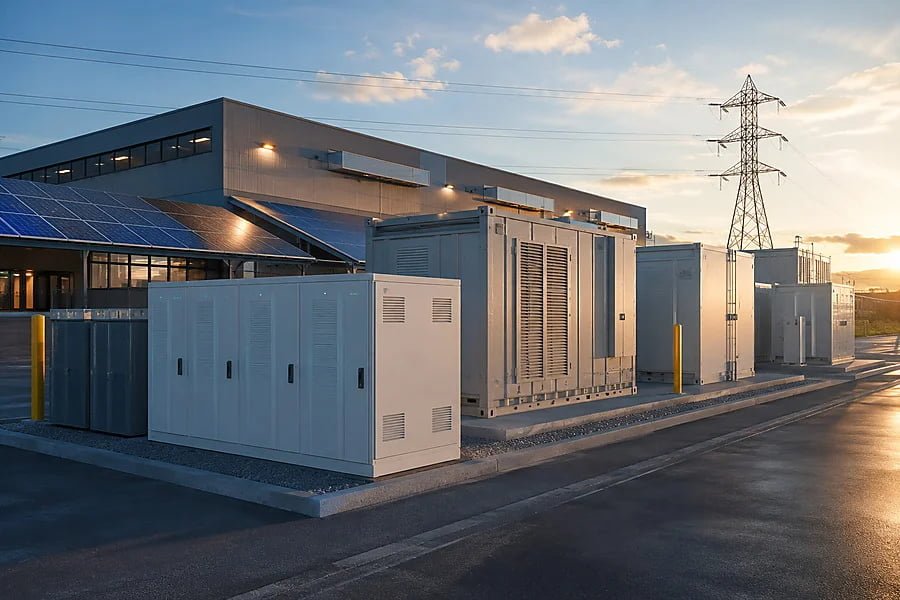
A commercial energy storage system (CESS) is a technical solution that stores electricity for use by businesses or industrial sites. It typically uses lithium-ion batteries to capture energy from the grid or renewable sources. This stored power helps companies reduce peak demand charges and provides backup power during grid failures.
Many professionals find the technical details of battery systems quite difficult to understand. I have spent years looking at how these systems help different industries manage their power. I will explain the core concepts and the practical facts you need to know before making a decision.
What is commercial energy storage?
Relying only on the local power grid can be risky for a modern business. A single power surge or a blackout can stop your production lines for hours. I believe that understanding energy storage is the first step toward building a more resilient and profitable company.
Commercial energy storage is a system that uses large-scale batteries to manage the electricity supply of a business. These systems use advanced software and hardware to store power when it is cheap or available. They release that power when demand is high or when the grid is down.
The Technical Components of a System
I find it helpful to think of a commercial energy storage system as a small power plant. It is not just a group of batteries in a box. A standard system has three main parts that work together. First, there are the battery modules. Most modern systems use LiFePO4 cells because they are safe and last a long time.[^1] Second, there is the Power Conversion System (PCS). This part changes the direct current (DC) in the battery into alternating current (AC) for your building. Third, there is the Battery Management System (BMS). This is the digital brain that monitors the health of every cell. It prevents the system from getting too hot or overcharging.
How the System Works in Daily Life
I often see businesses use these systems for "peak shaving." This means the battery provides power when your factory is running at full speed. By doing this, you do not pull as much power from the utility company during their most expensive hours. Another common use is "load shifting." You can charge the batteries at night when electricity rates are at their lowest. Then, you use that cheap energy during the day. This simple logic can save a business thousands of dollars every year.
Major Applications for Businesses
| Application | How it Works | Primary Benefit |
|---|---|---|
| Solar Integration | Stores extra solar power produced during the day. | Maximizes use of free renewable energy. |
| UPS Backup | Switches to battery power instantly during a blackout. | Protects sensitive data and machinery. |
| Demand Response | Provides power to the grid when the utility asks for help. | Earns credits or payments from the utility. |
| Voltage Regulation | Smooths out spikes and dips in the local power supply. | Extends the life of your electrical equipment. |
Why Battery Chemistry Matters
In my work, I always emphasize the type of battery used. Most commercial setups now use Lithium Iron Phosphate (LiFePO4).[^2] I prefer this chemistry because it does not catch fire as easily as other lithium batteries. It also allows for thousands of charge cycles. This means the system can work for ten years or more if you treat it well. When you look at a system, always check the cycle life and the safety certifications to ensure it meets international standards.
What are the disadvantages of BESS?
Investing in a Battery Energy Storage System (BESS) is a big step for any company. You might worry about the high initial price or the complexity of the installation process. I want to give you an honest look at the challenges so you can prepare for them ahead of time.
The main disadvantages of BESS include a high upfront cost and the need for specialized maintenance. These systems also take up significant physical space and require strict temperature controls. Additionally, battery capacity naturally fades over time, meaning the system will hold less energy after several years of use.
The Financial Challenge
The first hurdle I always mention is the capital expenditure. Buying a high-quality system is expensive. While it saves money over time, the initial investment can be hard for some businesses to handle. You must also consider the cost of site preparation. You might need to build a concrete pad or upgrade your existing electrical room. These extra costs can add up quickly. I suggest looking at the long-term savings rather than just the first price tag to see the real value.
Maintenance and Safety Requirements
I have seen many people ignore the maintenance side of energy storage. These systems are not "set and forget." They have cooling fans, air conditioners, and software that need regular checks. If the cooling system fails, the batteries can degrade very fast. Safety is another big concern. Even though modern LiFePO4 batteries are very safe, you still need to follow local fire codes. This might include installing special fire suppression systems or keeping the batteries a certain distance from other buildings.
Performance Limitations
- Capacity Fade: Every battery loses a bit of its ability to hold a charge every year. This is a natural chemical process.
- Efficiency Loss: Some energy is always lost when you move it in and out of a battery. This is called "round-trip efficiency."
- Temperature Sensitivity: Batteries do not like extreme heat or extreme cold. You must spend money on climate control to keep them at the right temperature.
- Technical Complexity: You will need a trained technician to fix the system if the software or the inverter has a problem.
Key Risks and Mitigation
| Risk Factor | Impact on Business | How to Manage It |
|---|---|---|
| High Upfront Cost | Slows down the start of the project. | Use financing or look for government grants. |
| Fire Risk | Potential damage to the facility. | Use certified LiFePO4 cells and fire sensors. |
| Capacity Loss | The system provides less power over time. | Buy a slightly larger system than you need. |
| Technology Shift | Newer tech might make yours look old. | Choose modular systems that are easy to upgrade. |
How much does an energy storage system cost?
Calculating the cost of a commercial battery system is often the hardest part of the planning stage. Prices can change based on the brand, the capacity, and how difficult the installation is. I will break down the numbers so you can understand where your money is going.
A commercial energy storage system usually costs between $400 and $700 per kilowatt-hour (kWh). For a medium-sized business, a 100kWh system might cost between $50,000 and $80,000 including installation. Prices vary depending on the battery chemistry, the power rating of the inverter, and local labor rates.
Components of the Final Price
I like to split the total cost into three buckets. The hardware is the biggest bucket. This includes the batteries, the racks, and the inverter. High-quality lithium cells are the most expensive part. The second bucket is the soft costs. This includes engineering, permits from the city, and the work needed to connect to the grid. The third bucket is the installation labor. You need skilled electricians to set this up. If your building has old wiring, this part of the cost might go up because you will need more upgrades.
Long-Term Value and ROI
When I talk about cost, I also talk about the Return on Investment (ROI). A system might cost $60,000, but if it saves you $10,000 a year on your electric bill, it pays for itself in six years. After that, the energy it provides is essentially free. You should also check for tax incentives or "green energy" rebates in your country. Many governments will pay for 20% to 30% of the system cost to encourage businesses to move away from fossil fuels. This makes the total cost much lower.
Cost Breakdown by System Size
| System Category | Typical Capacity | Estimated Price Range | Best For |
|---|---|---|---|
| Small Commercial | 30kWh - 60kWh | $20,000 - $45,000 | Retail shops, small offices. |
| Medium Commercial | 100kWh - 250kWh | $50,000 - $150,000 | Grocery stores, small factories. |
| Large Industrial | 500kWh - 1MWh+ | $250,000 - $700,000+ | Large plants, data centers. |
Factors That Drive Prices Up
I have noticed that certain features will always add to the bill. For example, if you want "Off-grid" capability, you need a more powerful inverter and extra safety switches. This allows your building to run even when the whole city loses power. Also, the "C-rate" matters. A high C-rate means the battery can release all its power very fast. If your machinery needs a huge burst of energy to start up, you will pay more for a system that can handle that high discharge rate.
What are the two types of energy storage systems?
It is easy to get lost in the jargon of the energy industry. Most people hear different terms and do not know which one applies to their specific business. I want to simplify this by focusing on the two main categories that define how these systems connect to the world.
The two main types of energy storage systems are Behind-the-Meter (BTM) and Front-of-the-Meter (FTM). BTM systems are located on the customer's side and focus on reducing building energy costs. FTM systems are located on the utility side and are used by power companies to manage the public grid.
Behind-the-Meter (BTM) Details
I spend most of my time working with BTM systems. These are the systems you see at a factory or an office park. They are called "behind the meter" because they are located after the electric meter that the utility company uses to bill you. The main goal of a BTM system is to give the owner control. You decide when to store power and when to use it. These systems are usually modular, so you can start small and add more batteries later. They are perfect for companies that want to save money and have a backup plan for outages.
Front-of-the-Meter (FTM) Details
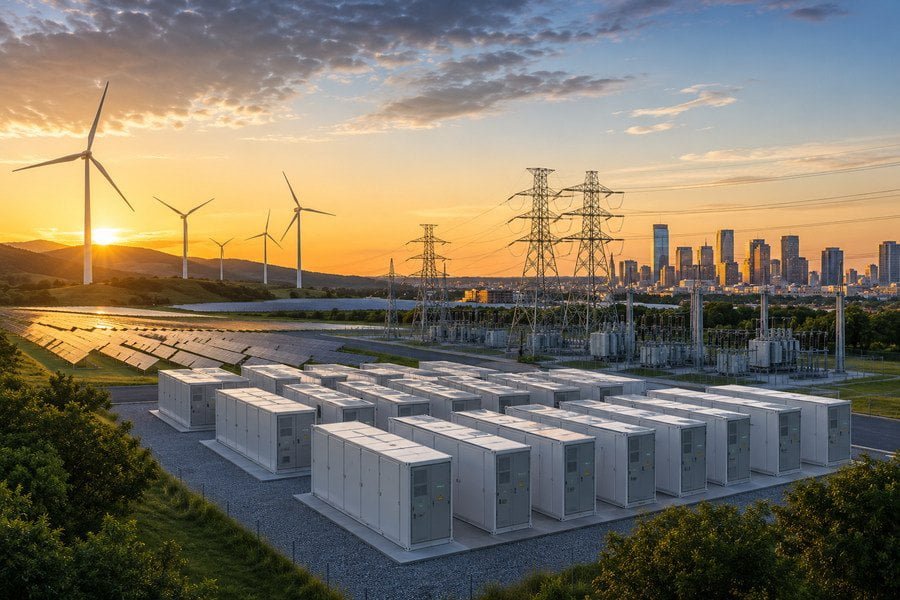
FTM systems are much larger and more complex. I often compare them to massive warehouses filled with batteries. These are owned by utility companies or independent power producers. They sit "in front" of the meter, meaning they connect directly to the high-voltage transmission lines. Their job is not to save one business money, but to keep the whole grid from crashing. They help balance the supply when thousands of people turn on their air conditioners at the same time. These systems are vital for a modern society that uses more and more renewable energy.
Why the Distinction Matters to You
I think it is important to know the difference so you buy the right equipment. If you are a business owner, you are looking for a BTM system. The hardware and software for BTM are designed to talk to your building's electrical panel. FTM systems use completely different communication protocols and much higher voltages. If you try to use an FTM-style battery for a small factory, it will be far too expensive and complicated.
BTM vs. FTM Comparison
| Feature | Behind-the-Meter (BTM) | Front-of-the-Meter (FTM) |
|---|---|---|
| Primary Goal | Cost savings for the owner. | Grid stability for the public. |
| Typical Owners | Businesses, homeowners. | Utilities, power developers. |
| Capacity | Tens to hundreds of kWh. | Many Megawatt-hours (MWh). |
| Installation Side | After the utility meter. | Before the utility meter. |
Choosing the Right Path
When I help clients choose, I look at their energy bills first. If the bill has high "demand charges," a BTM system is the perfect tool. If you are a land owner looking to sell power back to the state, you might be looking at an FTM project. Each type has its own set of rules, permits, and financial benefits. Most commercial projects will fall into the BTM category because it offers the most direct benefit to the person paying for the system.
My insights: Navigating the Mechanics and Strategic Value of Commercial Energy Storage Systems
Rising energy costs and grid instability threaten business profits. A Commercial Energy Storage System (CESS) provides the resilience and cost-control needed to turn energy volatility into a competitive advantage.
A Commercial Energy Storage System (CESS) is a high-capacity battery solution—typically 100kW to MW-scale—designed for businesses and industrial sites. It stores electricity from the grid or renewables, discharging it during peak times to reduce demand charges, provide emergency backup, and stabilize energy consumption through smart management software.
Breaking Down the Commercial Energy Ecosystem: From Hardware to Strategy
To understand a CESS, one must look beyond the "big battery" label. It is a sophisticated economic engine where hardware meets intelligent software to solve specific operational challenges.
The Technical Architecture
A CESS integrates several critical sub-systems to ensure safety and efficiency. While the battery chemistry (usually LiFePO4) provides the capacity, the Energy Management System (EMS) serves as the "brain," utilizing data to decide the most profitable times to charge or discharge.
| Component | Strategic Role | Business Impact |
|---|---|---|
| BMS & Thermal Control | Ensures cell longevity and safety. | Reduces maintenance and replacement costs. |
| Power Conversion (PCS) | Bi-directional AC/DC conversion. | Enables seamless integration with solar and the grid. |
| Containerized Housing | Modular, weather-proof scalability. | Simplifies installation and allows for future expansion. |
Economic and Operational Criticality
1. Peak Shaving and Load Shifting
By discharging during "peak demand" windows, businesses can avoid the highest utility tariffs, often the largest portion of a commercial energy bill.
2. Resilience and Renewable Synergy
For facilities with solar or wind, a CESS eliminates intermittency. It captures excess generation during the day to power operations at night or acts as an Uninterruptible Power Supply (UPS) during grid failures, preventing costly downtime.
Conclusion
Commercial energy storage systems provide a reliable way for businesses to manage costs and ensure power stability. By choosing the right type and understanding the costs, you can protect your company’s future.
](https://voltcrave-battery.com/wp-content/uploads/2026/06/Why-Do-You-Need-Large-Scale-Energy-Storage-in-Power-Grid-768x512.jpg)
](https://voltcrave-battery.com/wp-content/uploads/2026/08/What-Happens-to-Home-Battery-Storage-During-a-Power-Outage-768x512.webp)
](https://voltcrave-battery.com/wp-content/uploads/2026/09/What-Makes-Industrial-ESS-the-Ideal-for-Energy-Storage-768x512.webp)