

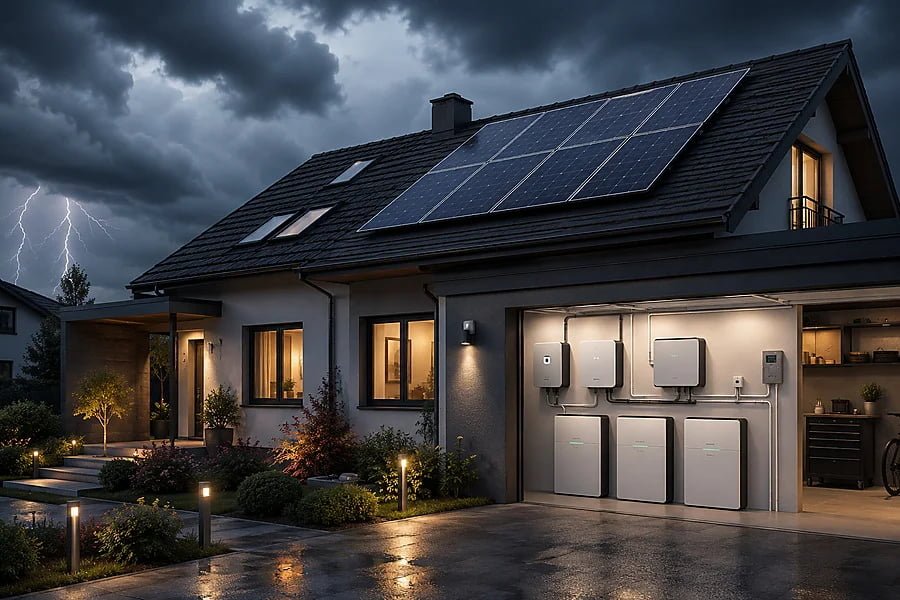
](https://voltcrave-battery.com/wp-content/uploads/2026/06/What-are-the-Best-Solar-Batteries-for-Home-Backup-in-2026.jpg)
Grid instability and high energy costs are making life difficult for many homeowners. You might feel frustrated when your solar panels do not work during a blackout or when electricity bills keep rising.
The best solar batteries for home backup in 2026 are high-capacity LiFePO4 systems with smart management software. These batteries provide safety, a long lifespan of over 10 years, and the ability to power your home during outages by storing excess solar energy.
I have spent a long time working with energy storage systems and I have seen how much the technology has changed. Choosing the right battery can be the difference between a reliable home and a dark one. If you want to know what makes a battery truly the best for 2026, keep reading to learn the technical details.
Are solar batteries worth it in 2026?
Utility companies are raising prices and many grid systems are reaching their limits. You might feel like you are paying too much for power while still worrying about the next big storm.
Yes, solar batteries are worth it in 2026 because they allow you to use your own clean energy and avoid peak electricity rates. They provide a high return on investment by reducing monthly bills and acting as a reliable insurance policy against frequent power grid failures.
I often talk to people who wonder if the cost of a battery is too high. In 2026, the answer is usually no. The price of lithium cells has dropped significantly over the last few years. At the same time, many utility companies have ended "net metering" programs. This means you no longer get a good price for the energy you send back to the grid. It is now much smarter to keep that energy in your own home.
When I look at the numbers for a standard home, the payback period for a battery has shrunk. A few years ago, it might have taken twelve years to see a return. Now, in many regions, it takes less than seven. This is because batteries help you avoid "time-of-use" charges. These are the high prices companies charge you during the evening. If you have a battery, you use your stored morning sun to power your evening lights. It is a simple way to keep your money in your pocket.
How Battery Worth is Measured
| Factor | 2020 Performance | 2026 Performance |
|---|---|---|
| Average Cycle Life | 2,500 Cycles | 6,000+ Cycles |
| Cost per kWh | High | Significantly Lower |
| Efficiency | 85% | 95% or higher |
| Safety Features | Basic BMS | AI-Driven Monitoring |
The Impact of Energy Independence
I see more people choosing batteries not just for the money, but for the freedom. Being independent from the grid means you do not have to worry about what the local power company does. If they have a problem or if they raise their prices, it does not affect you as much. This peace of mind is hard to put a price on. In 2026, a solar battery is a tool for control. It turns your home into a personal power plant that works on your schedule, not the utility's schedule.
Who makes the best solar backup battery?
Finding a good manufacturer is hard because there are so many brands that make big promises. You might worry about buying a product that has no support or lacks the proper safety certifications.
The best solar backup batteries are made by manufacturers who own their entire production process and focus on LiFePO4 technology. A top-tier maker provides products with global certifications like UL and CE, ensuring the battery is safe, durable, and compatible with various solar inverters.
I have found that the best manufacturers are the ones who invest heavily in research and development. In this industry, you cannot just put parts together and hope they work. A good battery needs a very smart Battery Management System (BMS). This is the brain of the battery. It keeps the cells balanced and prevents overheating. When I evaluate a supplier, I look for their history in the industry. I want to see that they have a large team of engineers who understand the chemistry of the cells.
Stability is also very important for a buyer. If you are a business owner or a project manager, you need a partner who can deliver thousands of units without any delay. The best makers have automated production lines. Machines are much better at making batteries than humans because they do not get tired. This means every battery that comes off the line is exactly the same as the one before it. This consistency is what prevents fires and failures in the field.
Checklist for Choosing a Manufacturer
- Vertical Integration: Do they make their own cells or just assemble them?
- Certifications: Do they have CE, UL, and FCC labels for international markets?
- Technical Support: Do they provide clear manuals and remote troubleshooting?
- Scale: Can they handle large orders and provide consistent quality?
Why Experience Matters in 2026
I have seen many small shops try to enter the battery market. They often use cheap components to keep the price low. This is a huge mistake. A battery is a long-term investment. If the company disappears in two years, you have no warranty and no help. I always suggest looking for a maker that has a large production capacity and a proven track record. This ensures that the product you buy today will still be supported ten years from now.
What is the best type of solar battery for home use?
Using the wrong battery type can be dangerous and expensive over the long term. You might be tempted by cheaper lead-acid batteries or older lithium types that do not last as long as you need.
The best type of solar battery for home use in 2026 is the LiFePO4 (Lithium Iron Phosphate) battery. This chemistry is the safest option because it does not catch fire easily and can handle thousands of charge cycles without losing significant capacity or performance.
I always recommend LiFePO4 over other types like NCM or Lead-Acid. The reason is simple: safety and value. Lead-acid batteries are very heavy and they only last for a few years. You also cannot drain them completely without damaging them. NCM batteries are smaller, but they have a higher risk of "thermal runaway." This means they can catch fire if they are damaged or if they get too hot. LiFePO4 is different. Even if it is punctured, it is very stable. For a family home, this is the only choice that makes sense to me.
Another thing to consider is the "Depth of Discharge" (DoD). This tells you how much of the battery's power you can actually use. With a LiFePO4 battery, you can usually use 90% or even 100% of the energy. Lead-acid batteries often limit you to only 50%. This means a 10kWh LiFePO4 battery actually gives you much more usable power than a 10kWh lead-acid battery. When you look at it this way, the better technology is actually cheaper in the long run.
Comparison of Home Battery Types
| Feature | LiFePO4 | NCM Lithium | Lead-Acid |
|---|---|---|---|
| Safety Level | Highest | Moderate | Low |
| Cycle Life | 6,000+ | 2,000 | 500 |
| Weight | Light | Very Light | Very Heavy |
| Maintenance | None | None | Needs Water |
The Rise of All-in-One Systems
In 2026, I see a huge trend toward "All-in-One" systems. These units put the battery and the solar inverter into a single cabinet. This is the best setup for most homes because it saves a lot of space. It also makes the installation much simpler. If you use a separate battery and inverter, you have to worry about if they are compatible. With an All-in-One system, the manufacturer has already done that work for you. It is a "plug and play" solution that reduces the chance of technical errors during setup.
Why are people getting rid of their solar panels?
You might hear stories about people being unhappy with their solar installations. They might feel like the panels did not save them as much money as they expected or that the system is too complicated to maintain.
People are not actually getting rid of their solar panels; they are replacing old, grid-tied systems with modern "Solar + Storage" solutions. Older systems without batteries provide no power during blackouts, leading many owners to upgrade their equipment so they can finally achieve true energy independence.
I have spoken to many homeowners who were disappointed with their original solar systems. They thought that having panels meant they would have power during a storm. But most old systems are designed to shut off when the grid goes down to protect utility workers. This realization makes people feel like their panels are useless. I tell them that they do not need to throw away their panels. They just need to add a battery and a hybrid inverter to make the system work properly.
The market is currently in a massive upgrade phase. People are moving away from simple systems and moving toward smart systems. A smart system uses a battery to manage power perfectly. It knows when the sun is shining and when the grid price is high. It makes decisions for you. People are not leaving solar; they are leaving the old way of doing solar. They want a system that actually protects them when the lights go out in the rest of the neighborhood.
Common Reasons for System Upgrades
- Grid Dependency: Old systems stop working during blackouts.
- Low Export Rates: Selling power back to the grid is no longer profitable.
- Better Technology: New batteries are more efficient and smaller than before.
- Home Value: A house with a full backup system is worth more than a house with just panels.
Moving Toward Total Energy Control
I believe the future is all about total control. When people "get rid" of their old solar setups, they are usually installing something much more powerful. They are adding large LiFePO4 battery packs that can run their entire house, including the air conditioner and the fridge. This shift is happening because people are tired of being dependent on others. They want to know that no matter what happens with the weather or the economy, their home will remain powered and comfortable.
My insights: Selecting the Ultimate Solar Battery for Home Resilience in 2026
Grid instability is rising, leaving families vulnerable to prolonged blackouts. Don’t settle for partial power. Advanced LFP solar batteries now provide the high-output, long-lasting energy security your home demands.
The Tesla Powerwall 3 is the premier choice for 2026, delivering 13.5 kWh capacity and 11.5 kW continuous power. Alternatives like the Enphase IQ 5P offer modular reliability, while FranklinWH handles heavy surges. For total independence, prioritize LFP chemistry and a system offering at least 10–20 kWh of storage.
Beyond Capacity: Decoding Power, Chemistry, and Integration
When evaluating 2026’s top tier, homeowners must look beyond simple storage (kWh) and focus on continuous power output (kW). A battery might store enough energy to last all night, but if it lacks the "surge" capability to start an air conditioner or well pump, the backup remains incomplete.
The Dominance of LFP Chemistry
In 2026, Lithium Iron Phosphate (LFP) has become the gold standard. Unlike older NMCA chemistries, LFP offers:
- Safety: Exceptional thermal stability, significantly reducing fire risks.
- Longevity: Rated for 6,000+ cycles, often lasting 15–20 years.
- Efficiency: Better performance in varying temperature ranges without rapid degradation.
System Architecture: AC vs. DC Coupling
The choice between AC and DC coupling defines your installation complexity. AC-coupled systems (like Powerwall 3) are ideal for retrofitting existing solar arrays. In contrast, DC-coupled systems offer higher round-trip efficiency for new installations by reducing energy conversion losses.
| Battery Model | Capacity (kWh) | Continuous Power (kW) | Chemistry | Ideal Application |
|---|---|---|---|---|
| Tesla Powerwall 3 | 13.5 | 11.5 | LFP | Best Overall / Whole-Home |
| Enphase IQ 5P | 5.0 | 3.84 | LFP | Modular Growth / Microinverters |
| FranklinWH aPower | 15.0 | 10.0 | LFP | Large Loads / High Surge |
| Bluetti EP900 | 9.9+ | 9.0 | LFP | DIY / Off-grid Flexibility |
Ultimately, 2026 marks the era of AI-optimized management, where systems like SigEnergy use smart software to predict weather patterns and utility rates, ensuring your backup is ready before the storm hits.
Conclusion
The best solar batteries in 2026 are high-quality LiFePO4 systems that offer safety and long-term savings. By upgrading to integrated storage, you can achieve true energy independence and security.
](https://voltcrave-battery.com/wp-content/uploads/2026/06/The-Real-Cost-of-Commercial-Battery-Energy-Storage-in-2026-What-You-Need-to-Know-768x512.jpg)
](https://voltcrave-battery.com/wp-content/uploads/2026/06/What-Are-the-Negatives-With-Battery-Storage-Facilities-768x512.jpg)
](https://voltcrave-battery.com/wp-content/uploads/2026/06/What-Are-the-Dangers-of-Lithium-Battery-Storage-Facilities-768x512.jpg)