
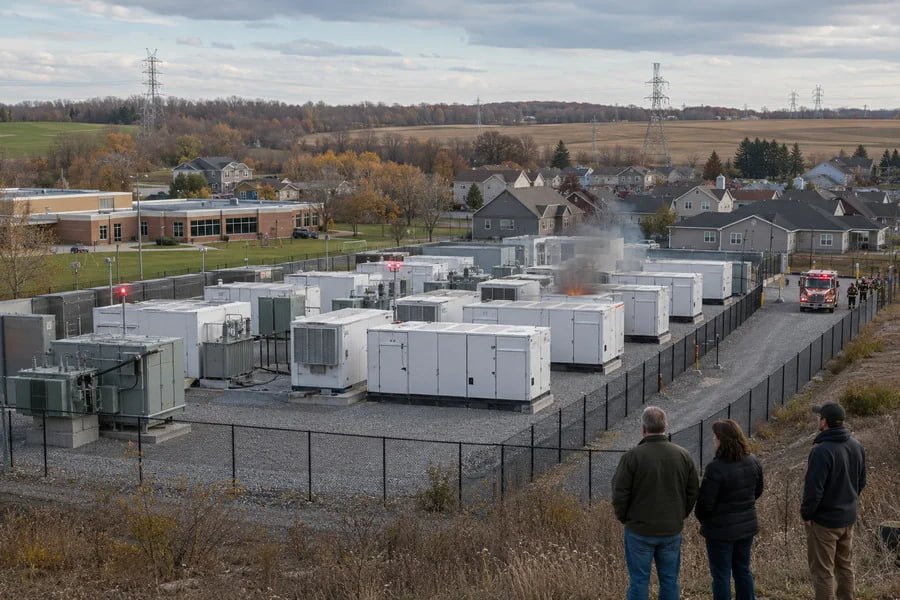
](https://voltcrave-battery.com/wp-content/uploads/2026/06/Why-Do-You-Need-Large-Scale-Energy-Storage-in-Power-Grid.jpg)
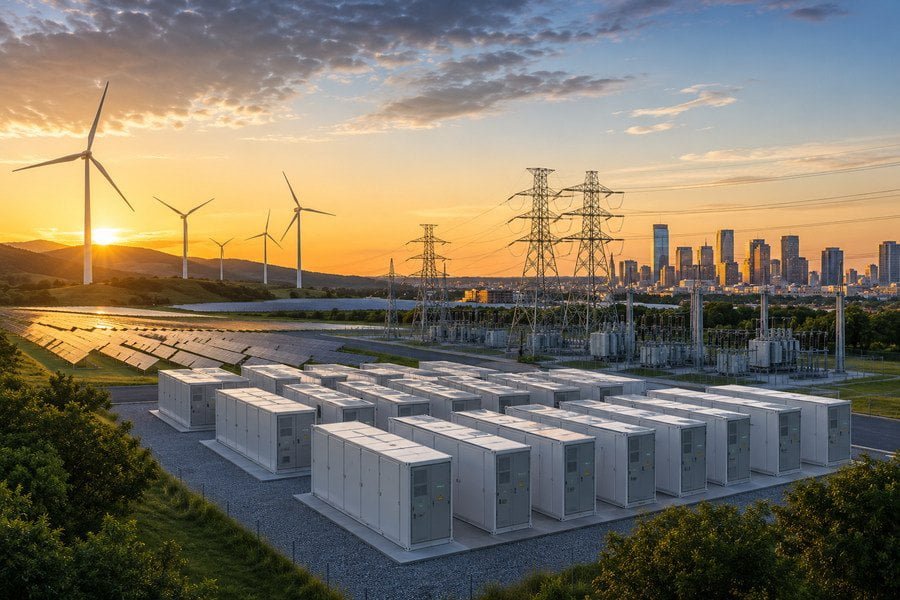
The modern power grid is under too much pressure. Demand is rising, but our old systems cannot handle the load. Large scale energy storage fixes this by preventing waste and blackouts.
Large scale energy storage is necessary to balance the grid by saving excess electricity and releasing it during peak hours. It allows for a steady flow of power, integrates renewable energy sources, prevents system overloads, and provides a critical backup during outages to ensure constant energy availability.
Grids are like roads without parking; extra energy causes total system crashes. After years of studying power flows, I’ll show you why large batteries are our only real solution.
Why is energy storage important for the electric grid?
Renewable energy like wind and solar is not consistent. When the wind stops or the sun sets, the power drops. This causes gaps that can damage sensitive electronics and machines.
Energy storage is important because it provides grid services like frequency regulation, voltage control, and spinning reserves. It stabilizes the network by matching supply with real-time demand, ensuring that the transition to renewable energy does not lead to frequent blackouts or infrastructure damage.
Solving the Problem of Intermittency
I often see the same issue in my projects. Solar panels produce the most power at noon, but people use the most power at night. Without a way to save that noon energy, it simply goes to waste. Large Scale Battery Energy Storage Systems (BESS) act like a bridge. They catch the energy when it is cheap and plentiful and hold it until the grid actually needs it. This makes green energy reliable instead of unpredictable.
Protecting Grid Infrastructure
The grid is made of old wires and transformers. When demand spikes, these parts get hot and can fail. I have seen how adding storage at a substation can prolong the life of this equipment. Instead of the grid working at 100% capacity and breaking, the battery takes the extra load. This saves the utility company from having to dig up streets to lay new cables, which costs millions of dollars.
Frequency and Voltage Support
The grid needs to stay at a very specific frequency to work right. If the frequency drops, motors in factories can burn out. Large batteries can react in milliseconds to push power back into the grid. This is much faster than a traditional coal or gas plant.
| Feature | Without Energy Storage | With Large Scale BESS |
|---|---|---|
| Response Speed | Slow (Minutes) | Instant (Milliseconds) |
| Renewable Integration | Limited | High |
| Grid Stability | Fragile | Resilient |
| Operational Cost | High (due to waste) | Optimized |
What battery company is backed by Bill Gates?
Fossil fuels are fading, but we need a way to store energy for many days. Investors are looking for the next big technology. Bill Gates is one of the biggest names leading this search.
Bill Gates primarily backs Form Energy through his firm, Breakthrough Energy Ventures. Form Energy is developing iron-air battery technology designed for long-duration storage, aiming to store electricity for up to 100 hours at a much lower cost than traditional lithium-ion systems.
The Goal of Long-Duration Storage
The industry is currently focused on "long-duration" storage. Most lithium batteries are good for 4 to 8 hours. But what happens if the wind doesn't blow for three days? This is the problem Bill Gates is trying to solve. I think it is important to realize that iron-air batteries use a process of "reversible rusting" to store energy. This is a very smart use of common materials to lower the price of storage for the whole world.
Diversifying the Energy Portfolio
Gates does not just put money into one thing. He also supports companies like Ambri, which uses liquid metal, and QuantumScape, which works on solid-state batteries. I believe this variety is good for the market. While we wait for these new techs to reach mass production, we use the 800+ patents we have in lithium technology to solve today’s problems. We need solutions that work now while we plan for the next twenty years.
Leading Gates-Backed Battery Ventures
- Form Energy: Focused on iron-air tech for multi-day grid support.
- Ambri: Creating liquid metal batteries for high-temperature industrial use.
- QuantumScape: Developing solid-state batteries mainly for electric vehicles.
- Malta Inc: Using molten salt to store energy as heat.
Market Readiness and Scale
I often talk to buyers who want the newest thing. But the reality is that many of these Gates-backed projects are still in the testing phase. If you need to power a factory or a housing complex today, you need a supply chain that can deliver. This is why we focus on 32 automated production lines that can churn out 500,000 units a month. You cannot build a grid on a lab experiment; you need proven technology that has passed CE, UL, and FCC tests.
Why is it so important to store energy in large-scale batteries?
High energy prices are a threat to every business. Peak demand makes electricity both expensive and dirty. Large batteries fix this by changing when we use the power we produce.
Storing energy in large-scale batteries is important for peak shaving, load shifting, and deferring expensive infrastructure upgrades. It reduces the need for carbon-heavy gas plants and allows utility companies to use more low-cost renewable energy, ultimately lowering costs and carbon emissions for everyone.
The Power of Peak Shaving
I have helped many industrial clients deal with "demand charges." Utility companies charge extra if you use a lot of power all at once. By using a large scale battery, the factory can pull power from the battery during busy times instead of the grid. This "shaves" the peak off the bill. It is one of the fastest ways for a company to save money on energy.
Moving Energy to When It Is Needed
Load shifting is a simple idea. You buy energy when it is cheap, like at 2 AM, and you use it when it is expensive, like at 2 PM. Without a large battery, you are a slave to the market price. With a battery, you become your own power manager. I see this becoming the standard for every large building and farm in the next five years.
Environmental Impact and Safety
When we store energy, we don't have to turn on "peaker plants." These are gas plants that only run when demand is high. They are very dirty. Replacing them with batteries is a huge win for the planet. But safety must come first. I always look for systems with a strong BMS (Battery Management System). We make sure our systems have multiple layers of protection to prevent fires and ensure a long life of over 10 years.
| Benefit Category | Impact of Large Scale Storage |
|---|---|
| Financial | Lowers electricity bills via peak shaving |
| Reliability | Provides backup power during outages |
| Environment | Reduces reliance on fossil fuel plants |
| Technical | Balances voltage and frequency automatically |
What will replace lithium?
Lithium is the current king, but the price is high and the supply is limited. Everyone is asking what comes next. We need materials that are easier to find so we can build batteries everywhere in the world.
Sodium-ion batteries and solid-state batteries are the most likely candidates to supplement or replace lithium. Sodium is much cheaper and easier to find than lithium. However, lithium-ion, especially LiFePO4, will remain the industry standard for the next decade due to its proven safety, energy density, and established supply chains.
The Potential of Sodium-Ion
Sodium is basically salt, so it is everywhere. Sodium batteries are very safe and work better in the cold than lithium. I believe sodium will be great for big grid storage where the battery's weight does not matter. It is cheaper to build, which will help developing nations get clean energy faster. Right now, many R&D teams, including our 300+ experts, are looking at how to make these batteries last longer.
Solid-State and Other Options
Solid-state batteries are the "holy grail." They don't have liquid inside, so they can't leak or catch fire easily. They also hold a lot more energy in a small space. The problem is they are very hard to make in a factory. I think we are still years away from seeing them in every home. Other options like flow batteries are good for huge sites, but they are too complex for most projects.
Why LiFePO4 Still Leads
I always tell my partners to look at the "cycle life." LiFePO4 (LFP) batteries can be charged and discharged thousands of times before they wear out. They are also much safer than the lithium used in phones (NMC). Until sodium or solid-state can match the price and reliability of LFP, it will stay the top choice. We continue to invest in this tech because it is what the market trusts.
Comparison of Current and Future Tech:
- LiFePO4: Best for safety and long life today.
- Sodium-Ion: Best for low cost in the future.
- Solid-State: Best for energy density, but very expensive.
- Iron-Air: Best for storing power for many days.
My insights: Bridging the Gap: How Large-Scale Storage Modernizes the Grid
Renewables are unpredictable, causing grid instability and volatile prices. This mismatch threatens energy security. Large-scale storage bridges this gap, transforming intermittent power into a steady, reliable, and cost-efficient resource.
Large-scale energy storage balances supply and demand by capturing excess electricity—especially from renewables—for later use. It stabilizes grid frequency, reduces peak-load strain on infrastructure, and prevents energy waste. This ensures a reliable, low-cost power supply while accelerating the transition to a carbon-free, resilient energy future.
The Multi-Dimensional Impact of Utility-Scale Storage
Large-scale storage is more than just a "giant battery"; it is the fundamental architect of a modern, flexible grid. Traditionally, grids operated on a "generation-on-demand" model fueled by fossil fuels. To meet climate goals, we must shift to a "flexible-demand-and-storage" model that accommodates the inherent variability of wind and solar.
Structural Shift: Beyond Simple Backup
Storage provides "ancillary services" that are often invisible to consumers but vital for the grid. It responds to frequency fluctuations in milliseconds, a feat traditional thermal plants cannot easily replicate. This rapid response prevents the cascading failures that lead to blackouts.
Economic and Environmental Synergy
By utilizing price arbitrage—charging when energy is cheap (and clean) and discharging during expensive peaks—storage reduces the need for "peaker plants." These plants are often the most expensive and polluting to run. Furthermore, storage defers the need for multi-billion dollar transmission upgrades by managing local congestion.
| Benefit Category | Traditional Grid (Without Storage) | Modern Grid (With Storage) |
|---|---|---|
| Renewable Energy | High curtailment (wasted energy) | Captured and maximized utilization |
| Peak Demand | Relies on expensive, dirty peaker plants | Discharges stored clean energy |
| Grid Stability | Slower mechanical response | Instantaneous digital response |
| Cost Efficiency | High volatility and infrastructure spend | Price smoothing and deferred upgrades |
Conclusion
Large scale energy storage is the essential foundation for a modern grid. It ensures stability, lowers costs, and makes a 100% renewable energy future possible for everyone.
](https://voltcrave-battery.com/wp-content/uploads/2026/06/The-Real-Cost-of-Commercial-Battery-Energy-Storage-in-2026-What-You-Need-to-Know-768x512.jpg)
](https://voltcrave-battery.com/wp-content/uploads/2026/06/What-are-the-Best-Solar-Batteries-for-Home-Backup-in-2026-768x512.jpg)
](https://voltcrave-battery.com/wp-content/uploads/2026/06/What-Are-the-Negatives-With-Battery-Storage-Facilities-768x512.jpg)