

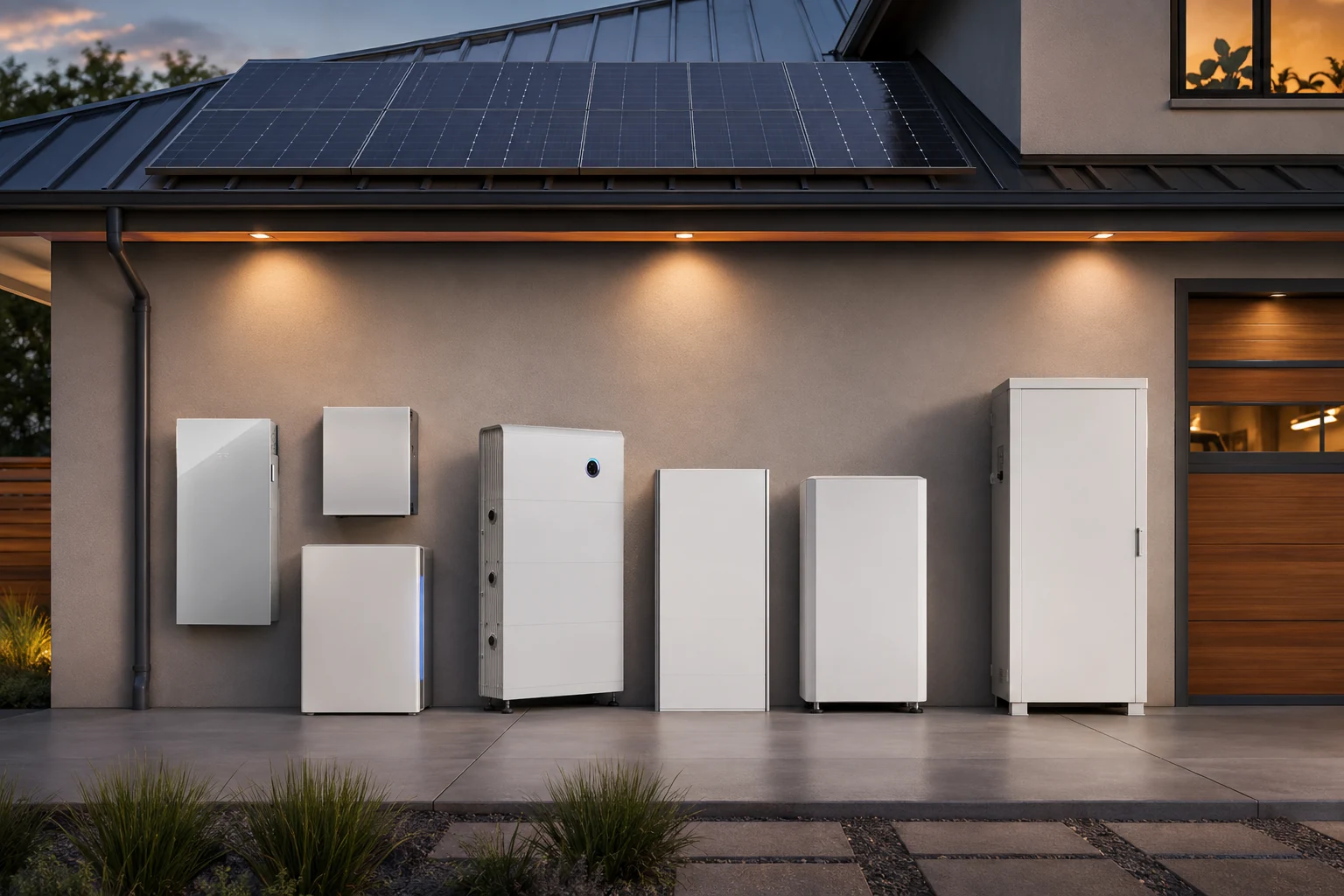
](https://voltcrave-battery.com/wp-content/uploads/2026/08/What-Happens-to-Home-Battery-Storage-During-a-Power-Outage.webp)
A home battery can keep essential equipment operating during an outage, but only when the system includes backup controls and enough stored energy.
During a power outage, a backup-capable home battery detects the loss of grid power, disconnects the home from the utility, and begins supplying approved circuits. A solar-plus-storage system may continue generating and charging while isolated. Backup ends when the battery reaches its minimum charge unless solar, a generator, or the returning grid recharges it.
I view a home battery as part of a complete backup system. The battery stores energy, but the inverter, transfer equipment, electrical panel, controls, solar array, and household loads determine what actually happens during the outage.
Does a Home Battery Turn On Automatically During a Power Outage?
A grid failure can occur without warning. A properly configured home battery system should not require the owner to connect extension cords or manually start the battery.
A backup-capable home battery normally detects the outage and automatically isolates the protected part of the home from the grid. The battery inverter then forms a local electrical supply for the selected circuits. The transition may happen in a fraction of a second or within several seconds, depending on the equipment and system design.
The System First Disconnects From the Utility
The home must not send battery or solar electricity into damaged utility lines. A backup switch, automatic transfer switch, system controller, or similar isolation device separates the home from the grid.
Tesla describes its Backup Switch as the part of the Powerwall system that quickly and safely disconnects the home when an outage is detected. Generac describes a similar process in which its automatic transfer equipment isolates the home before battery or solar power is routed to the electrical panel.
I see this isolation step as essential. A battery connected only for bill savings may charge and discharge while the grid is available but provide no electricity during an outage. Tesla states that a Powerwall installed in a non-backup configuration does not power the home when the grid fails. Enphase has also described grid-tied battery configurations that store energy during normal operation but need additional backup equipment to work during an outage.
| System configuration | What usually happens during an outage |
|---|---|
| Battery with backup controller | The system isolates from the grid and supplies protected loads |
| Battery installed only for energy savings | The system may shut down and provide no backup |
| Solar without suitable outage controls | The solar system normally disconnects from the grid |
| Solar plus backup-capable battery | Solar and storage may operate as a local island |
| Portable battery connected directly to appliances | Only appliances plugged into the unit receive power |
The Battery Creates a Local Electrical Island
After isolation, the battery inverter establishes local voltage and frequency. The home or protected circuits then operate as a small islanded electrical system.
The Department of Energy explains that residential solar-and-storage systems can detect grid loss and switch into islanded operation. This allows the battery and compatible solar equipment to continue serving local loads without energizing the wider grid.
The transition may be quick enough that some clocks, lights, routers, and electronics continue operating without an obvious interruption. However, I do not promise completely uninterrupted power for every system. Equipment design, transfer speed, load conditions, and sensitive electronics can affect whether a brief flicker or reset occurs.
Internet Service Is Not Usually Required for Basic Backup
The battery controller normally operates locally. An internet outage may remove remote monitoring, weather-based preparation, notifications, or cloud features, but it does not necessarily stop backup operation.
Tesla states that Powerwall continues operating in its last selected mode and provides backup during an outage even without an internet connection. Local or offline monitoring may also remain available in supported configurations.
I still keep communication equipment on the protected-load panel when internet access matters. The battery cannot preserve an internet connection when the local modem, router, fiber equipment, cable network, or service provider has also lost power.
What Can a Home Battery Power During an Outage?
A battery does not automatically support every appliance in the house. The answer depends on whether the installation provides partial-home or whole-home backup.
A home battery can power the circuits included in its backup design, as long as their combined demand remains within the inverter’s output and surge limits. Partial-home systems protect selected essentials. Whole-home systems connect the full panel, but large appliances may still need load management to prevent overload and preserve battery energy.
Partial-Home Backup Protects Essential Circuits
A partial-home system normally uses a backup or essential-load panel. The installer moves selected circuits to this panel.
Common protected loads may include:
- Refrigerators and freezers
- Lighting
- Internet equipment
- Security systems
- Medical devices
- Selected outlets
- Televisions and computers
- Garage-door controls
- Small pumps or heating controls
Tesla describes partial-home backup as a configuration in which essential loads remain available while heavier excluded loads do not receive battery power during the outage. Enphase also offers essential-backup configurations for basic appliances.
I often prefer this design when backup duration matters more than maintaining every normal household activity. A smaller protected load can operate longer from the same stored energy.
Whole-Home Backup Connects More Loads
A whole-home system can energize the main home panel. This may include both normal 120V circuits and 240V appliances.
Depending on system size, supported equipment may include air conditioners, well pumps, electric cooking equipment, dryers, water heaters, and EV charging. Tesla notes that the number of batteries, home consumption, and selected backup design determine which appliances can be supported and for how long.
Whole-home connection does not mean unlimited power. Several large appliances may exceed the inverter’s continuous or starting-power capability when they operate together.
| Load condition | Likely system response |
|---|---|
| Demand remains within output limits | The battery continues supplying the home |
| A motor creates a short but supported surge | The battery starts the appliance and continues |
| Loads approach the power limit | The system may reduce or disconnect managed loads |
| Demand exceeds the inverter rating | The battery may shut down or retry after the load is reduced |
| Stored energy becomes low | The system may send an alert and limit backup time |
| Battery reaches its shutdown level | Home backup stops until energy becomes available |
Tesla states that an overloaded Powerwall may stop supplying the home and automatically retry after high-power devices are turned off.
Smart Load Management Extends Backup
I use load controls to protect the battery from unnecessary demand.
A smart panel or load controller may automatically turn off an EV charger, water heater, pool pump, electric dryer, or secondary air-conditioning system when battery energy becomes low. Enphase describes battery-mode load prioritization based on the amount of stored energy remaining. Generac also uses coordinated load and thermostat controls to preserve battery energy during outages.
The owner can achieve a similar result manually by delaying cooking, laundry, EV charging, and other high-energy activities.
Will Solar Panels Still Work During the Power Outage?
Many homeowners assume that rooftop solar will always supply electricity while the sun is shining. Standard grid-connected solar usually shuts down when the utility fails.
Solar panels can continue supporting the home during an outage only when the system has compatible islanding controls and an inverter that can operate without the grid. In a properly designed solar-plus-storage system, solar can power household loads and recharge the battery. A standard grid-tied solar installation without backup capability normally shuts down.
Solar May Serve Loads Before Charging the Battery
During daylight, solar generation can support the operating home loads. Surplus production can charge the battery.
A simplified energy sequence is:
- Solar supplies the current household demand.
- Extra solar charges the home battery.
- The battery supplies the shortage when solar production falls.
- The battery powers the protected loads at night.
- Solar may begin charging again the next day.
The exact power flow depends on the inverter architecture, battery state of charge, solar production, and system controls. DOE explains that solar-generated electricity can be stored and later discharged without fuel delivery, supporting homes and businesses during extended outages.
The Battery May Need Energy to Restart Solar
Some systems need enough remaining battery energy to maintain the local grid and restart solar production the next morning.
When the battery becomes fully exhausted overnight, the system may enter a waiting state. It may periodically check whether solar output is sufficient to restart the local electrical system, power the home, and charge the battery.
Tesla states that an exhausted Powerwall may perform hourly checks until enough solar is available. When available solar is still insufficient, the homeowner may need to reduce loads and follow the manufacturer’s restart procedure.
I therefore avoid intentionally draining a solar-plus-storage system to its lowest possible level during a long outage. A protected reserve can help the system maintain controls and restart reliably.
Solar Output Still Changes With Weather
Solar does not guarantee continuous recharging.
Clouds, smoke, snow, shading, season, panel orientation, and limited daylight can reduce production. The household may also consume more electricity than the solar array generates.
| Daylight condition | Likely effect on backup |
|---|---|
| Strong sun and low household demand | Solar can run loads and charge the battery |
| Strong sun and high demand | Solar and battery may operate together |
| Cloudy weather | Battery charging may be slow or absent |
| Nighttime | The battery supplies loads without solar |
| Battery full and solar exceeds load | The system may reduce solar production |
| Battery empty with weak sunlight | The system may remain off until enough energy is available |
A battery does not create energy. It only stores electricity generated earlier by solar or received from another charging source.
How Long Will a Home Battery Last During an Outage?
The battery’s advertised capacity does not provide one fixed backup duration. Home energy use can change by the hour.
Home-battery backup may last from a few hours to several days. Duration depends on usable battery capacity, starting state of charge, household demand, inverter losses, battery reserve, temperature, battery age, and solar recharging. Reducing large loads usually extends backup more effectively than comparing capacity alone.
I Estimate Duration From Average Load
I begin with a basic calculation:
Estimated hours = usable battery energy ÷ average household load
Assume that a battery has 13.5 kWh of usable energy:
| Average protected load | Simple theoretical duration |
|---|---|
| 0.5 kW | 27 hours |
| 1.0 kW | 13.5 hours |
| 1.5 kW | 9 hours |
| 3.0 kW | 4.5 hours |
| 5.0 kW | 2.7 hours |
These are mathematical examples, not guaranteed operating times. Real duration will usually differ because of conversion losses, protected charge limits, changing appliance use, temperature, and battery aging.
A refrigerator cycles on and off. An air conditioner may operate heavily during hot weather. A well pump creates short high-power events. I therefore use measured household data when planning backup.
Starting Charge Matters
The battery can only supply the energy available when the outage begins.
Many systems allow the owner to set a backup reserve. A higher reserve keeps more energy ready for an outage but leaves less battery capacity available for daily bill savings.
Tesla describes Backup Reserve as the setting that controls how much energy is kept for grid outages. It warns that a low reserve may provide insufficient energy during a longer interruption.
Some systems also use storm-preparation modes. When severe weather is forecast, the battery may temporarily prioritize charging so that it begins the event with more stored energy. Tesla’s Storm Watch is one example of this behavior.
Household Decisions Change the Result
I reduce or delay these loads during a long outage:
- EV charging
- Electric resistance heating
- Electric water heating
- Clothes drying
- Pool and spa equipment
- Electric ovens
- Secondary refrigerators
- Large air-conditioning loads
- Decorative lighting
I keep refrigeration, communications, medical equipment, security, and essential lighting as priorities.
The system’s app may estimate remaining backup time, but the estimate changes when household demand or solar production changes.
What Happens When the Home Battery Runs Out?
A battery does not continue operating after it reaches its protected minimum state of charge.
When a home battery reaches its shutdown level during an outage, it stops powering the protected circuits. The home loses electricity unless another source is available. A solar-plus-storage system may restart when enough sunlight returns. A hybrid system may use a compatible generator to power loads and recharge the battery.
The System Shuts Down to Protect the Battery
The battery management system prevents damaging overdischarge. When stored energy reaches the minimum limit, the inverter stops supplying the home.
Tesla describes this condition as “Waiting for Grid” when Powerwall is empty and cannot resume until the utility returns. In a solar-connected system, it may instead wait for enough solar power to restart.
I avoid repeatedly trying to restart an empty system while high loads remain connected. I first turn off large appliances and leave only the smallest essential loads.
A Generator Can Extend a Hybrid System
Some home-energy systems combine batteries with a compatible standby generator.
The battery can provide quiet and immediate short-term backup. The generator can operate during a longer outage and may recharge the battery. Generac states that a compatible generator can power the home and recharge a low PWRcell 2 battery at the same time.
The equipment must be designed and approved to operate together. I do not connect a generator directly to a battery system without the required transfer equipment, controls, and installation design.
What Happens When Grid Power Returns?
The home does not need to remain permanently isolated after the utility restores service.
When stable grid power returns, the backup controller verifies the utility supply and reconnects the home. The battery then leaves outage mode and returns to its normal operating profile. Depending on its settings, it may recharge from solar or the grid, restore its backup reserve, or resume solar self-consumption and electricity-cost management.
Reconnection Is Controlled
The system does not simply connect the local battery-created grid to the utility without checking conditions.
The controller manages the transition and returns the home to normal utility operation. Automatic systems complete this process without homeowner action. Systems with manual transfer equipment may require the owner to move a switch according to the installation instructions.
Tesla states that its Powerwall and automatic transfer equipment reconnect when grid power returns and then resume normal operation.
The Battery May Recharge Its Reserve
The outage may leave the battery partly or almost completely discharged.
After reconnection, the system may prioritize charging until it reaches the selected backup-reserve level. Tesla states that Powerwall prioritizes restoring its reserve after it has discharged below that level during an outage.
The charging source depends on the system, regional rules, and owner settings. Some batteries recharge only from solar under normal conditions. Others can charge from the grid during approved periods.
Normal Energy Modes Resume
After the reserve is restored, the battery may return to:
- Solar self-consumption
- Time-of-use savings
- Peak-demand reduction
- Grid-service participation
- Virtual power plant operation
- Backup-only operation
I review the app or monitoring platform after a major outage. I confirm the battery charge, solar operation, alarms, internet connection, and operating mode.
My Insights: What Happens to Home Battery Storage During a Power Outage
I believe a home battery does more than switch from charging to discharging. It temporarily changes the electrical structure of the property.
During a power outage, a backup-capable home battery turns the protected part of the property into a small local power system. It disconnects from the utility, establishes voltage and frequency, controls solar generation, supplies approved loads, protects its remaining energy, and later coordinates reconnection when stable grid power returns.
Backup Capability Is a System Feature
A battery cabinet alone does not create home backup.
The system also needs:
| Component | Role during an outage |
|---|---|
| Battery cells | Store electrical energy |
| Battery management system | Protects cell voltage, current, and temperature |
| Battery inverter | Converts stored DC energy into household AC power |
| Backup controller | Detects grid loss and manages islanding |
| Transfer or isolation device | Prevents power from reaching utility lines |
| Electrical panel | Determines which circuits receive backup |
| Solar inverter | Controls solar production in islanded operation |
| Load controller | Disconnects lower-priority equipment |
| Monitoring system | Reports charge level, power flow, and alarms |
This is why two homes with batteries of similar capacity may behave differently during an outage.
Backup Reserve Is an Energy-Security Decision
A low reserve gives the owner more battery capacity for daily savings. A high reserve gives the owner more stored energy when the grid fails.
I set the reserve according to outage risk, weather, medical needs, solar availability, and the importance of uninterrupted electricity.
A homeowner in an area with rare short outages may accept a lower reserve. A household with a well pump, medical equipment, or frequent storm outages may need a higher reserve.
Whole-Home Connection Still Requires Priorities
Whole-home backup is useful because every circuit remains connected. It does not remove the battery’s energy and power limits.
I still identify which loads should stop first. An automated system can disconnect lower-priority appliances, but the homeowner should also understand how cooking, cooling, heating, pumping, and EV charging affect duration.
The best outage plan protects important functions instead of trying to reproduce unlimited grid use.
Solar Changes the Battery From a Fixed Reserve Into a Renewable System
A battery without solar begins an outage with a fixed amount of stored energy.
A battery with compatible solar may receive new energy every day. This can greatly extend backup, but only when solar production exceeds part of the household demand.
I therefore size the solar array and battery together when multi-day resilience is the goal. A large battery with a small solar array may take too long to recharge. A large solar array with a small battery may waste available daytime production when evening demand is high.
The Owner Still Needs an Outage Plan
Automation reduces the need for manual action, but it does not replace preparation.
Before an outage, I check:
- The backup-reserve setting
- Battery charge level
- Protected-circuit list
- High-power appliance priorities
- Solar and battery monitoring
- Emergency contact details
- Manual shutdown instructions
- Medical and communication requirements
During the outage, I monitor stored energy and reduce unnecessary loads. After the outage, I confirm that the system has reconnected, recharged, and returned to the intended operating mode.
Conclusion
During an outage, a backup-capable home battery isolates from the grid and powers protected loads. Solar may extend operation, but capacity, power, and load control determine duration.
](https://voltcrave-battery.com/wp-content/uploads/2026/08/How-Does-Depth-of-Discharge-Affect-BESS-Lifespan-768x512.webp)
](https://voltcrave-battery.com/wp-content/uploads/2026/08/What-Are-the-Best-Home-Energy-Storage-Systems-768x512.webp)