

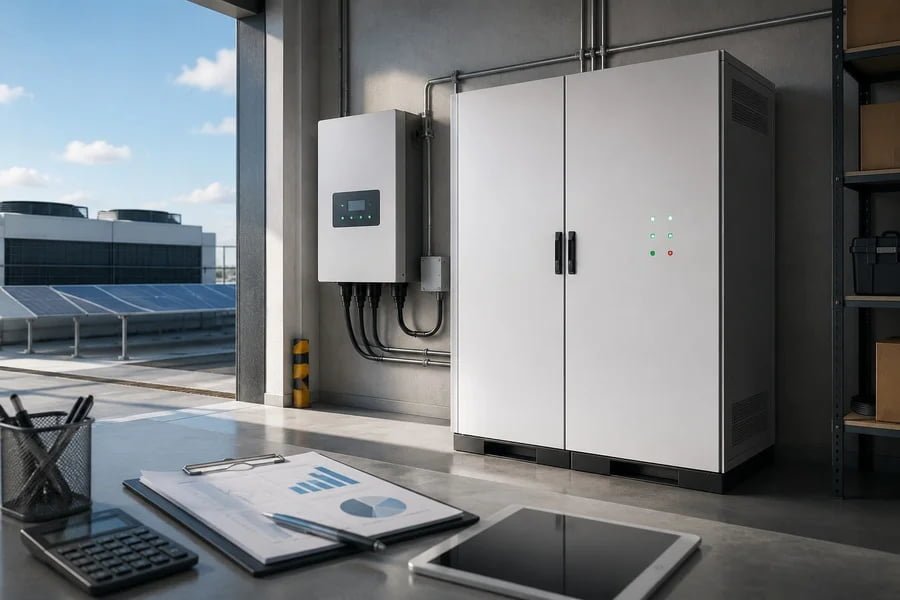
](https://voltcrave-battery.com/wp-content/uploads/2026/06/How-Much-Does-a-100kWh-Commercial-Battery-System-Really-Cost-in-2026.jpg)
High energy bills and power instability are threatening your business growth. You need a clear budget, but confusing market quotes make it hard to choose. I will help you understand the real costs.
A 100kWh commercial battery system in 2026 typically costs between $25,000 and $45,000 for the hardware. This price includes the LiFePO4 battery modules, the power conversion system (PCS), and the integrated management software. Final costs depend on certification levels and the specific system configuration you need.
Reading through long technical data sheets is tiring and often leads to more confusion. I have broken down the pricing details so you can make a fast and safe decision for your project.
How much does a 100kwh battery storage system cost?
Planning a commercial project without knowing the full system price is risky. Unseen costs can quickly eat your profit margins. You need a reliable estimate to secure your investment and project approval.
In 2026, the cost for a complete 100kWh battery storage system usually falls between $250 and $450 per kilowatt-hour. This range covers the "all-in-one" cabinet solutions. These systems include batteries, an inverter, cooling systems, and fire protection all in one package.
Understanding the Full System Price
When I talk to procurement managers, they often ask why prices vary so much. The answer lies in the level of integration. A fully integrated system is easier to install but costs more upfront. A modular system might look cheaper but requires more work on-site. In my years of looking at production data, I have seen that manufacturing scale is the biggest driver of cost. Factories with dozens of automated lines can lower the price per unit by reducing waste and labor hours.
The hardware usually makes up about 70% of the total project cost. The rest goes to shipping, taxes, and local labor. If you are buying for a factory or a large farm, you should look for systems that are already tested and certified. This saves money during the inspection phase of your project.
Major Cost Components of a 100kWh System
| Component | Estimated Cost (USD) | Function in the System |
|---|---|---|
| Battery Modules (LFP) | $15,000 - $22,000 | Stores the energy for later use |
| Power Inverter (PCS) | $5,000 - $8,000 | Converts power for building use |
| Cabinet & Thermal Management | $3,000 - $6,000 | Keeps batteries at safe temperatures |
| BMS & Control Software | $2,000 - $4,000 | Balances cells and tracks performance |
| Safety & Fire Suppression | $1,000 - $3,000 | Prevents and manages fire risks |
Why Quality Certifications Impact the Price
You might see very low prices from some suppliers. Often, these products lack international certifications like CE, UL, or FCC. While they seem like a bargain, they can be very expensive in the long run. Without these documents, you might fail your local fire inspection. This means you cannot connect to the grid. I always recommend checking for at least 500+ global certifications across the manufacturer's range. This ensures the product meets safety standards in Europe, the Middle East, and Southeast Asia.
Efficiency and Production Volume
The cost is also linked to how many units the factory makes. If a supplier has a monthly capacity of 500,000 units, their buying power for raw materials is huge. They can get lithium and copper for less money. This savings is usually passed on to you. I suggest looking for partners who own their supply chain and have hundreds of patents. This shows they are not just assembling parts but are actually innovating to make the system cheaper and better.
How much does a 100kWh battery cost?
Buying just the battery packs might seem like a way to save money. However, a battery without a brain is just a heavy box. You might end up with parts that do not talk to each other.
The price of the 100kWh battery modules alone is about $13,000 to $18,000 in 2026. This is the price for Grade A LiFePO4 cells in a pack format. This does not include the inverter, the outer housing, or the cooling system required for operation.
Cells versus Modules
I often see buyers confuse the price of raw cells with the price of a battery pack. A pack includes the cells, the internal wiring, and a local Battery Management System (BMS). In 2026, the market has moved almost entirely to LiFePO4 (Lithium Iron Phosphate). This chemistry is safer than NCM and lasts much longer.
When you look at the battery cost, you must look at the cycle life. A battery that costs $15,000 but only lasts 2,000 cycles is more expensive than a $18,000 battery that lasts 6,000 cycles. I always calculate the "cost per cycle" to find the real value. High-quality packs from large manufacturers usually offer better cycle life because they use more precise automated assembly lines.
Battery Quality Comparison
| Feature | Grade A Battery Pack | Grade B / Refurbished Pack |
|---|---|---|
| Expected Cycle Life | 6,000 - 8,000 cycles | 2,000 - 3,000 cycles |
| Safety Features | Built-in BMS with cell balancing | Minimal protection |
| Capacity Stability | Stays above 80% for 10 years | Drops quickly after 3 years |
| Certifications | UL, CE, UN38.3, MSDS | Often missing or fake |
The Role of the BMS
The BMS is the most important part of the 100kWh battery. It prevents the battery from overcharging or getting too hot. A cheap BMS can lead to a total system failure. In my experience, spending an extra 5% on a high-end BMS pays for itself by preventing just one service call. Most top-tier suppliers now have hundreds of R&D engineers focused only on BMS software. They use data from thousands of existing sites to make the battery last longer.
Customization and OEM Options
If you are a distributor, you might want your own logo or specific colors. This is called OEM or ODM service. Some large factories can do this for a small extra fee if you buy in bulk. They can change the battery's shape or the way it connects to the inverter. This helps you build your own brand in your local market. I find that customers in Europe and Australia value this brand identity highly. It makes your business look more professional and established.
Will the lithium price go up in 2026?
Market changes can make your project budget outdated in just a few months. You do not want to buy at the peak of the market. Understanding the future of lithium prices is key to your timing.
Lithium prices are expected to be stable in 2026. While demand for batteries is growing, the supply of raw lithium has increased significantly. New mining projects and better recycling technology have balanced the market. Prices will not see the massive spikes that occurred in 2022.
The Global Supply Chain in 2026
I keep a close eye on the supply chain in major hubs like Dongguan and the Yangtze River Delta. These areas have built a very strong network for battery production. In 2026, we see a more "circular" economy. This means old batteries are being recycled to create new ones. This reduces the need for new mining and keeps the price of the raw materials steady.
The manufacturing process is also getting more efficient. When a company has over 300 R&D experts, they find ways to use less lithium per kilowatt-hour. They improve the energy density of the cells. This means you get more storage for the same amount of material. This technical progress acts as a shield against price increases.
Factors Stabilizing Prices
- New Mining Sites: Mines in Australia, Africa, and South America are now in full production.
- Sodium-Ion Batteries: This new technology is taking over low-end storage, which leaves more lithium for high-end commercial systems.
- Automation: Factories with 30+ automatic lines have very little material waste, which helps lower the overall cost.
- Inventory Levels: Most major suppliers now keep larger stocks of finished cells to prevent price jumps during high demand.
Estimated Price Trends for LiFePO4
| Year | Market Condition | Price Impact |
|---|---|---|
| 2022 | Shortage | Very High Prices |
| 2024 | Correction | Rapidly Falling Prices |
| 2025 | Maturity | Slow Price Decline |
| 2026 | Stability | Steady, Low Prices |
Why You Should Not Wait Forever
Some people think prices will drop to zero. This is not true. The cost of the raw material is only one part of the price. You still have to pay for the high-tech manufacturing, the 800+ patents, and the international shipping. In my opinion, 2026 is the "sweet spot." The technology is mature, the supply is high, and the certifications are standardized. Waiting longer might only save you 1% or 2%, but you will lose years of energy savings from the system itself.
How much does a commercial BESS cost?
Hardware is only one part of the story. If you ignore the total cost of ownership, your project might fail. You need to look at the "all-in" price to understand your return on investment.
A total commercial BESS installation for 100kWh usually costs between $35,000 and $60,000 in 2026. This total includes the hardware, shipping, customs duties, local permits, and the electrical labor required for the final hookup to your building.
Breaking Down the Soft Costs
Soft costs are the parts of the budget that do not involve the battery itself. These are often the biggest surprise for new buyers. For example, shipping a heavy 100kWh unit across the ocean can cost several thousand dollars. Then you have the local electrician. They need to be trained on high-voltage DC systems. I suggest looking for suppliers who provide very clear installation manuals and remote technical support. This reduces the time your electrician needs to spend on-site.
Installation costs can vary by region. In Europe or Australia, labor is expensive. In Southeast Asia or the Middle East, it might be cheaper. But no matter where you are, you need a system that is easy to set up. Many modern BESS units use a "modular design." This means the unit arrives in pieces that are easy to move with a standard forklift.
Estimated "All-In" Project Costs
- Hardware (100kWh Unit): $30,000
- Shipping & Insurance: $2,500
- Import Duties & Taxes: $3,000 (varies by country)
- Local Permits & Engineering: $2,000
- Electrical Labor & Materials: $5,000
The Importance of Compatibility
In my work, I have seen many projects fail because the battery and the inverter did not talk to each other. This is a common pain point for solar installers. When you buy a complete BESS, the manufacturer has already tested the communication protocols. This "plug-and-play" feature is worth a lot of money. It prevents weeks of troubleshooting. Look for suppliers who have a dedicated R&D team that tests compatibility with all major inverter brands.
Long-Term Maintenance and ROI
A commercial battery system should be a 10 to 15-year investment. You should factor in a small amount for annual maintenance. This usually just involves cleaning the air filters and checking the cable connections. If you choose a system with 6,000+ cycles, your cost per year is very low. Most businesses find that the system pays for itself in 4 to 6 years through peak shaving and backup power. This makes the $40,000 or $50,000 initial cost very reasonable when spread over a decade of use.
My insights: Navigating the 2026 Price Landscape for 100kWh Commercial Storage
Rising energy costs and demand charges drain commercial profits. Without clear 100kWh storage pricing, investment feels like a gamble. Our 2026 guide provides the transparent data needed to optimize ROI.
In 2026, a 100kWh commercial battery system costs between $25,000 and $65,000 for a turnkey installation, averaging $250–$500 per kWh. While hardware prices have dropped, total costs include inverters, fire protection, and permitting. After federal incentives like the 30% ITC, net costs often fall to even more competitive levels.
Beyond the Battery: Understanding Total System Value and ROI Factors
The true cost of a 100kWh system in 2026 is no longer dictated solely by battery cells; it is defined by the integration of hardware, software, and compliance. Lithium Iron Phosphate (LFP) remains the industry standard because its thermal stability and 10+ year cycle life offer the lowest total cost of ownership. While global hardware prices have plummeted toward $117/kWh, "soft costs"—including engineering, EPC labor, and complex grid interconnection—now represent a significant portion of the total budget.
Strategic Cost Drivers
When budgeting, distinguish between a "raw pack" and a "turnkey system." A turnkey solution includes the Power Conversion System (PCS), Energy Management System (EMS), and fire suppression. A cheaper system might lack the sophisticated EMS required for complex peak shaving or time-of-use (TOU) arbitrage, which can actually extend your payback period despite the lower upfront price.
2026 Commercial Storage Cost Breakdown
| Cost Component | Est. % of Total | Impact on ROI |
|---|---|---|
| Battery Modules (LFP) | 40-50% | Determines capacity and safety. |
| PCS & Inverter | 15-20% | Affects round-trip efficiency. |
| BMS/EMS Software | 5-10% | Essential for demand-charge savings. |
| EPC & Installation | 20-30% | Varies by site complexity and local codes. |
In summary, while the initial investment remains substantial, the combination of falling hardware costs and 30% federal tax credits makes the 100kWh system a high-value asset for businesses seeking energy independence.
Conclusion
A 100kWh commercial battery system in 2026 costs between $25,000 and $45,000 for hardware. Stable lithium prices and high manufacturing capacity make this a safe and profitable investment for businesses.
](https://voltcrave-battery.com/wp-content/uploads/2026/06/What-Are-the-Conditions-Necessary-for-Energy-Storage-768x512.jpg)
](https://voltcrave-battery.com/wp-content/uploads/2026/06/What-are-the-Best-Solar-Batteries-for-Home-Backup-in-2026-768x512.jpg)
](https://voltcrave-battery.com/wp-content/uploads/2026/06/Stationary-Storage-Battery-Key-Guardians-of-Energy-Security-768x512.jpg)