

](https://voltcrave-battery.com/wp-content/uploads/2026/06/Stationary-Storage-Battery-Key-Guardians-of-Energy-Security.jpg)
Energy security is no longer only about fuel supply. It is also about whether electricity can stay reliable, affordable, and available when the grid faces pressure.
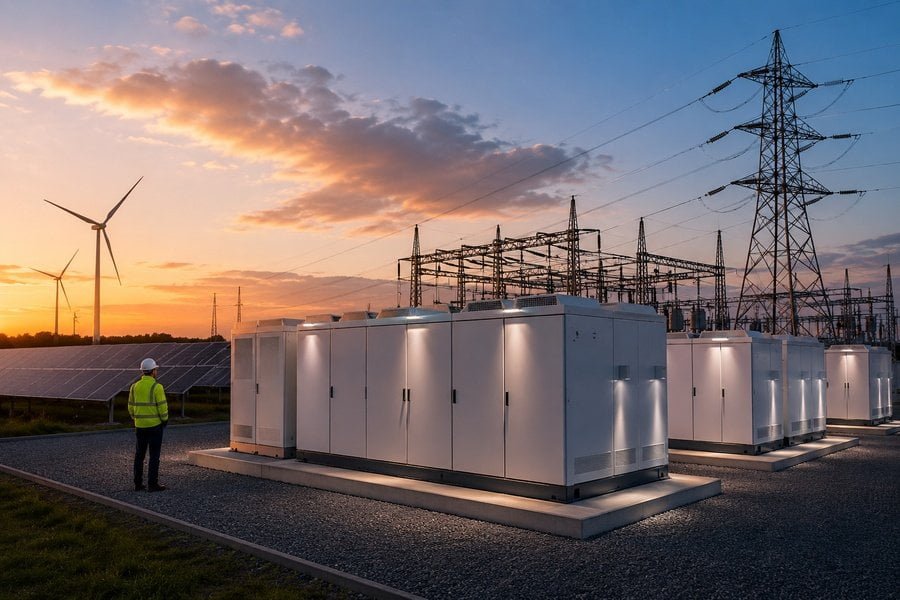
A stationary storage battery is important for energy security because it stores electricity when supply is strong and releases it when demand rises, renewable output drops, or the grid needs fast support.
Stationary storage batteries add flexible support between power generation and use, improving electricity reliability, renewable integration, emergency backup, and price stability without replacing the grid.
What Are the 4 Pillars of Energy Security?
Energy security is often explained through four connected ideas: availability, accessibility, affordability, and acceptability. These four pillars help me judge whether an energy system is strong or fragile.
The 4 pillars of energy security are availability, accessibility, affordability, and acceptability. A stationary storage battery supports these pillars by keeping stored electricity ready, improving local access, reducing peak pressure, and helping cleaner energy enter the grid.
Availability means power must be there when needed
Availability is the first test. A power system may have enough annual generation, but that does not mean electricity is available at the exact hour people need it. Solar power may peak at noon, while demand may peak in the evening. Wind may be strong at night but weak during a hot afternoon. A stationary battery helps close this timing gap.
| Pillar | What It Means | How Stationary Storage Helps |
|---|---|---|
| Availability | Energy supply exists when needed | Stores energy for peak or emergency use |
| Accessibility | Users can reach useful energy | Supports local grids, microgrids, and remote sites |
| Affordability | Energy cost stays manageable | Reduces peak demand and expensive short-term supply |
| Acceptability | Energy system meets social and environmental needs | Supports renewable use and cleaner backup options |
Affordability is also a security issue
Energy security is weak if electricity exists but becomes too expensive during stress. Batteries can help reduce expensive peak-period demand. They can also reduce curtailment of solar and wind, which means more generated clean power can be used instead of wasted. IEA notes that grid-scale storage is one of the flexibility tools needed as power systems decarbonize.
Acceptability cannot be ignored
People also care about safety, land use, noise, and environmental impact. A storage project must be accepted by regulators, communities, insurers, and operators. That means certified equipment, clear fire safety design, and responsible end-of-life planning are part of energy security, not side issues.
What Is the Best Battery Type for Energy Storage?
There is no single best battery for every storage project. The best choice depends on duration, safety needs, cost, climate, cycling frequency, available space, and the grid service required.
For many stationary energy storage projects, lithium iron phosphate batteries, also called LFP or LiFePO4 batteries, are widely preferred because they offer good safety, long cycle life, stable performance, and strong cost potential.
LFP is strong for stationary storage
Stationary systems do not need the lightest battery possible. They need safety, durability, stable output, and good lifecycle cost. This is why LFP has become common in stationary battery energy storage systems. NREL’s 2024 residential battery storage data notes that LFP became the primary chemistry for stationary storage starting in 2021.
| Battery Type | Strength | Limitation | Common Use |
|---|---|---|---|
| LFP / LiFePO4 | Safer chemistry, long cycle life, stable cost | Lower energy density than some chemistries | Residential, commercial, utility BESS |
| NMC lithium-ion | High energy density | More safety and material concerns | EVs, compact systems |
| Lead-acid | Mature and low upfront cost | Shorter life, lower usable capacity | Backup and legacy systems |
| Flow battery | Long-duration potential, scalable energy capacity | Higher complexity and lower market maturity | Long-duration stationary storage |
| Sodium-ion | Lower material pressure, emerging potential | Still developing at scale | Future stationary storage applications |
The best battery is the one that fits the duty cycle
I would not choose a battery only by name. I would first ask: How many hours must it discharge? How often will it cycle? Will it support backup power, peak shaving, solar self-consumption, or grid services? Will it operate indoors, outdoors, in heat, or in cold?
For most commercial and grid-connected stationary storage systems, LFP is a strong default choice. But the project still needs a proper battery management system, thermal control, inverter matching, fire protection, and clear operating limits. A good chemistry can still fail inside a poor system.
What Are the 4 A’s of Energy Security?
The 4 A’s of energy security are another way to describe the same core framework: availability, accessibility, affordability, and acceptability. This framework is widely used to look at energy systems beyond simple fuel supply.
The 4 A’s of energy security are availability, accessibility, affordability, and acceptability. Stationary storage batteries support all four by making electricity more flexible, local, cost-aware, and compatible with cleaner energy systems.
The 4 A’s explain why storage matters
Availability asks whether power exists at the right time. Accessibility asks whether the user can actually receive it. Affordability asks whether the cost is stable and reasonable. Acceptability asks whether the solution fits safety, environmental, and social expectations.
| 4 A’s | Storage Battery Contribution |
|---|---|
| Availability | Stores electricity for evening peaks, outages, or low renewable output |
| Accessibility | Can be placed near homes, businesses, factories, and remote sites |
| Affordability | Helps reduce demand charges, peak prices, and diesel dependence |
| Acceptability | Enables more renewable power and cleaner backup strategies |
Stationary batteries turn energy into a managed resource
Without storage, electricity usually has to be generated and consumed almost at the same moment. With storage, electricity becomes easier to manage across time. This is one reason I call stationary storage batteries guardians. They do not create energy from nothing. They protect useful energy from being wasted at the wrong time.
Clean energy storage can also support transmission and distribution infrastructure by reducing congestion and improving operational flexibility. This matters because energy security is not only a national policy term. It also appears at the site level. A factory that avoids downtime has better energy security. A telecom station with backup storage has better energy security. A solar project with batteries can deliver more useful electricity.
What Are the Three Pillars of Energy Security?
Some discussions simplify energy security into three pillars: reliability, affordability, and sustainability. This version is easier for many businesses to use because it connects directly with daily energy decisions.
The three pillars of energy security are often described as reliability, affordability, and sustainability. A stationary storage battery supports these pillars by improving backup capacity, reducing peak pressure, and increasing the useful share of renewable electricity.
Reliability comes first
Reliability means electricity must continue when the system is under stress. A stationary storage battery can respond quickly when demand changes or renewable output drops. It can also support critical loads during an outage when it is designed as part of a backup or microgrid system.
Affordability needs smart operation
A battery does not save money just because it is installed. It saves money when it charges and discharges at the right time. For a commercial site, this may mean reducing peak demand. For a solar project, this may mean shifting midday solar into evening use. For a grid project, this may mean supporting capacity, frequency response, or congestion relief.
Sustainability depends on full lifecycle thinking
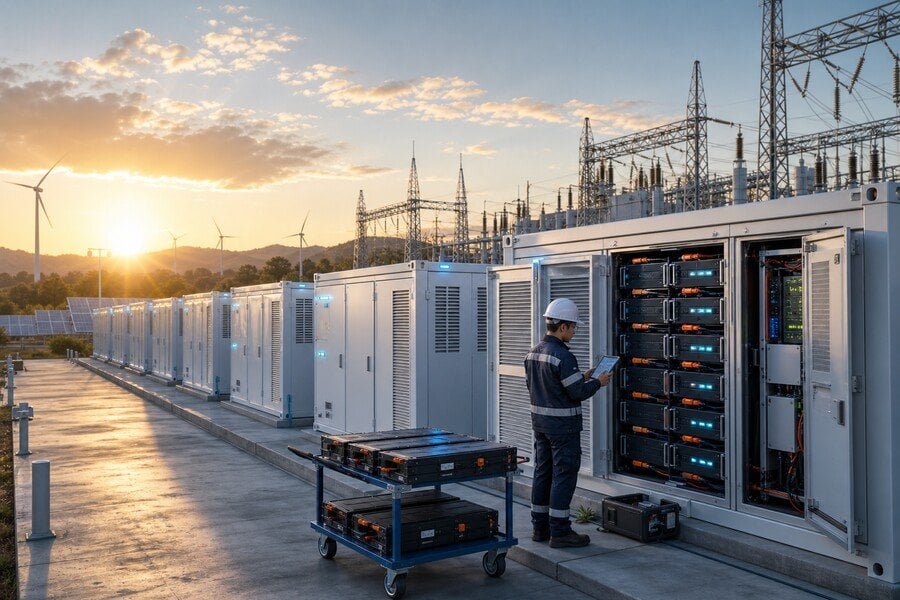
Batteries help increase renewable energy use, but sustainability also depends on safe manufacturing, responsible minerals, long service life, recycling, and proper system design. A short-lived or poorly operated system may not deliver the expected environmental value.
| Three-Pillar View | What I Check in a Storage Project |
|---|---|
| Reliability | Backup time, response speed, critical load design |
| Affordability | Payback logic, tariff structure, operating strategy |
| Sustainability | Battery life, safety, recycling, renewable integration |
A stationary storage battery is strongest when it supports all three pillars at once. A system that is reliable but too expensive may not scale. A system that is cheap but unsafe will lose trust. A system that supports clean energy but lacks backup value may not solve the user’s real problem.
My Insights: Why Are Stationary Storage Batteries Key Guardians of Energy Security
Stationary storage batteries are key guardians of energy security because they protect the grid from timing gaps, local outages, renewable variability, and peak demand stress. They turn electricity into a controllable asset.
The core value of a stationary storage battery is not only backup power. Its deeper value is controlled flexibility. It helps energy systems stay available, accessible, affordable, and acceptable when demand, weather, grid limits, or market prices change.
Storage guards the time gap
The biggest weakness of many energy systems is not total energy supply. It is timing. A region may produce enough solar energy during the day but still face evening grid pressure. A battery protects that energy by moving it from the wrong time to the right time.
Storage guards critical loads
Hospitals, data centers, telecom sites, farms, factories, and residential communities cannot treat power interruptions as minor problems. A stationary battery can keep key loads running while generators start, while the grid recovers, or while a microgrid switches operating mode.
Storage guards renewable investment
Solar and wind projects become more valuable when their output can be stored and dispatched. Battery storage helps reduce wasted renewable electricity and makes clean power more useful for real demand patterns. This supports both sustainability and security.
Storage guards the grid from stress
Peak demand can overload local equipment. Transmission congestion can limit power delivery. Sudden changes in generation can force grid operators to react fast. A stationary battery can respond quickly, which gives the grid more room to breathe.
Storage must also be guarded by safety standards
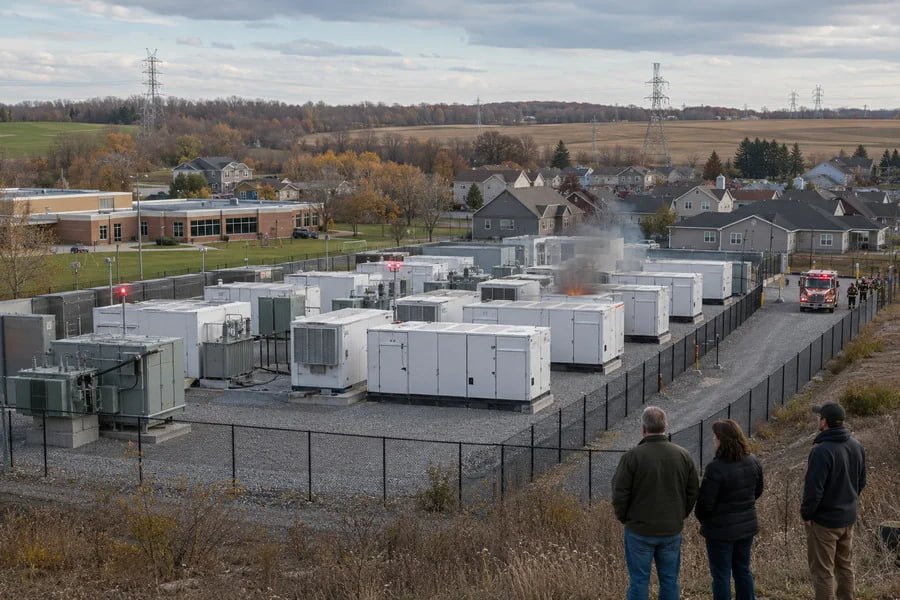
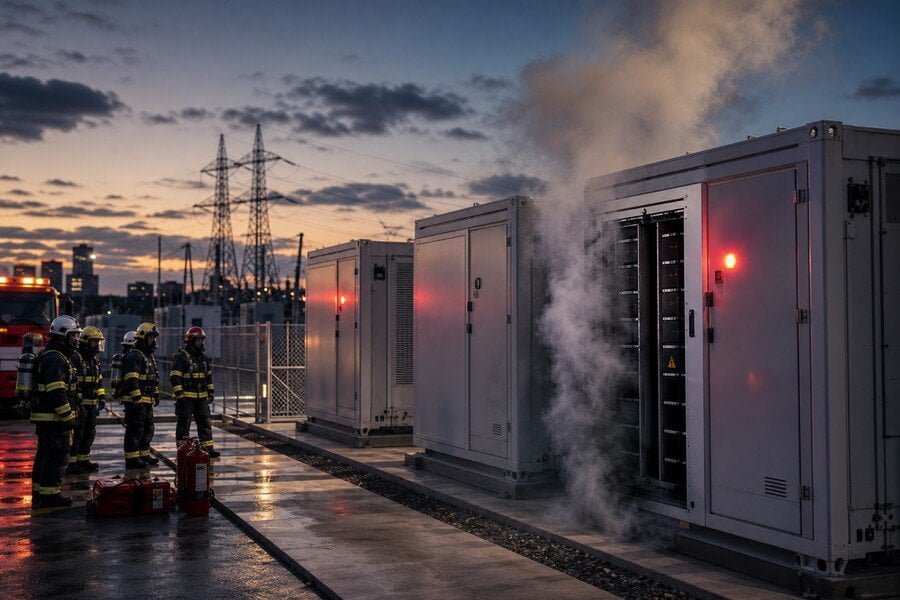
A battery that protects energy security must itself be safe. UL 9540A is designed to meet strict fire safety and building code requirements for battery energy storage systems. NFPA 855 provides minimum requirements for mitigating hazards associated with energy storage systems.
| Security Role | What the Battery Protects |
|---|---|
| Time shifting | Protects renewable energy from being wasted |
| Backup power | Protects critical loads from outages |
| Peak shaving | Protects the grid from demand spikes |
| Frequency response | Protects grid stability |
| Local resilience | Protects communities and businesses from disruption |
I think the most useful way to understand stationary storage is simple: it is not just a box of batteries. It is a security device for the electricity system. It stores options. It gives operators more choices. It gives users more control. It gives renewable energy more value. And when it is designed safely, it gives communities more confidence in the energy transition.
Conclusion
Stationary storage batteries guard energy security by adding flexibility, backup, and control. They help power systems stay reliable, affordable, and cleaner under real-world stress.
](https://voltcrave-battery.com/wp-content/uploads/2026/06/What-Are-the-Negatives-With-Battery-Storage-Facilities-768x512.jpg)
](https://voltcrave-battery.com/wp-content/uploads/2026/06/How-Long-Do-Grid-Storage-Batteries-Last-768x512.jpg)
](https://voltcrave-battery.com/wp-content/uploads/2026/06/What-Are-the-Dangers-of-Lithium-Battery-Storage-Facilities-768x512.jpg)