
](https://voltcrave-battery.com/wp-content/uploads/2026/06/What-Are-the-Pros-and-Cons-of-Solar-Energy-Storage.jpg)
Solar panels can cut energy costs, but they do not solve every power problem alone. Storage adds control, but it also adds cost and complexity.
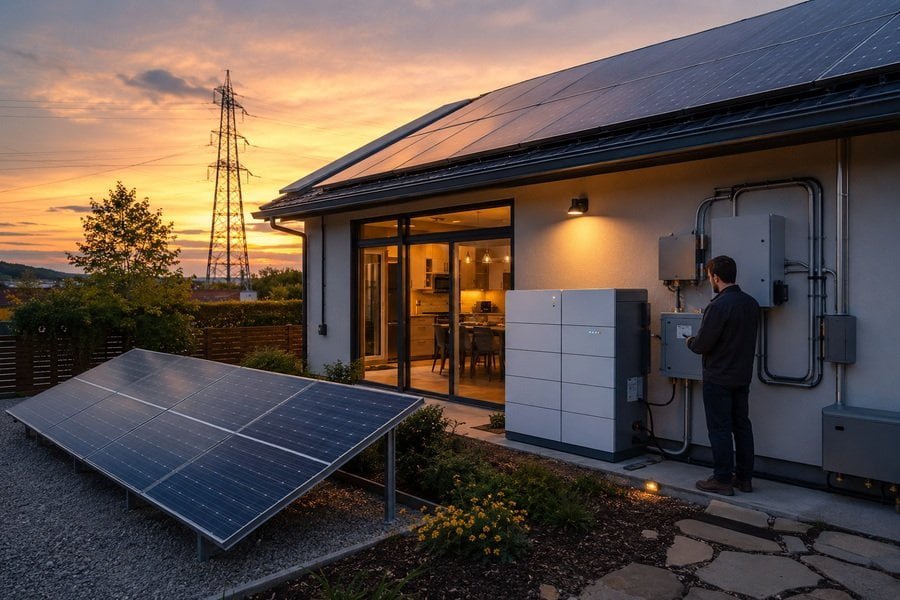
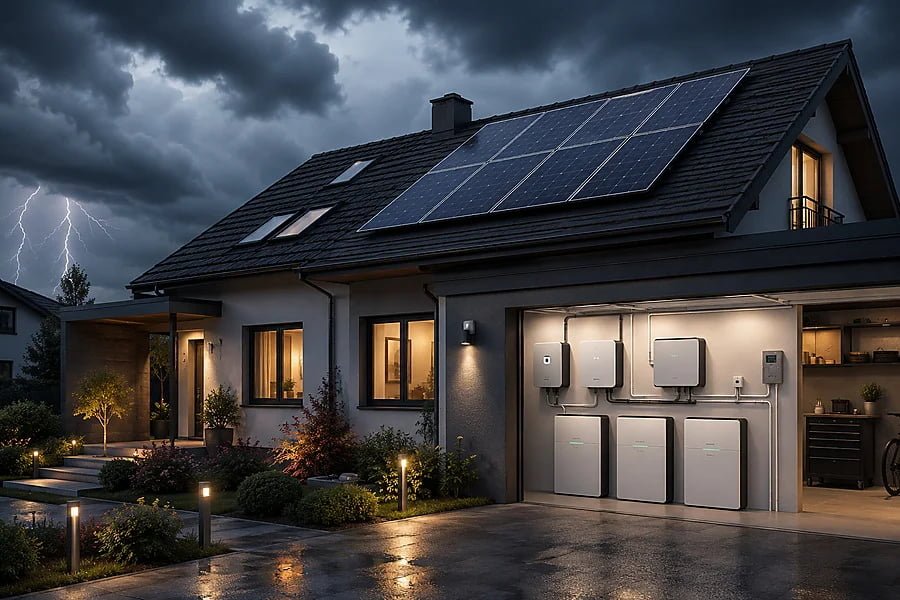
Solar energy storage helps store excess solar power for later use, reduce grid dependence, support backup power, and improve solar self-consumption. Its main drawbacks are high upfront cost, battery degradation, limited backup duration, installation complexity, and the need for safe system design.
Solar energy storage gives users more control and backup power, but it must be properly sized, installed, and operated to deliver reliable value.
What Are 5 Cons of Solar Energy?
Solar energy is clean and useful, but it has real limits. These limits become easier to manage when solar is paired with storage, but they do not disappear.
The five main cons of solar energy are intermittent output, high upfront cost, space requirements, lower production at night or in poor weather, and dependence on local utility rules. Solar energy storage can reduce some of these problems, but it adds battery cost and maintenance concerns.
Solar does not always produce when power is needed
Solar panels produce the most power when sunlight is strong. Many homes and businesses use more electricity in the evening, when solar production drops. This creates a timing gap. A battery can store extra daytime solar and release it later, but the battery must have enough usable capacity.
| Solar Energy Con | How Storage Helps | What Still Needs Attention |
|---|---|---|
| Intermittent output | Stores daytime solar for later use | Battery may not cover long cloudy periods |
| No night production | Discharges stored solar at night | System must be sized for evening load |
| High upfront cost | Can improve self-consumption value | Battery increases total project cost |
| Space limits | Uses more solar energy from the same array | Battery needs safe installation space |
| Utility policy limits | Reduces low-value exports | Savings depend on tariffs and rules |
Storage adds value, but it also adds responsibility
I do not see solar storage as a simple add-on. It changes the whole system design. A solar-only system mostly needs panels, inverters, wiring, mounting, and grid connection. A solar-plus-storage system also needs a battery, battery management system, battery inverter or hybrid inverter, protection devices, communication controls, and safe operating limits.
The benefit is clear. Storage can make solar power more useful during outages and at night. The DOE also states that its solar office aims to enable solar energy with storage to support grid reliability, resilience, and security. But the drawback is also clear. More equipment means more design work, more cost, more space, and more parts that must work together.
The real question is not “Is solar good?”
The better question is, “Does this site have the right conditions for solar storage?” A home with high evening use, time-of-use pricing, frequent outages, and low export credits may benefit a lot. A site with cheap grid power, strong net metering, low outage risk, and low evening demand may not need storage right away.
What Is the 20% Rule for Solar?
Many people say “20% rule,” but in solar installation, the common term is the “120% rule.” It is about electrical panel safety, not battery savings.
The solar 120% rule limits how much solar backfeed can be connected to an electrical panel. In simple terms, the main breaker plus the solar breaker usually cannot exceed 120% of the panel busbar rating, unless another approved interconnection method is used.
The rule protects the panel from overload
A panelboard has a busbar rating. That rating tells electricians how much current the panel is designed to handle. If solar power feeds into the panel while the grid also feeds the panel, the combined current can create a safety risk if it exceeds the panel’s safe design limits.
Greentech Renewables explains the calculation as 120% of the bus rating minus the main breaker rating. For example, a 200A panel with a 200A main breaker leaves 40A of room under the 120% calculation.
| Example Item | Rating |
|---|---|
| Panel busbar rating | 200A |
| 120% of busbar rating | 240A |
| Main breaker rating | 200A |
| Remaining allowance for solar backfeed | 40A |
Storage can affect the design path
Solar storage does not remove electrical code requirements. A battery system still needs proper interconnection, overcurrent protection, inverter settings, and approval from the authority having jurisdiction. The design may use a load-side connection, supply-side connection, line-side tap, main breaker derate, subpanel, backup loads panel, or other approved method.
I treat this rule as a planning condition. Before talking about battery size, I want to know the main panel rating, available breaker space, utility rules, local code requirements, and whether the site needs backup circuits. A strong battery may be useless if the electrical design cannot safely connect it.
The rule is not the same everywhere
The exact method depends on local code adoption, utility standards, equipment listing, and inspector approval. This is why I do not recommend using online calculations as the final answer. They are useful for early planning, but a licensed solar electrician should confirm the design before installation.
For buyers, the practical lesson is simple. Solar storage is not only an energy product. It is also an electrical system. The project must pass both performance logic and safety logic.
What Did Elon Musk Say About Solar Energy?
Elon Musk has often supported solar energy and battery storage as part of a larger sustainable energy system. His view is usually not “solar alone,” but “solar plus electrification plus storage.”
Elon Musk has argued that solar energy has massive potential, but Tesla’s broader energy view connects solar with battery storage, electrification, and large-scale renewable power. Tesla’s Master Plan Part 3 proposes a sustainable energy economy based on electrification, renewable electricity generation, and storage.
The useful point is the system view
Tesla’s 2023 Master Plan Part 3 says a sustainable global energy economy is technically feasible through end-use electrification and sustainable electricity generation and storage. It also models a future with large renewable power and energy storage needs.
That matters because solar energy has a timing problem. It produces when the sun shines. People and businesses need electricity according to real schedules. Batteries help connect those two patterns.
| Solar View | Storage Role |
|---|---|
| Solar creates clean electricity | Storage saves excess production |
| Electrification increases power demand | Storage helps manage peak periods |
| Renewable output changes with weather | Storage adds flexibility |
| Grid demand changes by hour | Storage shifts energy to better times |
Musk’s solar comments are often about scale
Reports have also quoted Musk saying that the solar energy received by Earth could support a civilization much larger than today’s. I would treat that as a scale argument, not a complete project plan. Large solar potential does not automatically solve transmission, storage, permitting, land use, cost, or grid integration.
This is where solar energy storage becomes important. It helps convert solar potential into usable electricity. Without storage, extra solar can be exported at low value, curtailed, or wasted when the grid cannot absorb it. With storage, that same solar energy can serve evening demand, backup loads, or high-price hours.
Solar storage needs practical thinking
I think the best takeaway is not celebrity opinion. The best takeaway is this: solar energy becomes more powerful when it is paired with a storage and control strategy. A solar array produces energy. A battery decides when that energy becomes useful. A control system decides whether the energy should support the home, the business, the battery, the grid, or backup loads.
Why Is My Electric Bill High If I Have Solar?
A high electric bill after installing solar is common when system output, energy use, billing rules, and usage timing do not match.
Your electric bill may still be high with solar if your system is undersized, your usage increased, your home uses power at night, your utility has fixed charges, your export credits are low, or your system is not producing as expected.
Solar does not always erase the bill
Many solar customers still stay connected to the grid. They buy power when solar production is low and may export extra power when solar production is high. The DOE explains that net metering rules vary by state and utility, and the old idea of the meter simply “running backward” is rarely that simple today.
EnergySage also notes that if a home uses more electricity than the solar system generates, the utility charges for the extra electricity drawn from the grid.
| Reason for High Bill | What It Means | How Storage May Help |
|---|---|---|
| Nighttime usage | Solar is not producing after sunset | Battery can supply evening loads |
| Undersized system | Panels do not cover total usage | Battery helps timing, not total generation |
| Higher consumption | EVs, heat pumps, AC, or appliances increase use | Storage helps only if enough solar exists |
| Fixed charges | Utility fees remain even with solar | Storage usually cannot remove all fees |
| Low export credits | Sold solar is worth less than bought power | Battery can store solar for self-use |
| System fault | Inverter, panel, or monitoring issue | Needs service, not only storage |
Billing policy changes can reduce savings
In some places, exporting solar power is less valuable than using it directly. California’s Net Billing Tariff is one example. The CPUC says customers can maximize savings under the NBT by installing battery storage with generation, so they can use or export stored energy during higher-value hours.
This is why batteries are becoming more important in solar economics. Under strong net metering, a battery may be more about backup power. Under lower export rates and time-of-use pricing, a battery may be central to bill savings.
Storage is not a cure for every high bill
A battery cannot fix every problem. If the solar array is too small, the battery will not create extra energy. If the home uses much more electricity than expected, storage may drain quickly. If the bill is mostly fixed charges, taxes, or loan payments, a battery may not reduce those items. If the solar system is not working correctly, the first step is checking production data, inverter status, and utility meter records.
I usually recommend checking three numbers first: monthly kWh consumption, monthly solar production, and the value of exported power. These numbers show whether the problem is generation, timing, or billing policy.
My Insights: What Are the Real Pros and Cons of Solar Energy Storage
Solar energy storage has strong benefits, but it should be judged by real use cases. The best system is not the biggest battery. It is the battery that solves the right problem.
The main pros of solar energy storage are higher solar self-use, backup power, lower peak-grid dependence, better time-of-use savings, and improved resilience. The main cons are upfront cost, limited duration, battery aging, safety requirements, and more complex installation.
The strongest pro is control
Without storage, solar energy follows the sun. With storage, the user gets more control. A battery can charge at midday and discharge in the evening. It can support backup circuits during outages. It can reduce grid imports during expensive hours. It can also help commercial sites manage peak demand if the system is designed for that purpose.
| Pros of Solar Storage | Why It Matters |
|---|---|
| More solar self-consumption | Less dependence on low export credits |
| Backup power | Critical loads can keep running during outages |
| Peak shaving | Helps reduce demand pressure |
| Time-of-use savings | Uses stored solar when grid rates are high |
| Better resilience | Supports homes, businesses, and microgrids |
The strongest con is cost
The battery adds a large cost to the project. It may improve savings, but payback depends on local tariffs, incentives, outage value, usage profile, and battery life. NREL’s 2024 residential battery storage data uses a representative 5 kW / 12.5 kWh system and notes that lithium-ion batteries, especially LFP for stationary storage, are the main chemistry in its current residential storage modeling.
Cost also includes installation, permits, electrical upgrades, monitoring, and possible replacement in the future. A low battery quote may not be a good quote if it ignores safety design, usable capacity, warranty terms, or backup-load planning.
The practical answer is balanced
I would choose solar energy storage when at least one of these conditions exists: frequent outages, weak or changing net metering, high evening electricity rates, critical backup needs, high self-consumption goals, or commercial peak demand costs.
I would be more cautious when the grid is very reliable, export credits are strong, utility rates are low, the home has low evening use, or the customer expects the battery to eliminate every bill. Solar storage is powerful, but it is not magic. It stores electricity; it does not create new electricity.
The best solar storage project starts with a load profile, not a product catalog. I want to know when electricity is used, when solar is produced, what the utility pays for exports, what the site needs during an outage, and how long backup power must last. After that, battery size and system design become much easier to judge.
Conclusion
Solar energy storage adds control, backup power, and better solar use. Its value is strongest when the battery solves a clear timing, billing, or resilience problem.
](https://voltcrave-battery.com/wp-content/uploads/2026/06/What-Is-the-Most-Efficient-Energy-Storage-System-768x512.jpg)
](https://voltcrave-battery.com/wp-content/uploads/2026/06/How-Long-Do-Grid-Storage-Batteries-Last-768x512.jpg)
](https://voltcrave-battery.com/wp-content/uploads/2026/06/What-are-the-Best-Solar-Batteries-for-Home-Backup-in-2026-768x512.jpg)