
](https://voltcrave-battery.com/wp-content/uploads/2026/06/What-Are-the-Conditions-Necessary-for-Energy-Storage.jpg)
Energy storage sounds simple, but many projects fail when one condition is missing. The battery is only one part of a much larger system.
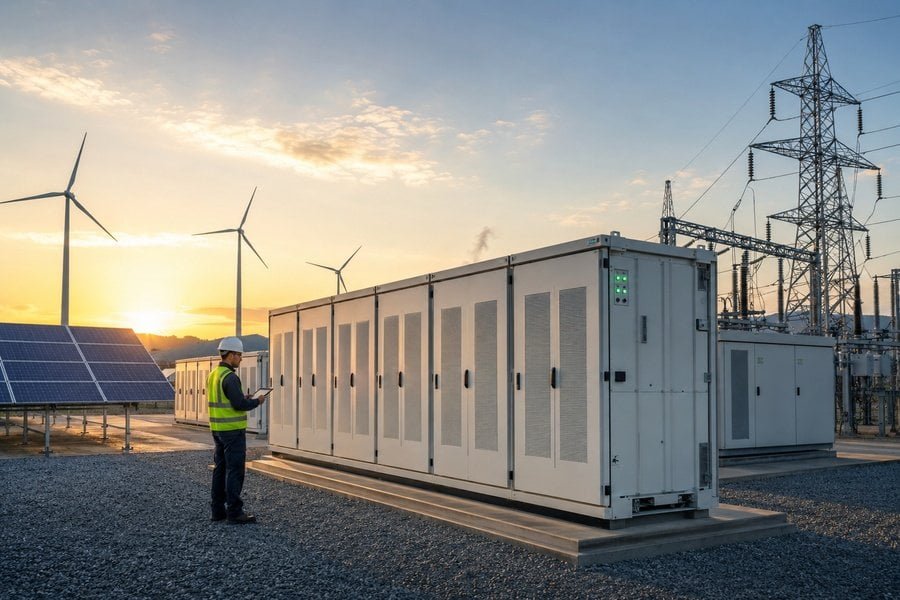
Energy storage needs five basic conditions: a clear energy problem, the right storage technology, safe system design, grid or load compatibility, and a workable economic model. Without these conditions, storage may look useful on paper but perform poorly in real projects.
Energy storage starts with a clear need, then depends on the right technology, safe design, smart control, certification, operation, and long-term value.
What Are the 5 Types of Energy Storage?
Energy storage is not only batteries. Batteries are important, but they are only one part of the storage family. When I evaluate a project, I first ask what kind of energy needs to be stored, how long it must be stored, and how fast it must be released.
The five common types of energy storage are electrochemical, mechanical, thermal, chemical, and electrical or electromagnetic storage. Each type serves a different need, from fast grid response to long-duration energy shifting.
Enel also groups energy storage into these five broad categories.
The storage type must match the job
A lithium battery can respond very fast, so it is useful for short-duration grid services, peak shaving, and solar energy shifting. Pumped hydro can store large amounts of energy, but it needs suitable geography and long development time. Thermal storage can help buildings reduce cooling or heating demand. Hydrogen can store energy for longer periods, but it needs more infrastructure.
| Storage Type | How It Stores Energy | Common Use |
|---|---|---|
| Electrochemical | Batteries store electricity through chemical reactions | Solar storage, BESS, backup power |
| Mechanical | Energy is stored through movement, height, or pressure | Pumped hydro, flywheels, compressed air |
| Thermal | Heat or cold is stored for later use | Building cooling, industrial heat |
| Chemical | Energy is stored in fuels such as hydrogen | Long-duration storage, fuel production |
| Electrical / Electromagnetic | Energy is stored in electric or magnetic fields | Fast response, power quality support |
The condition is not “best technology”; it is “best fit”
I do not think a project should start with the question, “Which battery is best?” A better question is, “What problem must this storage system solve?” A residential solar project may need 5 to 20 kWh of backup storage. A commercial building may need peak shaving and demand charge reduction. A grid-scale project may need hundreds of MWh for renewable integration.
The EIA states that energy storage systems charge from electricity or another energy source and discharge electricity later at desired levels and quality. That means the real condition is functional fit. The system must have enough power capacity, enough energy capacity, suitable discharge duration, safe operating limits, and proper control logic.
What Is the Biggest Battery in the World?
Large battery projects show what energy storage can do at grid scale. They also show why site design, permitting, safety, and grid connection are just as important as battery capacity.
One of the world’s largest battery storage projects is the Edwards & Sanborn solar-plus-storage project in California, with about 3,287 MWh of battery storage capacity. It is connected with a major solar project and supports large-scale renewable energy delivery.
Energy-Storage.news reported that the project became fully online with 3,287 MWh of BESS capacity. NASA also described Edwards Sanborn as having about 3,300 MWh of battery capacity, surpassing Moss Landing as the largest battery storage system in the world at that time.
Big storage needs big conditions
A large battery is not just a bigger version of a home battery. It needs land, transformers, inverters, thermal management, fire detection, grid studies, dispatch software, security, maintenance access, and emergency planning. It also needs a clear revenue model or grid service agreement.
| Condition | Why It Matters for Large BESS |
|---|---|
| Grid interconnection | The project must safely send power into the grid |
| Site suitability | The land must support access, drainage, spacing, and safety |
| Thermal control | Batteries must stay within safe temperature ranges |
| Fire safety planning | First responders need clear response procedures |
| Market or contract value | The project must earn revenue or provide defined grid value |
Size does not guarantee usefulness
I see many people focus on the largest battery. Size is impressive, but it is not the only measure of success. A smaller BESS in the right location can be more valuable than a large battery in the wrong location. A distribution-level battery can reduce local transformer stress. A commercial battery can lower peak demand. A microgrid battery can keep a remote facility running during an outage.
The condition necessary here is grid purpose. A large battery must have a defined role. It may shift solar from midday to evening. It may support grid stability. It may help reduce curtailment. It may provide capacity during peak hours. Without this role, the project becomes expensive hardware without a clear job.
What Is the Necessity of Energy Storage?
Energy storage becomes necessary when electricity supply and demand no longer match easily. This issue grows when grids add more solar, wind, EV charging, heat pumps, data centers, and distributed power systems.
Energy storage is necessary because electricity must be balanced in real time. Storage helps save surplus energy and release it later, which supports reliability, renewable integration, peak demand control, and resilience.
Stanford’s energy storage overview explains that storage helps maintain the balance between energy supply and demand, which can vary by hour, season, and location.
Storage solves a timing problem
Solar power is often strongest at midday. Many homes and businesses need more electricity in the evening. Wind power may be strong at night or during certain weather patterns. Industrial demand may rise suddenly. Grid equipment may face stress during hot days or cold nights.
Energy storage helps move electricity across time.
| Grid Problem | How Storage Helps |
|---|---|
| Solar overproduction | Stores excess solar for later use |
| Evening peak demand | Discharges when demand rises |
| Grid frequency changes | Responds quickly to stabilize power |
| Outages | Provides backup for critical loads |
| Congestion | Reduces pressure on local grid assets |
Storage also solves a control problem
Modern grids need flexibility. Traditional power plants can take time to ramp up or down. Batteries can respond quickly. This makes BESS useful for frequency regulation, voltage support, backup power, and short-duration balancing.
However, storage is not magic. It must be charged before it can discharge. It must be sized correctly. It must be controlled by good software. It must also follow limits on state of charge, cycle life, depth of discharge, and operating temperature.
I believe this is one of the most important conditions for storage: the system must be managed, not just installed. A battery with poor control logic can charge at the wrong time, discharge too early, age faster, or miss the highest-value grid events. A well-managed battery can support the grid and extend its own life.
Why Are People Against BESS?
People are not always against energy storage itself. Many are against poorly explained, poorly sited, or poorly managed BESS projects. Their concerns often come from safety, fire risk, toxic smoke, land use, noise, visual impact, and lack of trust.
People oppose BESS when they worry about fire safety, thermal runaway, emergency response, environmental risk, noise, and project transparency. These concerns do not mean BESS should stop, but they do mean safety and communication must be treated as core project conditions.
The EPA notes that fires at some BESS installations have caused concern in communities considering BESS projects.
Safety must be designed from the start
A safe BESS project needs more than battery cells. It needs battery management systems, thermal monitoring, fire detection, ventilation, spacing, shutdown controls, emergency response plans, and clear site access. EPA guidance recommends considering battery chemistry, manufacturing quality, unit design, BMS analytics, system integration, remote sensors, thermal monitoring, and fire detection.
| Concern | Practical Response |
|---|---|
| Fire risk | Use certified systems, fire testing, spacing, monitoring |
| Toxic smoke | Plan emergency response and site setbacks |
| Noise | Model inverter and HVAC sound before approval |
| Visual impact | Use screening, layout planning, and proper zoning |
| Local trust | Share safety documents and response plans early |
Certification and codes matter
BESS safety depends on recognized standards. UL says UL 9540A is designed to meet strict fire safety and building code requirements for battery energy storage systems. Clean Power states that NFPA 855 outlines minimum requirements for safe design, installation, commissioning, operation, and decommissioning of stationary energy storage systems.
I think community opposition often grows when developers treat permitting as a paperwork step. It should be a trust-building step. Residents want to know what happens during a fire, who responds, what chemicals may be present, how water runoff is managed, and how the project will be monitored. These are fair questions.
A necessary condition for BESS is social acceptance. The system must be safe, and people must understand why it is safe. Clear communication can prevent fear from filling the information gap.
My Insights: What Conditions Are Necessary for Energy Storage?
Energy storage needs more than batteries, cabinets, and inverters. It needs the right operating conditions, the right business case, and the right safety framework. The title question matters because storage only creates value when the whole project environment supports it.
The necessary conditions for energy storage are demand for flexibility, suitable technology, safe site design, compliant installation, reliable controls, grid compatibility, and a clear economic purpose. When these conditions are present, storage can become a useful grid asset instead of a costly backup device.
The first condition is a real flexibility need
A storage project should begin with a problem. The problem may be high peak demand, weak grid reliability, solar curtailment, unstable voltage, high diesel cost, or lack of backup power. If there is no real problem, the storage system will not have a clear purpose.
The second condition is correct sizing
Power and energy are different. Power is measured in kW or MW. Energy is measured in kWh or MWh. A system with high power but low energy can respond quickly but not for long. A system with high energy but low power can run longer but may not support large instant loads.
| Sizing Question | Why It Matters |
|---|---|
| How much power is needed? | Determines peak output |
| How long must it discharge? | Determines energy capacity |
| How often will it cycle? | Affects battery life |
| What is the backup load? | Protects critical equipment |
| What is the charge source? | Defines solar, grid, or hybrid design |
The third condition is safe integration
The battery must work with the inverter, BMS, EMS, transformer, protection devices, and grid rules. Poor integration can cause downtime, alarms, overheating, communication failures, or warranty issues.
The fourth condition is long-term operation
Energy storage is not a one-time installation. It needs monitoring, maintenance, software updates, performance checks, and end-of-life planning. A strong project includes training, spare parts, data access, and clear responsibility between the owner, installer, operator, and supplier.
The fifth condition is economic value
Storage must either save money, earn revenue, reduce risk, or enable another asset to work better. In homes, that value may come from backup power and solar self-consumption. In commercial sites, it may come from demand charge reduction. In grid projects, it may come from capacity, arbitrage, ancillary services, or renewable integration.
The final condition is simple: energy storage must be planned as a system. I would not treat it as a product sitting beside solar panels. I would treat it as a controlled energy asset that needs a reason, a design, a site, a safety plan, and a financial logic.
Conclusion
Energy storage works best when technology, safety, grid needs, and economics align. The right conditions turn storage from equipment into real energy flexibility.
](https://voltcrave-battery.com/wp-content/uploads/2026/06/Commercial-Energy-Storage-Systems-The-Future-of-Reliable-Power-for-Businesses-768x512.jpg)
](https://voltcrave-battery.com/wp-content/uploads/2026/05/What-is-Commercial-and-Industrial-Energy-Storage-768x512.jpg)
](https://voltcrave-battery.com/wp-content/uploads/2026/06/What-Are-the-Pros-and-Cons-of-Solar-Energy-Storage-768x512.jpg)