
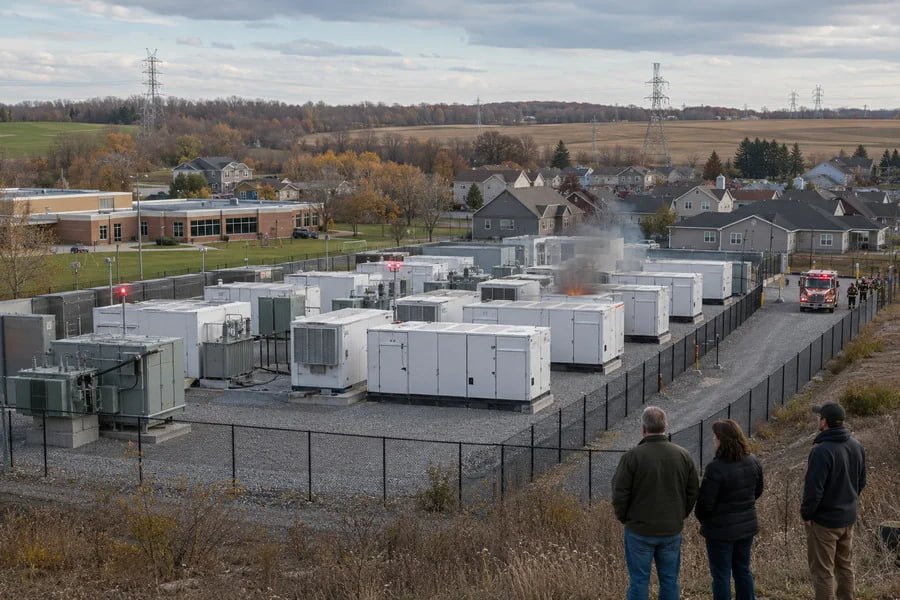
](https://voltcrave-battery.com/wp-content/uploads/2026/06/Commercial-Energy-Storage-Systems-The-Future-of-Reliable-Power-for-Businesses.jpg)
Unstable power grids and rising energy costs put your business at risk. Sudden outages can stop your production and lead to expensive downtime that ruins your bottom line.
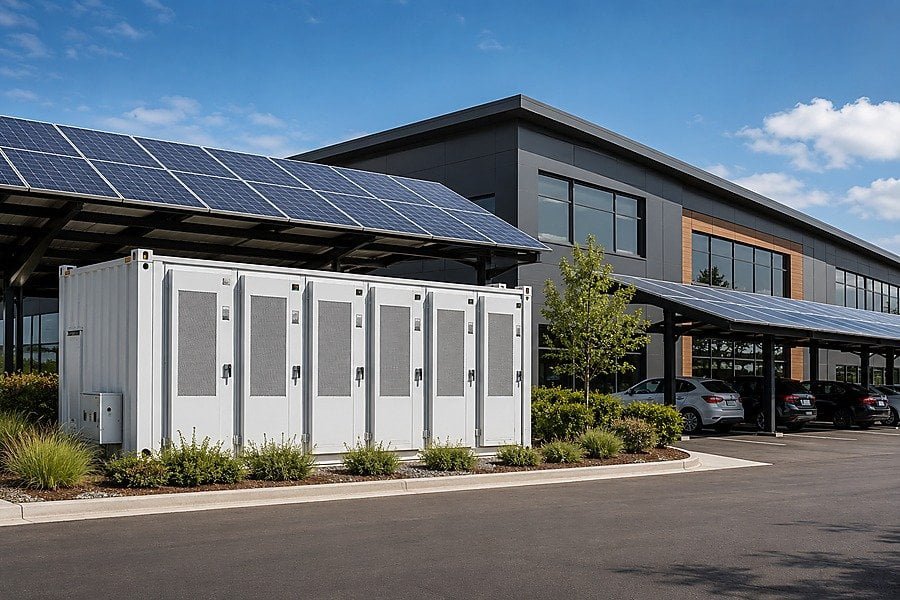
Commercial energy storage systems (BESS) store electricity from the grid or renewable sources to use when needed. They reduce costs by avoiding peak utility rates and providing backup power. These systems are essential for businesses wanting to improve energy reliability and lower their carbon footprint.
I have studied the energy market for a long time to understand how businesses can stay competitive. Managing a large operation requires a steady flow of power that you can trust. If you want to stop worrying about the grid and start controlling your own energy, this guide will show you how.
What battery company is backed by Bill Gates?
Standard batteries often fail to provide enough power for long periods. You might find that your current backup plans are too expensive or not strong enough for a major crisis.
Bill Gates is a major investor in Form Energy through his firm, Breakthrough Energy Ventures. Form Energy is developing a new type of battery called an iron-air battery. This technology can store electricity for up to 100 hours at a very low cost compared to lithium.
Why the world is watching Form Energy
I look at new technology to see which ones will actually work for large businesses. Bill Gates does not just invest in ideas; he invests in things that can scale. Form Energy is special because it uses iron, which is one of the most common metals on Earth. Most batteries today use lithium or cobalt. Those materials are hard to find and very expensive. By using iron, Form Energy can make batteries that are much cheaper to build. This helps businesses store days of power instead of just hours.
The technology of iron-air batteries
The way these batteries work is very interesting. They use a process of "reversible rusting." When the battery gives out power, it turns iron into rust. When it takes in power, it turns the rust back into iron. This simple cycle is very stable. It does not have the same fire risks as some other battery types. For a business owner, this means you can have a very large battery on your site without the same safety worries.
Comparing common battery types
I find it helpful to see how these new technologies compare to what we already know. Most businesses use lithium-ion today, but iron-air is the future for long-term storage.
| Feature | Lithium-Ion Batteries | Form Energy (Iron-Air) |
|---|---|---|
| Main Material | Lithium, Cobalt, Nickel | Iron, Water, Air |
| Storage Time | 2 to 4 hours | 100 hours (4 days) |
| Cost Goal | $150 per kWh | Less than $20 per kWh |
| Safety Level | Moderate risk of fire | Very high safety (non-flammable) |
Impact on business operations
If your business depends on constant power, a four-day battery is a total shift in safety. Most current systems only help you get through a few hours of an outage. Form Energy is building a massive factory right now to start making these at scale. I believe this will change how we think about the "grid." We will no longer be victims of a weak power line. We will have our own power plant sitting right in our yard.
Is Hithium a Chinese company?
It is hard to know which suppliers to trust when the market is full of new names. You need a partner that has the scale and the history to deliver high-quality products.
Yes, Hithium is a Chinese company based in Xiamen. They are a top global manufacturer that focuses only on stationary energy storage products. They do not make batteries for electric cars, which allows them to specialize in high-efficiency systems for commercial and industrial use.
Specializing in energy storage
In my experience, companies that try to do everything often fail to be the best at one thing. Hithium is different because they only care about energy storage systems (ESS). They focus on "stationary" batteries. These are batteries that stay in one place, like a warehouse or a solar farm. Because they have this focus, they have created battery cells that last much longer than standard ones. Their cells can go through thousands of charge cycles before they start to get weak.
Market position and reliability
Hithium has quickly become one of the biggest names in the industry. They are ranked as a "Tier 1" supplier by major energy analysts. This means they are financially stable and their products are high quality.
- Massive Production: They have the factory space to build gigawatts of storage every year.
- Safety Standards: Their products meet all the major international safety certifications.
- Global Offices: Even though they are based in China, they have teams in the US, Europe, and Australia to help customers.
Why Hithium is a strong choice for businesses
I see many businesses looking for a balance between price and performance. Since Hithium is a Chinese company, they have access to the best battery supply chains in the world. This keeps their prices lower than many Western brands. However, they do not cut corners on quality.
Key advantages of Hithium technology
I have broken down why their products stand out in the current market:
- High Energy Density: You can fit more power into a smaller space.
- Long Life: Their batteries are designed to work for 15 to 20 years.
- Thermal Management: They use advanced cooling to keep the batteries safe during hot weather.
- Direct Supply: They work directly with large commercial clients to provide custom solutions.
How much does a 1 MW BESS cost?
Starting a large energy project requires a lot of capital. You might feel overwhelmed by the high price tags you see online. It is important to know exactly what you are paying for before you sign a contract.
A 1 MW (1,000 kW) Battery Energy Storage System (BESS) typically costs between $450,000 and $750,000 for the hardware and installation. The total price varies based on the storage duration (usually 2 or 4 hours), the brand of the cells, and the complexity of connecting it to your building.
Understanding the cost layers
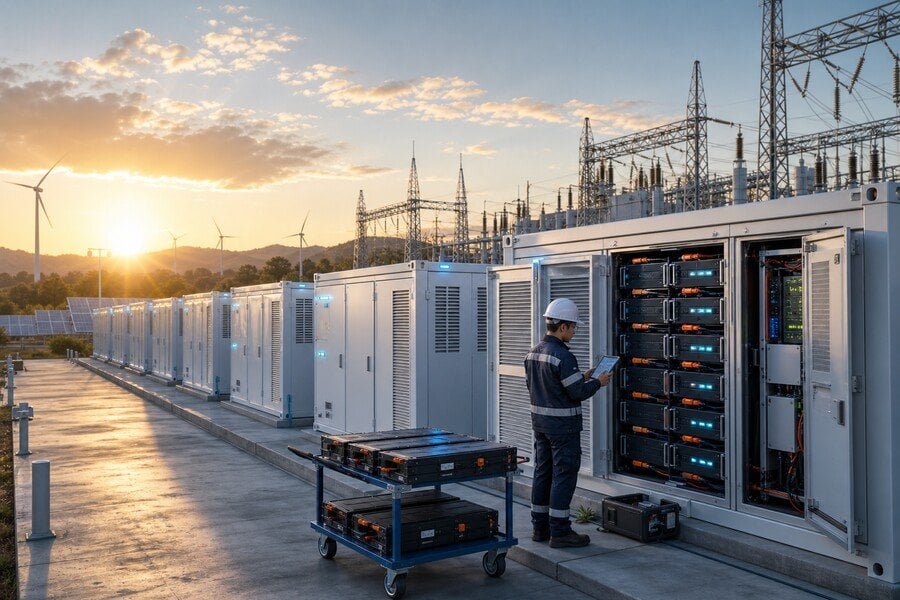
I always tell people that the battery cells are only half the story. When you buy a 1 MW system, you are buying a complete power plant in a box. You have to pay for the "inverter," which is the brain of the system. It changes the battery power into the kind of electricity your machines use. You also have to pay for the "Balance of Plant." This includes the wires, the cooling systems, and the fire protection.
Cost breakdown for a 1 MW system
I have put together a simple table to show where your money goes when you buy a large-scale system.
| Component | Estimated Cost Range | Details |
|---|---|---|
| Battery Racks | $250,000 - $400,000 | The actual cells that hold the power. |
| Inverter/PCS | $80,000 - $120,000 | Converts DC power to AC power. |
| Installation & Labor | $50,000 - $100,000 | Concrete pads, wiring, and labor. |
| Soft Costs | $40,000 - $80,000 | Permits, taxes, and engineering fees. |
How to get your money back
A $600,000 investment sounds like a lot, but it is a tool to save money. Most businesses use these systems for "peak shaving." This means you use the battery when the power company tries to charge you the highest rates. In many cities, these rates are five times higher in the afternoon than at night. By using your own power during these times, your monthly bill can drop by 30% or 40%.
Long-term maintenance costs
You must also think about what happens after the system is installed. I suggest setting aside a small budget for yearly checks. Most systems have a warranty for 10 years, but the software needs updates. You also need to keep the area clean and ensure the cooling fans are working. If you take care of the system, it will continue to save you money for two decades. The "ROI" or return on investment usually happens within 5 to 7 years. After that, the energy you save is pure profit for your company.
What is the holy grail of battery technology?
Current batteries have limits that hold us back. They can be heavy, they can be dangerous, and they eventually wear out. Scientists are searching for a "holy grail" that will make energy storage perfect for every business and home.
The "holy grail" of battery technology is the solid-state battery. Unlike current batteries that use a liquid electrolyte, these use a solid material. This change makes batteries much safer, allows them to hold twice as much energy, and lets them charge in just a few minutes.
The move to solid-state
I believe that solid-state technology will be the biggest change in the energy world. Right now, if a battery gets damaged, the liquid inside can leak and cause a fire. A solid-state battery does not have this liquid. It is a solid block. This means you can put these batteries anywhere without a big fire suppression system. It also means the batteries can be much smaller but still hold the same amount of power.
Why it is not in your office yet
Even though we call it the holy grail, it is still hard to make. It is very expensive to build these batteries in a factory right now. We are still a few years away from seeing them in every commercial building.
- Manufacturing hurdles: Creating a perfect solid layer is difficult at a large scale.
- Cost: Right now, they cost much more than the lithium batteries we use today.
- Durability: Scientists are still making sure the solid layers don't crack over time.
Other exciting technologies
While solid-state is the most famous, I am also watching other ideas. There is no single winner yet.
- Sodium-Ion Batteries: These use salt. They are very cheap and work well in cold weather.
- Flow Batteries: These use tanks of liquid. They are perfect for very large buildings because they never wear out.
- Graphene Batteries: These can charge faster than anything else, but they are still very new.
The future for business owners
When these technologies become cheap, the grid will change forever. Every building will be its own power station. We will store sun and wind energy and never have to pay a utility company again. I am excited for this future because it gives power back to the people who run businesses. We will have more money to grow our companies and less money going to the power company. The holy grail is not just a dream; it is a goal that we are reaching for every single day.
My insights: Commercial Energy Storage: Building Resilient, Cost-Effective Business Infrastructure
Rising energy costs and grid instability threaten productivity. One outage can lose thousands. Commercial Energy Storage Systems (CESS) provide the ultimate solution for cost-saving, sustainable, and unbreakable business power.
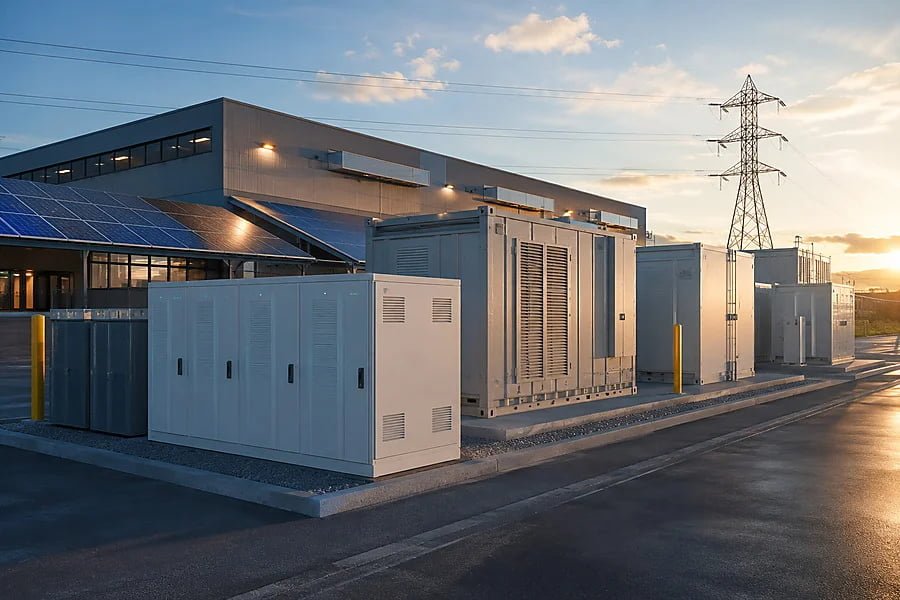
Commercial energy storage systems (CESS) use advanced batteries (like LFP) and AI-driven software to store electricity for later use. They provide businesses with backup power, reduce demand charges, and maximize renewable energy use. By automating energy dispatch, they transform energy from a utility expense into a strategic asset.
Unlocking Strategic Value through Advanced Storage Technology
Modern CESS is more than a battery; it is a sophisticated ecosystem comprising Lithium-ion (LFP) cells, Battery Management Systems (BMS), and AI-driven Energy Management Systems (EMS). This hardware-software synergy allows for "Peak Shaving"—discharging power when grid rates spike—and "Load Shifting," which optimizes energy use based on real-time market pricing.
The Synergy of Hardware and Intelligence
While the Power Conversion System (PCS) ensures seamless energy flow, the real value lies in the EMS. Smart software automates charging during off-peak hours and discharging during demand spikes, drastically reducing "demand charges" that often plague industrial facilities like factories and data centers.
Financial and Operational Resilience
For critical operations, storage is no longer just an emergency backup; it is a strategic hedge against fluctuating utility prices. As battery costs continue to plummet, CESS is becoming a vital piece of modern corporate infrastructure, supporting ESG goals by integrating on-site solar more efficiently.
| Feature | Business Impact | Strategic Outcome |
|---|---|---|
| Peak Shaving | Reduces high-demand utility fees | Direct Cost Savings |
| Grid Backup | Ensures zero downtime during outages | Operational Continuity |
| Solar Integration | Stores excess renewable generation | Sustainability & ESG |
| AI Automation | Optimizes charge/discharge cycles | Maximized ROI |
Conclusion
Commercial energy storage systems are the best way to protect your business from power risks. By investing in this technology today, you secure a reliable and affordable energy future.
](https://voltcrave-battery.com/wp-content/uploads/2026/06/What-Is-a-Commercial-Energy-Storage-System-768x512.jpg)
](https://voltcrave-battery.com/wp-content/uploads/2026/06/How-Long-Do-Grid-Storage-Batteries-Last-768x512.jpg)
](https://voltcrave-battery.com/wp-content/uploads/2026/06/What-Are-the-Negatives-With-Battery-Storage-Facilities-768x512.jpg)