

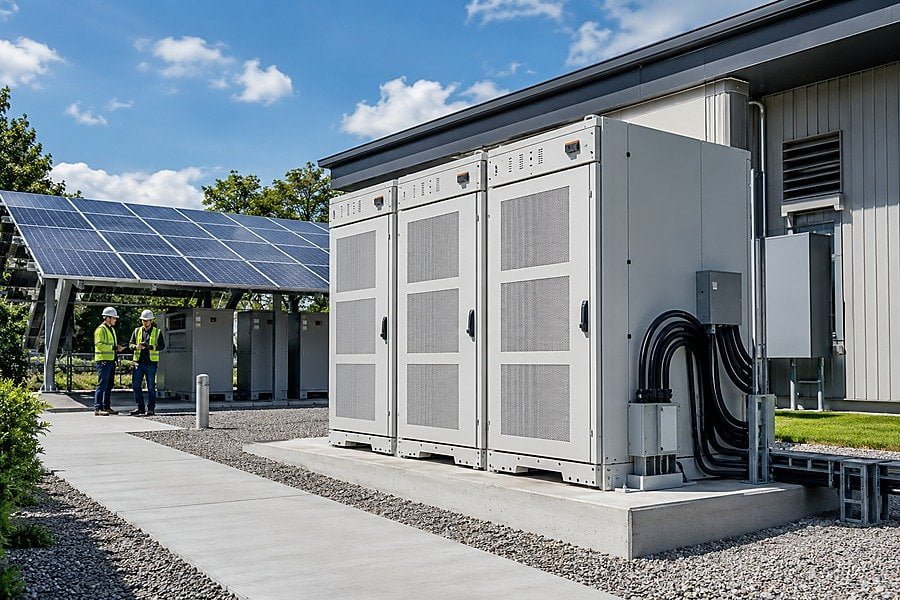
](https://voltcrave-battery.com/wp-content/uploads/2026/06/A-Complete-Guide-to-the-Lifespan-of-Lithium-Ion-Solar-Batteries.jpg)
High costs and sudden system failures make solar energy storage a risky investment for many businesses. If your batteries die early, your project ROI disappears and your clients lose trust in your solutions.
A lithium-ion solar battery typically lasts between 10 and 15 years. This lifespan depends on the chemical composition, the depth of discharge, and environmental temperature. Most high-quality lithium batteries provide between 4,000 and 10,000 charge cycles before their capacity drops below 70% of the original rating.
This guide will help you understand the technical factors that determine how long your energy storage system will actually serve your needs.
What is the lifespan of a lithium-ion solar battery?
Unreliable batteries lead to frequent maintenance and high replacement costs for solar installers. When a system fails after only a few years, it ruins your reputation and cuts into your project profits.
A lithium-ion solar battery usually lasts 10 to 15 years in a residential or commercial setting. Its life is measured in "cycles," with most units offering 6,000 to 8,000 cycles. One cycle equals a full charge and discharge. If used daily, 6,000 cycles theoretically support over 16 years of operation.
The Science Behind Battery Decay
At our R&D center, where we employ over 300 experts, we study how lithium ions move between the anode and cathode. Over time, these ions get trapped or the internal materials degrade. This is a natural process called "capacity fade." It does not mean the battery stops working. It just means it holds less energy than it did when it was new. In my view, a battery is "dead" when it can only hold 60% or 70% of its original charge. For a commercial building or a farm, this reduction can cause power shortages during peak times.
Factors That Shorten Battery Life
Many people think a battery is a "set and forget" device. This is a mistake. Environmental factors play a huge role in performance. If you install a battery in a hot, unventilated room, the chemical reactions inside happen too fast. This leads to early failure. Similarly, discharging the battery to 0% every day puts immense stress on the cells. We have more than 800 patents focused on improving these chemical stabilities, but user behavior still matters.
Comparing Industrial Standards
When I work with system integrators, I emphasize the importance of cell consistency. In our Dongguan and Huizhou facilities, we ensure that every cell in a pack has the same voltage and internal resistance. If one cell is weak, the whole pack dies faster.
| Factor | Impact on Lifespan | Recommended Action |
|---|---|---|
| Temperature | High heat speeds up degradation | Install in a climate-controlled area (15°C - 25°C) |
| Charge Rate | Fast charging generates internal heat | Use a steady, moderate charge rate |
| Depth of Discharge | Deep cycles stress the chemistry | Keep discharge levels above 20% |
| Cycle Frequency | More cycles lead to faster wear | Size the system to avoid multiple cycles per day |
What is the 40-80 rule for lithium batteries?
Constant deep discharging and overcharging cause internal stress that destroys expensive lithium cells. Without a proper management strategy, you will find yourself replacing your entire battery bank much sooner than expected.
The 40-80 rule suggests keeping your battery charge level between 40% and 80% to maximize its lifespan. By avoiding the high-voltage stress of a 100% charge and the chemical instability of dropping below 20%, you can significantly increase the total number of cycles the battery can handle.
Why Voltage Stress Matters
In my professional experience, the most dangerous times for a battery are when it is nearly full or nearly empty. When a lithium battery reaches 100%, the voltage is at its peak. This high voltage creates "parasitic reactions" that consume the electrolyte. On the other end, when a battery drops below 20%, the internal resistance increases and heat builds up. I have seen tests in our labs where batteries kept in the 40-80 range lasted twice as long as those cycled from 0 to 100.
Automated Management Systems
You might wonder how a busy Procurement Director or CEO can manage this rule. The answer lies in the Battery Management System (BMS). We have developed advanced BMS technology that can be programmed to enforce these limits automatically.
- Low-Level Protection: The BMS cuts off power when the battery hits a certain percentage.
- High-Level Protection: The system stops the solar inverter from pushing more power once the "ceiling" is reached.
- Balancing: The BMS ensures that all cells in a series stay at the same voltage within this range.
Performance Gains and ROI
For a business like yours, implementing the 40-80 rule changes the financial outlook of a project. If a battery is rated for 6,000 cycles at 100% Depth of Discharge (DoD), it might reach 10,000 or even 12,000 cycles if you only use the middle 40% of its capacity. This effectively doubles the life of the hardware.
| Strategy | Cycle Life Estimate | Maintenance Need |
|---|---|---|
| Full Cycling (0-100%) | 3,000 - 5,000 cycles | High (Risk of cell imbalance) |
| Partial Cycling (20-90%) | 6,000 - 8,000 cycles | Moderate |
| Optimal Cycling (40-80%) | 10,000+ cycles | Low (Highest stability) |
Which is better, Duracell lithium or Energizer lithium?
Using standard consumer batteries for specialized energy equipment leads to poor data logging and system errors. If your monitoring sensors fail because of low-quality batteries, your entire solar array could go offline without warning.
Energizer Ultimate Lithium is widely considered the superior choice for high-tech and outdoor solar peripherals. It performs better in extreme temperatures ranging from -40°F to 140°F. Duracell Lithium is a strong competitor for indoor devices, but Energizer holds the edge for longevity in high-drain outdoor applications.
Applying Consumer Tech to Industrial Projects
While VoltCrave focuses on large-scale BESS and LiFePO4 packs, I often get asked about the small batteries used in remote sensors and communication hubs. In my travels across Europe and Australia, I have seen many installers make the mistake of using alkaline batteries in outdoor boxes. These leak and destroy the electronics. Lithium AA or AAA batteries from Energizer or Duracell are essential because they do not leak and have a shelf life of up to 20 years.
Extreme Climate Performance
For David’s projects in the Middle East or Northern Europe, temperature is a major concern. Standard batteries fail when it gets too hot or too cold.
- Energizer Ultimate Lithium: This is my recommendation for outdoor solar trackers and weather stations. It is 33% lighter than alkaline and works in extreme heat.
- Duracell Lithium: These are excellent for backup power in indoor control panels. They offer high energy density and are very reliable in stable temperatures.
Choosing for Your Business
When you are procurement for a large project, you need to look at the "Total Cost of Ownership." Saving a few cents on a battery that fails in the winter will cost you hundreds of dollars in a truck roll and technician labor.
| Feature | Energizer Ultimate Lithium | Duracell Lithium |
|---|---|---|
| Weight | Very Light (Best for portable) | Standard Lithium |
| Temp Range | -40°C to 60°C | -20°C to 54°C |
| Leak Resistance | Guaranteed Leak-proof | High Resistance |
| Best Use | Outdoor Solar Nodes | Indoor Controllers |
Can a Lifepo4 battery last 20 years?
Relying on old battery technology like Lead-Acid or standard NMC can lead to safety hazards and frequent replacement cycles. If your storage system fails in year five, your client's investment becomes a liability rather than an asset.
Yes, a LiFePO4 (Lithium Iron Phosphate) battery can last 20 years if it is designed with high-quality cells and managed by a sophisticated BMS. Under "floating" or light-use conditions with controlled temperatures, these batteries can reach 10,000 to 15,000 cycles, which spans two decades of service life.
The Superiority of LiFePO4 Chemistry
At VoltCrave, we specialize in LiFePO4 because it is the safest and longest-lasting lithium chemistry available. Unlike NMC (Nickel Manganese Cobalt) batteries, LiFePO4 does not suffer from thermal runaway. This means it will not catch fire if it is punctured or overcharged. For David’s clients in residential or commercial buildings, safety is the number one priority. Furthermore, the chemical structure of iron phosphate is very robust. It does not break down as easily during the charge and discharge process.
Manufacturing Excellence and Longevity
A 20-year lifespan is not just about the chemistry; it is about how the battery is made. We use 32 automatic production lines to eliminate human error. In my experience, most batteries fail because of poor welds or dust contamination during assembly. By using a fully automated process, we ensure that every connection is perfect. This stability is what allows a battery to function for 20 years without losing its structural integrity.
Requirements for the 20-Year Goal
If you want your BESS or RESS to last 20 years, you must follow a strict installation and maintenance protocol.
- Temperature Control: Keep the battery between 15°C and 25°C.
- Oversizing the Bank: If you only use 30% of the battery's capacity daily, the wear is minimal.
- BMS Monitoring: Use a system with remote technical support so engineers can check the health of the cells every year.
- Quality Inverters: Use a hybrid solar system that manages the charge curve smoothly without voltage spikes.
| Battery Type | Expected Years | Cycle Life | Safety Level |
|---|---|---|---|
| Lead-Acid (AGM) | 3 - 5 years | 500 - 1,000 | Moderate |
| Lithium NMC | 7 - 10 years | 2,000 - 3,000 | Moderate |
| LiFePO4 (Standard) | 10 - 15 years | 5,000 - 6,000 | Very High |
| LiFePO4 (Premium) | 15 - 20 years | 10,000+ | Very High |
I believe that for any long-term energy project, LiFePO4 is the only logical choice. With our 680 international certifications, including UL and CE, we provide the documentation you need to prove this longevity to your local regulators and clients.
My Insights: Mastering the 15-Year Lifespan of Lithium-Ion Solar Storage
High solar battery costs make premature failure a financial nightmare. Without optimization, lithium cells degrade rapidly. Discover the critical factors to extend your battery's service life to 20 years.
Lithium-ion solar batteries generally last 10 to 15 years, with LiFePO₄ variants reaching 20+ years. Longevity is determined by cycle count and calendar aging. To ensure maximum duration, maintain a 20–80% depth of discharge and store units in climate-controlled environments between 20°C and 25°C.
The Engineering Secrets Behind Long-Term Solar Storage
To truly understand battery longevity, we must look beyond the warranty. While standard lithium-ion chemistries are common, Lithium Iron Phosphate (LiFePO₄) has emerged as the superior choice for solar applications due to its exceptional thermal stability and chemical resilience.
A critical nuance is the synergy between the Battery Management System (BMS) and environmental variables. A BMS doesn’t just monitor; it actively prevents the "silent killers" of lithium cells: voltage imbalance and thermal stress. For every 8°C rise above the ideal 25°C operating temperature, a battery's chemical life is effectively halved. Furthermore, while manufacturers claim high Depth of Discharge (DoD), staying within a moderate "sweet spot" (20-80% SoC) significantly reduces mechanical stress on the lithium ions during transit.
Comparative Longevity & Impact Factors
| Factor | Impact on Lifespan | Optimal Strategy |
|---|---|---|
| Chemistry (LFP) | High (3,000 - 10,000 cycles) | Prioritize LiFePO₄ for stationary storage. |
| Temperature | Critical (Halves life per 8°C rise) | Install in climate-controlled indoor areas. |
| DoD Levels | High (Deep discharge wears cells) | Limit daily discharge to 80% or less. |
| Charge Rate | Medium (Rapid charging adds heat) | Use C/3 to C/5 rates for gentle charging. |
Critical Maintenance for Asset Protection
Critical thinking suggests that "maintenance-free" is a myth. While you don't add water like lead-acid, you must perform "digital maintenance." This includes monthly 100% "top-off" charges to allow the BMS to recalibrate and balance cell voltages, alongside annual professional inspections of terminal connections to prevent high-resistance heating. Monitoring State of Health (SoH) through manufacturer apps allows for proactive adjustments before a system failure occurs.
Conclusion
Lithium-ion solar batteries usually last 10 to 15 years, but LiFePO4 technology can reach 20 years with proper care. By following the 40-80 rule and choosing certified, high-capacity suppliers, you ensure long-term project success.
](https://voltcrave-battery.com/wp-content/uploads/2026/06/What-is-the-Best-Portable-Outdoor-Power-Station-768x512.jpg)
](https://voltcrave-battery.com/wp-content/uploads/2026/06/What-Are-the-Negatives-With-Battery-Storage-Facilities-768x512.jpg)
](https://voltcrave-battery.com/wp-content/uploads/2026/06/Top-5-Tesla-Powerwall-Alternatives-in-2026-The-Ultimate-Home-Battery-Guide-768x512.jpg)