

](https://voltcrave-battery.com/wp-content/uploads/2026/06/How-Big-Can-the-Battery-Grid-Storage-Market-Get.jpg)
Energy grids are struggling to keep up with rising demand and the shift to renewables. This creates instability and frequent power outages. Battery storage is the only way to solve this.
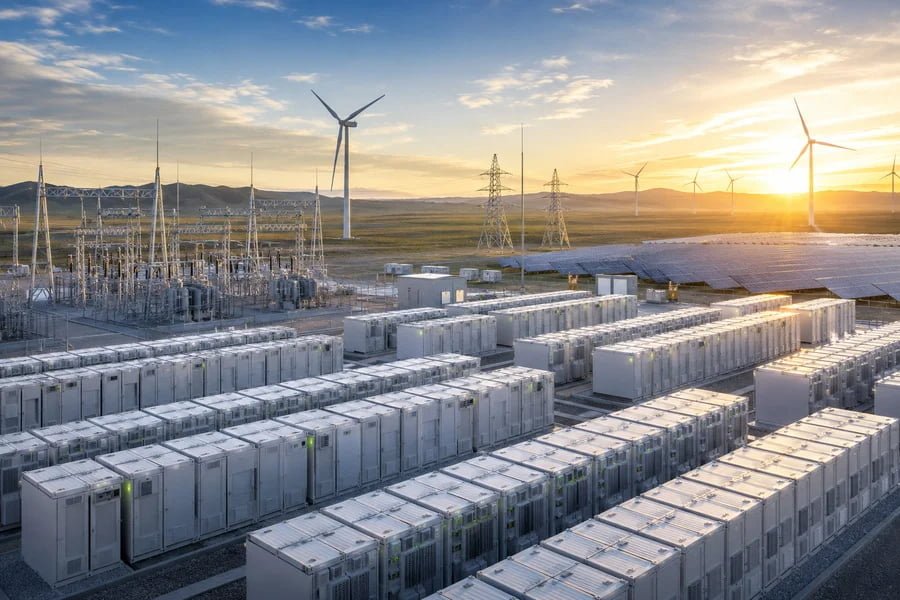
The battery grid storage market is projected to reach over 400 GW of capacity by 2030. Annual investments in this sector will likely exceed $150 billion. This growth is driven by the need to stabilize power grids and the falling costs of lithium-ion battery technology worldwide.
I have worked in the energy sector for over a decade, and I have never seen a shift this fast. Global energy needs are changing, and traditional power plants cannot keep up. If you are a business leader, you need to know how large this market is becoming to plan your future projects effectively.
What is the 40 80 rule for batteries?
Batteries are expensive assets that can degrade quickly if they are not managed well. High replacement costs can ruin the return on investment for any storage project. You need a simple way to protect your hardware.
The 40 80 rule for batteries is a management strategy where the state of charge stays between 40% and 80%. This range reduces chemical stress on the cells and limits heat. Following this rule can double the operational lifespan of a lithium-ion battery system.
Understanding the chemistry of stress
In my experience managing large-scale production lines, I have seen how much voltage affects cell health. When a battery is pushed to 100% charge, the internal pressure and temperature rise. This causes the electrolyte to break down over time. On the other side, letting a battery drop to 0% can cause permanent capacity loss. By staying in the middle zone, you keep the lithium ions moving in a stable environment. This is especially true for Lithium Iron Phosphate (LFP) cells, which are the standard for the systems we build today.
Long-term financial benefits
When you look at the total cost of ownership, the 40 80 rule is a game changer. Most commercial systems are designed to last 10 years, but poor charging habits can cut that to 5 years. Our R&D team has tested thousands of cells under different stress levels. The data shows that staying within a narrower charge window significantly increases the cycle count.
Battery Cycle Life Comparison
| Charging Strategy | State of Charge Range | Estimated Cycles (LFP) | Lifespan Impact |
|---|---|---|---|
| Full Discharge | 0% - 100% | 2,500 - 3,000 | High Wear |
| Moderate | 20% - 90% | 4,500 - 5,000 | Average |
| 40 80 Rule | 40% - 80% | 7,000 - 8,000 | Excellent |
Implementing the rule with software
You do not have to monitor these levels manually. Modern Battery Management Systems (BMS) can be programmed to stop charging at 80%. I always recommend that our clients use smart inverters that communicate directly with the battery packs. This automation ensures that the system stays healthy without any human effort. With over 800 patents in our portfolio, we focus heavily on these smart control systems to ensure long-term reliability for every project.
How much does a 1 MW BESS cost?
Estimating the cost of a large energy project is difficult because prices fluctuate. A wrong estimate can lead to huge budget gaps and project failure. You need a clear breakdown of the current market prices.
A 1 MW Battery Energy Storage System (BESS) typically costs between $250,000 and $450,000 per megawatt-hour. This price includes the battery racks, power conversion systems, and installation. Costs vary based on the battery chemistry used and the specific safety certifications required for the local region.
Hardware and component costs
When I talk to procurement directors, I explain that the battery cells represent about 50% to 60% of the total price. Since we are a subsidiary of major players like Greatpower and Sunwoda, we see how the supply chain affects these numbers. The other major cost is the Power Conversion System (PCS), which includes the inverters. These components are vital for turning the stored DC energy into usable AC power for the grid.
The impact of certifications
Certification is another factor that many people forget. In markets like Europe and North America, you must have CE, UL, or FCC certifications. Getting these documents is a long and expensive process for manufacturers. However, it ensures the system is safe and easy to clear through customs. We maintain 680 international certifications to make sure our systems can be deployed anywhere without legal or safety delays.
Cost Breakdown for a 1 MW System
- Battery Modules: 55% of the budget. This is the core storage unit.
- Inverter & PCS: 15% of the budget. This handles the power flow.
- BMS & Thermal Management: 10% of the budget. This keeps the system cool and safe.
- Structure & Housing: 10% of the budget. Usually a fire-rated container.
- Labor & EPC Services: 10% of the budget. This covers the site prep and wiring.
Scalability and economies of scale
Price also depends on how many units you buy. If you are a large-scale integrator, you can get better pricing through bulk orders. With 32 automatic production lines and a monthly capacity of 500,000 units, we are able to provide competitive rates that smaller shops cannot match. I always suggest looking at the price per cycle rather than just the initial purchase price. A cheaper system that fails early is actually the most expensive option in the long run.
What battery company is backed by Bill Gates?
Choosing the right technology partner is a major risk for any energy company. You want to invest in tech that has the support of global leaders and experts. Understanding where big investors are putting their money helps you see the future.
Form Energy is the most prominent battery company backed by Bill Gates through his Breakthrough Energy Ventures fund. They develop iron-air batteries designed for long-duration storage. These systems can provide power for up to 100 hours, which is much longer than standard lithium-ion batteries.
The goal of long-duration storage
I follow the work of companies like Form Energy because they solve a specific problem. While the lithium-ion packs we produce are great for 2 to 4 hours of backup, the grid sometimes needs days of power. Iron-air technology uses the oxidation of iron (rusting) to store and release energy. This is a very low-cost material, which makes it ideal for huge utility-scale projects that need to store power from wind farms.
Comparing Iron-Air and Lithium-ion
It is important to understand that iron-air is not a replacement for lithium-ion. Iron-air batteries are very large and heavy. You cannot use them in a home or a portable power station. Lithium-ion, specifically LFP, remains the best choice for residential, commercial, and industrial use because of its high energy density and efficiency. Our R&D team of 300 people continues to focus on LFP because it is the most reliable tech for the current market.
Key Differences Between Technologies
| Feature | Lithium-Ion (LFP) | Iron-Air (Form Energy) |
|---|---|---|
| Main Use Case | Homes, Factories, EVs | Grid-scale long duration |
| Discharge Time | 1 - 4 Hours | 24 - 100 Hours |
| Size | Compact / Modular | Very Large |
| Maturity | Fully Commercialized | Early Deployment |
The role of invention and patents
Investment from people like Bill Gates shows that the energy storage industry is the most important sector for the next twenty years. Innovation is happening fast. At our facilities, we have filed over 420 invention patents to stay ahead. While long-duration tech is exciting for the future, the immediate demand is for high-performance lithium systems that can be installed today. We are focused on delivering those solutions while keeping an eye on the next wave of technology.
What is the outlook for BESS industry?
Market volatility can make it hard to commit to large energy storage investments. You need to know if the industry will continue to grow or if it is just a temporary trend. A clear outlook helps you make confident business decisions.
The outlook for the BESS industry is very positive, with a projected 23% annual growth rate through 2030. This growth is supported by government green energy mandates and the urgent need to replace aging grid infrastructure. Energy storage is now a central part of global climate policy.
Regional growth and demand
I see different trends in different parts of the world. In Europe and Australia, high electricity prices are driving home and business owners to install their own storage systems. In Southeast Asia and the Middle East, the focus is on grid stability and supporting large solar farms. We have built a robust supply chain across the Greater Bay Area to respond to these global needs quickly. The demand for all-in-one ESS and hybrid solar systems is at an all-time high.
Manufacturing and supply chain stability
The future of this industry depends on manufacturing capacity. To meet global goals, we need massive production. Our expansion into Zhejiang and other areas is a direct response to this need. We use 32 automated lines to ensure that every unit we ship meets the same high standards. This level of automation is necessary to keep costs down and quality up as the market grows.
Future Market Drivers
- EV Integration: As more people drive electric cars, the grid needs batteries to manage the charging load.
- Decentralization: More businesses are choosing to generate and store their own power rather than relying on the main grid.
- Policy Support: Tax credits and subsidies in the US and Europe are making BESS more profitable for investors.
- Technological Safety: New safety standards and better BMS software are making batteries safer than ever before.
Why long-term partnerships matter
As the market grows, many small suppliers will appear and disappear. For a CEO or procurement director, the biggest risk is buying from a company that cannot provide technical support in three years. I believe the future belongs to companies that have the scale, the patents, and the certifications to provide a stable supply. We are committed to being a global leader and empowering homes and businesses with safe energy for the long term.
My insights: The Trillion-Dollar Surge in Global Battery Grid Storage
Renewable intermittency threatens grid stability and triggers soaring energy costs. As blackouts loom, scalable battery storage emerges as the essential trillion-dollar bridge to a resilient, electrified, and carbon-free future.
The global grid-scale battery storage market is projected to reach approximately $100–$106 billion by 2030, with long-range bullish scenarios suggesting a multi-trillion-dollar infrastructure market by the mid-2030s. Driven by renewable integration and AI demand, annual U.S. installations alone are expected to exceed 110 GWh by 2030.
Decoding the Growth Catalysts and Market Evolution
The market is evolving from simple energy arbitrage—buying low and selling high—into a complex ecosystem of grid services. The ceiling for this industry rises significantly as batteries are increasingly tapped for frequency control, congestion relief, and as "non-wires alternatives" to avoid expensive transmission upgrades.
While Lithium-ion remains dominant with over 70% share, the next frontier is Long-Duration Energy Storage (LDES). This is fueled by the massive power requirements of AI data centers and industrial electrification, which require firm, 24/7 power that solar and wind alone cannot provide. However, the ultimate market size will be dictated by "soft" barriers rather than just technology; permitting speed and interconnection queue reforms are the primary variables that will determine if the market hits the multi-trillion-dollar bullish target.
| Growth Driver | Market Impact | Strategic Role |
|---|---|---|
| Renewable Integration | High | Balancing solar/wind "duck curves" |
| AI Data Centers | Emerging | Providing 24/7 carbon-free "firm" power |
| Grid Modernization | High | Replacing aging infrastructure and regulating frequency |
| EV Charging Hubs | Moderate | Managing peak demand spikes at high-speed stations |
Beyond Chemistry: The Resilience Revenue Stream
As grids become more volatile, the market is shifting focus toward resilience revenue. Utilities and private developers are no longer just looking at battery costs; they are valuing the "avoided cost" of catastrophic grid failures. This shift transforms batteries from a commodity into a critical infrastructure asset class.
Conclusion
The battery grid storage market is expanding into a massive global industry driven by policy and technology. Investing in high-quality, certified storage systems today ensures long-term energy security and profitability.
](https://voltcrave-battery.com/wp-content/uploads/2026/06/Commercial-Energy-Storage-Systems-The-Future-of-Reliable-Power-for-Businesses-768x512.jpg)
](https://voltcrave-battery.com/wp-content/uploads/2026/06/What-Is-a-Commercial-Energy-Storage-System-768x512.jpg)
](https://voltcrave-battery.com/wp-content/uploads/2026/06/What-Are-the-Conditions-Necessary-for-Energy-Storage-768x512.jpg)