

Power outages can interrupt refrigeration, internet access, heating, and daily activities. Choosing the wrong backup system may leave essential appliances without electricity when they are needed most.
The best power backup option for home use depends on outage duration, electricity demand, and budget. A LiFePO4 home battery is a strong choice for quiet, automatic backup, while solar-plus-battery storage adds daytime recharging. Standby generators suit extended outages, and portable power stations provide affordable electricity for essential devices.
I recommend choosing home backup power based on essential appliances, reliability, runtime, and cost, comparing batteries, solar, generators, portable stations, and hybrid systems for resilience.
What Are the Best Power Backup Options for Different Home Needs?
Homeowners need dependable electricity during outages, but backup systems vary in size, operating requirements, and cost. A solution that works for a small apartment may be unsuitable for a large family home.
The most practical home backup options include rechargeable home batteries, solar battery storage, standby generators, portable power stations, and hybrid systems. Home batteries are useful for quiet emergency power, generators support longer outages, and portable stations provide flexible electricity for selected appliances. The best choice depends on household requirements and available energy sources.
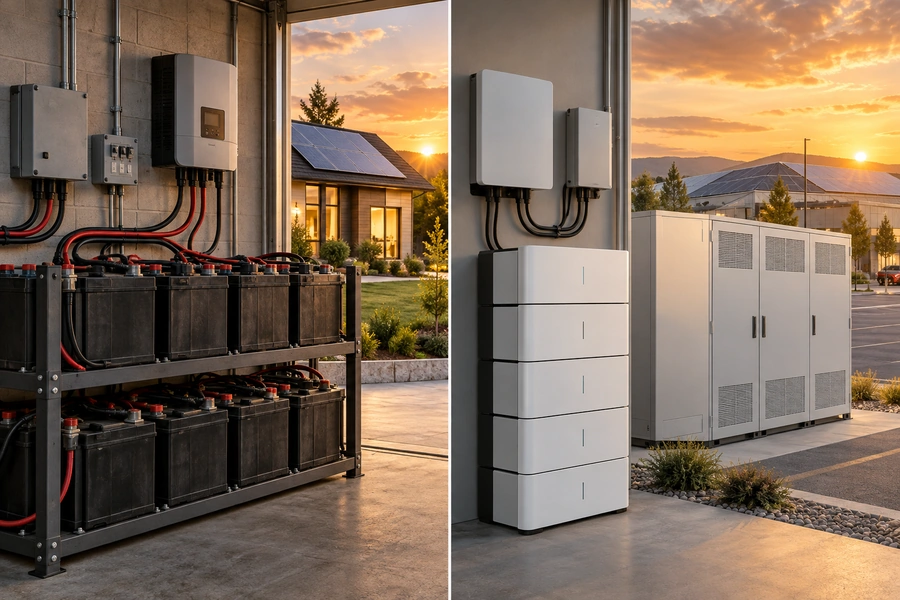
Home Battery Backup Systems
Residential battery energy storage systems store electricity for use during outages or expensive utility rate periods.
Most modern systems combine rechargeable batteries, a Battery Management System (BMS), power conversion equipment, and monitoring technology.
A compatible backup controller or transfer system allows protected household circuits to receive battery electricity when the utility grid fails.
I consider LiFePO4 batteries particularly attractive for residential energy storage because of their cycling durability and thermal characteristics.
Home batteries can also operate without solar panels when the manufacturer supports grid charging.
However, a battery does not generate electricity independently.
Without solar power or another approved charging source, its backup duration is limited by the energy already stored.
Solar Panels With Battery Storage
A solar-plus-battery system combines rooftop photovoltaic panels with rechargeable storage.
During normal operation, solar panels generate electricity for household use.
Surplus electricity can recharge the battery when the system is configured appropriately.
During a grid outage, a backup-capable inverter and isolation system can maintain electricity for protected loads.
I believe this is one of the strongest options for homeowners who want both emergency backup and improved solar energy self-consumption.
However, ordinary grid-connected solar panels may shut down during outages unless the installation includes compatible backup equipment.
Standby Home Generators
Standby generators use natural gas, propane, or another approved fuel to produce electricity.
An automatic transfer switch can allow a properly installed generator to supply selected circuits or the whole house when utility power fails.
I consider standby generators especially useful for homes with high electrical demand.
Central air conditioning, electric heating equipment, water pumps, and other substantial loads can require more energy than a small battery system can provide.
The main limitation is the dependence on fuel.
Generators also produce engine noise, exhaust, and ongoing maintenance requirements.
Portable Power Stations
Portable power stations contain rechargeable batteries, inverters, and integrated electrical outlets.
They are generally simpler to deploy than permanently installed home storage systems.
For example, a portable station can power a laptop, router, LED lights, or compatible refrigerator through its approved outlets.
I consider this a practical starting point for renters and households that need limited emergency electricity.
However, a portable power station is not automatically suitable for connection to permanent household wiring.
Such installations require equipment and connection methods specifically approved for that purpose.
Comparing Home Backup Technologies
| Backup Option | Main Advantage | Main Limitation |
|---|---|---|
| Home battery | Quiet, automatic backup | Finite stored energy |
| Solar + battery | Potential daytime recharging | Weather-dependent production |
| Standby generator | Extended operation with fuel | Exhaust, noise, and maintenance |
| Portable power station | Flexible and relatively affordable | Limited capacity and output |
| Hybrid system | Multiple sources of energy | Greater installation complexity |
I believe no single technology is the best option for every household. The correct choice depends on expected outages and the electrical loads that must remain operational.
How Much Battery Capacity or Generator Power Does a Home Need?
Selecting a backup system without calculating household electricity use can result in insufficient power or unnecessary investment. Battery capacity and generator output must be matched to actual appliance demand.
A home backup system must provide enough power in kilowatts to operate connected appliances and enough energy in kilowatt-hours to support the required duration. A 10–15 kWh battery may provide essential-load backup, while broader whole-home operation may require 20–40 kWh or more. Generator sizing depends on simultaneous loads and starting currents.
Understanding kW and kWh
I always distinguish between power and energy.
Kilowatts (kW) measure the rate at which electricity is delivered or consumed.
Kilowatt-hours (kWh) measure the amount of energy stored or used over time.
For example, a home consuming 2 kW continuously for six hours requires:
2 kW × 6 hours = 12 kWh
A battery with 12 kWh of nominal storage may not deliver the full amount because of operating reserves and electrical conversion losses.
I therefore calculate usable AC energy before estimating runtime.
Calculate Essential Household Loads
The first step is to identify appliances that must remain operational during an outage.
Consider the following illustrative example.
| Appliance | Estimated Daily Energy Use |
|---|---|
| Refrigerator | 1.2 kWh |
| Wi-Fi and communication devices | 0.4 kWh |
| LED lighting | 0.6 kWh |
| Television and computer | 0.8 kWh |
| Fans and small appliances | 1.0 kWh |
| Additional essential equipment | 1.0 kWh |
| Total | 5.0 kWh |
These values are planning examples, not fixed appliance specifications.
A household using approximately 5 kWh per day for essential equipment may require less battery capacity than a household attempting to operate all appliances during an outage.
I recommend using smart meter data or appliance energy measurements whenever possible.
Calculate Required Battery Storage
I use the following simplified calculation:
Required Battery Capacity (kWh) = Required AC Energy ÷ (Usable Discharge Fraction × Delivery Efficiency)
Suppose a home needs 18 kWh of AC electricity during a 12-hour outage.
Assume:
- Usable discharge fraction: 90%
- Energy delivery efficiency: 90%
The required nominal battery capacity becomes:
18 kWh ÷ (0.90 × 0.90) = 22.2 kWh
I would consider approximately 25 kWh or more as an initial planning point, subject to the home's additional reserve and power requirements.
This calculation does not replace a detailed electrical load assessment.
Estimated Backup Runtime
The following table assumes that 80% of rated battery capacity becomes available as AC electricity.
| Battery Capacity | 1 kW Average Load | 2 kW Average Load |
|---|---|---|
| 5 kWh | 4 hours | 2 hours |
| 10 kWh | 8 hours | 4 hours |
| 15 kWh | 12 hours | 6 hours |
| 20 kWh | 16 hours | 8 hours |
| 30 kWh | 24 hours | 12 hours |
| 40 kWh | 32 hours | 16 hours |
These are simplified estimates with constant power consumption and no additional charging.
Actual runtime depends on battery state of charge, efficiency, reserve settings, temperature, and household electricity demand.
How Should You Size a Generator?
Generator sizing requires a different approach.
I begin by calculating the combined running power of appliances that may operate simultaneously.
I then check any starting current requirements.
For example, refrigerators, pumps, and air conditioning compressors may draw additional power when starting.
A generator with insufficient surge capability may shut down or fail to start connected equipment.
I recommend having large standby systems sized by a qualified installer using actual appliance specifications.
Why Load Management Is Important
I believe reducing unnecessary electricity use can be more economical than purchasing additional backup capacity.
During an outage, homeowners may postpone electric vehicle charging, clothes drying, or other high-energy activities.
This leaves more available electricity for refrigeration, heating controls, lighting, and communication equipment.
For many households, a properly designed essential-load system provides sufficient protection without the expense of unrestricted whole-house backup.
Is a Home Battery Better Than a Generator or Portable Power Station?
Home batteries, generators, and portable power stations can all provide electricity during blackouts. However, their operating duration, maintenance requirements, and installation costs differ significantly.
Home batteries are often preferable for quiet, automatic backup and daily energy management. Standby generators may be better for frequent multi-day outages when fuel is available. Portable power stations are practical for limited loads and lower budgets. A battery-generator hybrid system can offer greater flexibility when the equipment is properly integrated and configured.
Home Batteries: Best for Quiet Backup and Daily Use
I consider residential batteries particularly useful for households that want automatic backup without operating a combustion engine.
A battery system supplies stored energy through an inverter.
This avoids on-site combustion exhaust during discharge and generally produces less operating noise than a generator.
Home batteries can also provide value outside emergencies.
Some systems charge from solar generation or lower-cost grid electricity and discharge when utility rates are higher.
I believe this makes battery storage more versatile than equipment used only during blackouts.
However, savings depend on local electricity tariffs and actual operating patterns.
Standby Generators: Best for Prolonged Outages
A properly installed standby generator can provide electricity as long as it has a suitable fuel supply and remains operational.
This makes generators attractive for areas that experience hurricanes, severe winter storms, or extended utility outages.
For example, a home requiring continuous heating, air conditioning, and water pumping may use substantial electricity over several days.
A large battery bank could provide this energy, but the installation might be expensive.
A standby generator can be a more practical alternative for some households.
I also consider the availability of fuel essential.
A generator cannot provide reliable long-duration backup if fuel deliveries are interrupted or its supply becomes unavailable.
Portable Power Stations: Best for Small Backup Needs
Portable stations are useful when the household needs electricity for only a few devices.
They may support lighting, communication equipment, a computer, and selected small appliances.
However, battery capacity varies significantly.
A 1 kWh portable station cannot provide the same runtime as a 15 kWh residential storage system under identical electrical loads.
I recommend checking the station's usable energy and continuous AC output rather than relying on the manufacturer's advertised appliance list.
Hybrid Systems: Best for Greater Flexibility
A hybrid backup system can combine batteries, solar panels, and compatible generator equipment.
During shorter outages, the battery may provide quiet electricity.
Solar panels can recharge the battery when sufficient sunlight is available.
For extended outages, a properly integrated generator may provide additional power or recharge the system if the equipment supports that function.
I consider this approach valuable for households with demanding reliability requirements.
However, not every battery or inverter supports generator charging.
The system must use manufacturer-approved integration equipment and installation methods.
Which System Performs Best?
| Evaluation Factor | Home Battery | Standby Generator | Portable Station |
|---|---|---|---|
| Quiet operation | Strong | Limited | Strong |
| Long-duration backup | Depends on capacity and charging | Strong with available fuel | Limited |
| Automatic operation | Common | Common | Model-dependent |
| Everyday energy savings | Possible | Usually limited | Limited |
| Low initial investment | Less favorable | Moderate | Often favorable |
| Maintenance demands | Generally lower | Higher | Generally lower |
| Solar integration | Common | Requires additional equipment | Model-dependent |
| Whole-home capability | With proper sizing | With proper sizing | Only approved configurations |
I recommend selecting the system according to the expected outage duration and the importance of the connected loads.
How Much Does Home Backup Power Cost, and What Should You Check Before Buying?
Backup electricity can protect essential equipment, but installation costs vary significantly between technologies. Comparing equipment prices alone may overlook maintenance, charging, fuel, and safety expenses.
Home backup power costs depend on capacity and installation complexity. In the United States, a typical installed 13.5 kWh home battery costs about $15,650 in 2026, while a standby generator installation often starts at several thousand dollars. Portable power stations generally require less initial investment but cannot always support complete household electrical systems.
Home Backup Power Costs in 2026
The following ranges represent broad U.S. planning estimates rather than fixed quotations.
| System Type | Indicative Cost (USD) |
|---|---|
| Small portable power station | $300–$1,000 |
| Larger portable power station | $1,000–$3,500+ |
| Standby generator installation | $7,000–$15,000 |
| Typical installed 13.5 kWh home battery | About $15,650 |
| Multi-battery whole-home backup | $25,000–$45,000+ |
Actual costs depend on equipment specifications, electrical upgrades, labor, permits, and location.
I also evaluate the total amount of electricity each system can deliver.
A small portable power station and a whole-home battery system should not be compared on purchase price alone.
Consider Electricity Savings and Operating Costs
A home battery may support electricity savings when local rates vary by time of day.
For example, the battery can charge during cheaper periods and discharge when electricity prices increase.
Solar generation can provide additional value when stored electricity replaces expensive grid purchases.
However, battery conversion losses reduce the potential savings.
I would calculate expected annual savings using local utility tariffs and the battery's usable capacity.
For generators, I evaluate fuel consumption, maintenance, testing, and possible repairs.
Check Incentives and Tax Rules
Homeowners should verify the incentive rules that apply to their location and installation date.
In the United States, the federal Residential Clean Energy Credit under Section 25D ended for new qualifying residential clean-energy expenditures after December 31, 2025.
This means a new residential battery installation completed in 2026 does not qualify for the former federal 30% Section 25D credit.
Some state and utility programs may still provide incentives.
I recommend confirming program availability before including incentives in a financial comparison.
Verify Battery Safety and Certifications
For permanent home energy storage, relevant North American standards may include UL 9540 for complete energy storage systems and UL 1973 for stationary battery equipment.
UL 9540A addresses thermal runaway fire-propagation testing.
I do not treat a UL 9540A test result as equivalent to complete UL 9540 system certification.
Portable power packs may fall within UL 2743, depending on their design and intended use.
I recommend checking the exact equipment listing and following all applicable electrical, fire, and building requirements.
Generator Safety Matters
Portable fuel generators produce carbon monoxide, a colorless and potentially deadly gas.
I recommend following the U.S. Consumer Product Safety Commission's guidance to operate portable generators outdoors, at least 20 feet from the home, with exhaust directed away from the building.
They should never be operated inside a garage, basement, or enclosed space.
A generator connected to household wiring also requires an approved transfer arrangement.
Improvised backfeeding through household outlets can create serious hazards for occupants and utility workers.
Choose the Right Equipment for Your Home
Before purchasing, I check:
- How often outages occur and how long they usually last
- Which appliances must remain operational
- Required continuous power and starting surge
- Expected daily energy consumption
- Available charging or fuel sources
- Installation and maintenance costs
- System certification and local permit requirements
- Manufacturer warranty and technical support
I believe these factors provide a stronger purchasing framework than selecting the equipment with the largest advertised battery capacity.
My Insights: What Is the Best Power Backup Option for Home Use
A home backup system can be expensive, and selecting equipment without understanding household demand may create unnecessary costs. Reliability depends on more than simply purchasing a large battery or generator.
I believe a properly sized LiFePO4 home battery is one of the best backup options for households that value quiet operation, automatic outage protection, and daily energy management. However, a standby generator may be more practical for frequent long outages, while a portable power station offers better value when only a few essential devices need electricity.
I Prioritize Essential Loads Before Selecting Equipment
I do not believe every home needs unrestricted whole-house backup.
Many households can maintain essential services using a smaller system.
For example, refrigeration, communications, lighting, and selected outlets may consume far less electricity than air conditioning or electric heating.
I recommend identifying essential loads first and calculating their average daily consumption.
This helps avoid purchasing more equipment than the home actually needs.
Battery Capacity Should Match Outage Duration
I consider operating duration more important than the advertised size of the system.
A 10 kWh battery may provide meaningful backup when household energy consumption is low.
The same battery may discharge quickly when connected to large electrical appliances.
I therefore calculate the amount of energy required during the expected outage.
I also evaluate inverter output because sufficient energy capacity does not guarantee the ability to operate every connected appliance simultaneously.
Recharging Availability Determines Long-Term Reliability
I believe the availability of additional energy is particularly important during multi-day outages.
A battery without solar panels normally cannot recharge when the grid is unavailable.
A solar-plus-battery system may replenish energy during daylight hours, but solar generation depends on weather and system configuration.
A generator can provide additional energy when fuel is available.
I therefore evaluate backup power through five connected factors:
Essential Loads → Peak Power → Backup Duration → Energy Storage → Recharging Availability
This provides a clearer view of the system's practical capability.
Long-Term Cost Should Include More Than the Purchase Price
I also consider the total ownership cost.
A generator may cost less initially but require fuel, servicing, and mechanical maintenance.
A home battery may cost more but provide electricity management benefits during normal operation.
A portable power station may be less expensive, but it cannot always support the same loads or backup duration.
I evaluate whether the additional cost delivers a meaningful improvement in reliability or energy savings.
My Recommended Home Backup Strategy
For small homes and limited budgets, I generally recommend starting with an appropriately rated portable power station or essential-load backup system.
For homes with existing solar panels, I would prioritize a compatible LiFePO4 battery with approved outage protection equipment.
For households facing regular multi-day outages, I would compare standby generators and hybrid systems.
For larger homes that require continuous operation of high-power appliances, I would recommend a professional assessment of both battery capacity and generator options.
Ultimately, I believe the best power backup option for home use is the system that can supply essential electricity safely and reliably for the expected outage duration, at a reasonable lifetime cost.
Conclusion
The best home backup power depends on your needs. Batteries suit quiet backup, generators support long outages, and portable stations provide affordable essential electricity.
](https://voltcrave-battery.com/wp-content/uploads/2026/09/Lead-Acid-vs.-Lithium-Ion-Batteries-Which-Is-Better-for-Residential-and-Commercial-BESS-768x512.webp)
](https://voltcrave-battery.com/wp-content/uploads/2026/09/Do-Portable-Car-Jump-Starters-Actually-Work-768x512.webp)
](https://voltcrave-battery.com/wp-content/uploads/2026/08/How-Much-Does-a-Commercial-BESS-Cost-768x512.webp)







































