

](https://voltcrave-battery.com/wp-content/uploads/2026/08/What-Are-the-Best-Home-Energy-Storage-Systems.webp)
Choosing a home battery is harder than comparing capacity. Power output, solar compatibility, backup performance, warranty, and expansion can matter just as much.
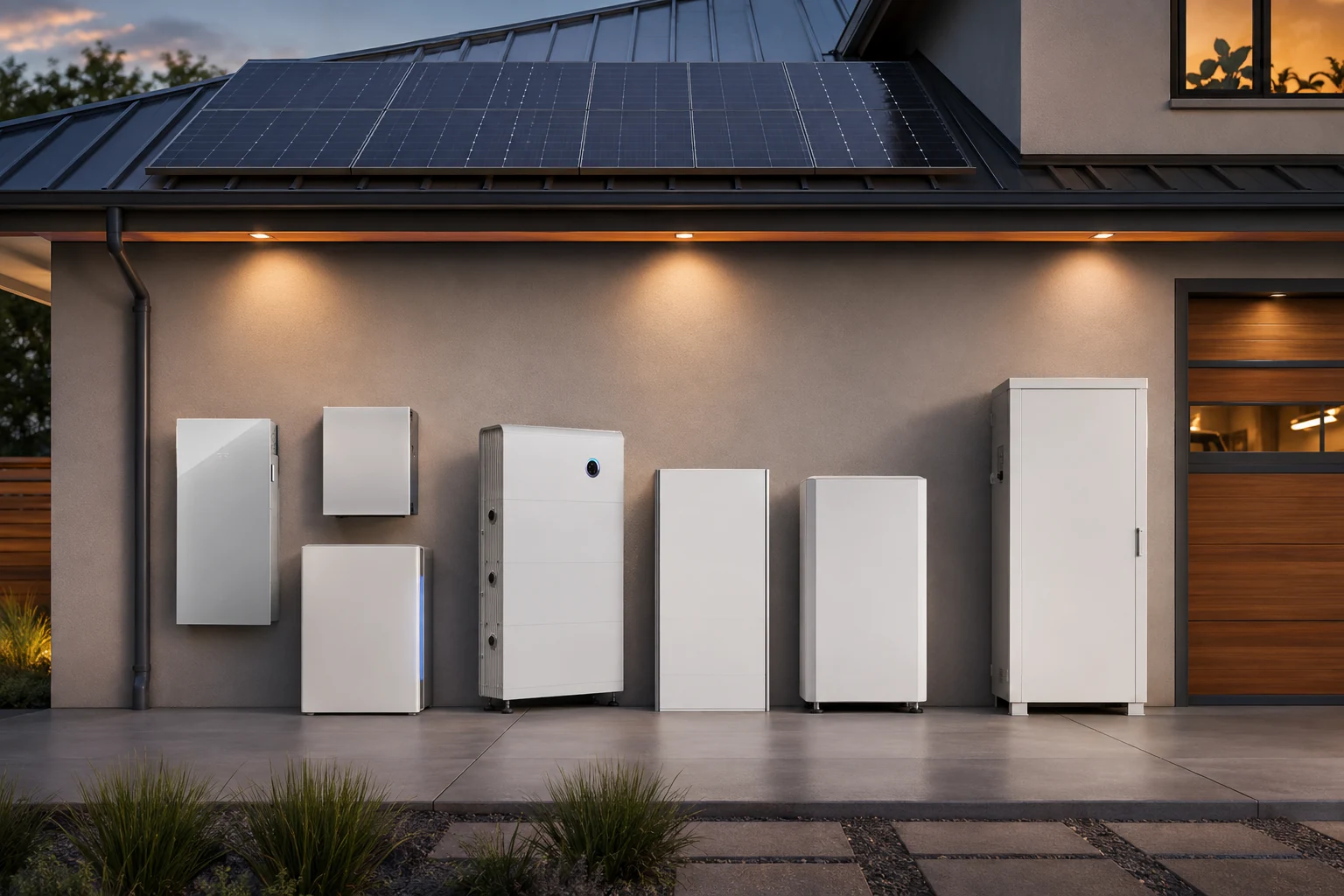
The best home energy storage systems in 2026 include Tesla Powerwall 3, FranklinWH aPower 2, MidNite Solar Powerflo 16, Sigenergy SigenStor BAT, Enphase IQ Battery 10C, and SolarEdge BAT-10K. I rank Tesla Powerwall 3 best overall, while other systems are stronger for high-power backup, modularity, efficiency, or existing solar ecosystems.
I do not believe one battery is best for every house. I first look at the home's daily energy use, peak power demand, existing solar equipment, outage goals, local installer support, and installed price. EnergySage's current 2026 comparison also evaluates performance, warranty, backup intelligence, value, and marketplace popularity rather than choosing batteries by capacity alone.
What Are the Best Home Energy Storage Systems in 2026?
The strongest home batteries now combine energy storage with high-output inverters, automatic backup, smart energy management, and expandable capacity.
My 2026 shortlist starts with Tesla Powerwall 3 as the best overall system. FranklinWH aPower 2 is excellent for high-power whole-home backup, MidNite Solar Powerflo 16 offers unusually large single-battery capacity, Sigenergy SigenStor emphasizes efficiency and integration, while Enphase and SolarEdge are especially attractive within their existing solar ecosystems.
My Home Battery Ranking
| Home energy storage system | Capacity per main battery | Main strength | My recommendation |
|---|---|---|---|
| Tesla Powerwall 3 | 13.5 kWh | Overall balance and solar integration | Best overall |
| FranklinWH aPower 2 | 15 kWh | High power and long warranty | Best for whole-home backup |
| MidNite Solar Powerflo 16 | 16 kWh | Large single-unit capacity | Best high-capacity value |
| Sigenergy SigenStor BAT | Up to 8.8 kWh usable per current U.S. module | Efficiency and modular integration | Best efficiency-focused option |
| Enphase IQ Battery 10C | 10 kWh | Enphase ecosystem | Best for Enphase solar |
| SolarEdge BAT-10K | 9.7 kWh usable | SolarEdge integration | Best for SolarEdge homes |
| Generac PWRcell 2 | 9–36 kWh per inverter configuration | Generator and load-management integration | Best for extended resilience |
EnergySage's current 2026 ranking places Tesla Powerwall 3 first, FranklinWH aPower 2 second, MidNite Solar Powerflo 16 third, and Sigenergy SigenStor fourth. Enphase IQ Battery 10C and SolarEdge BAT-10K share the next position.
I treat this as a useful independent benchmark rather than a universal answer.
A homeowner with an existing Enphase solar system may have a much stronger reason to select Enphase than someone building a new solar-plus-storage project from scratch.
Likewise, a homeowner who already owns or wants a standby generator may get more practical outage value from Generac's integrated ecosystem than from the battery with the highest independent review score. Generac currently offers PWRcell 2 configurations from 9 to 36 kWh and supports solar, grid, and generator-based home energy strategies.
Why Is Tesla Powerwall 3 the Best Home Energy Storage System Overall?
Tesla Powerwall 3 performs well across nearly every specification I consider important for a typical residential system.
I rank Tesla Powerwall 3 as the best overall home energy storage system because one unit combines 13.5 kWh of battery capacity with up to 11.5 kW of continuous AC power, an integrated solar inverter, strong motor-start capability, automatic backup functions, and expandable storage. EnergySage also ranks it first overall for 2026.
Powerwall 3 Combines High Power With Useful Capacity
Tesla specifies:
- 13.5 kWh battery energy
- Up to 11.5 kW continuous output
- 120/240 V split-phase operation
- Heavy-load starting capability
- Integrated solar conversion
- Expandable battery capacity
The ratio between energy and power matters.
A home battery can contain 15 or 20 kWh and still disappoint if its inverter cannot operate an air conditioner, well pump, microwave, and refrigerator at the same time.
Powerwall 3's 11.5 kW maximum continuous rating gives one unit enough output for many demanding residential applications, although the actual system still needs to be sized around the home's measured loads.
Tesla also offers Powerwall 3 Expansion units. Each adds another 13.5 kWh of battery energy to a compatible Powerwall 3 installation.
That creates a useful path for homeowners who need more runtime but do not necessarily need another complete inverter.
It Works Especially Well With New Solar
Powerwall 3 integrates the solar inverter into the battery platform.
This can simplify a new solar-plus-storage design because the solar array and battery are managed through one integrated power-conversion architecture.
EnergySage gives Powerwall 3 its highest overall 2026 score and highlights its power output, energy optimization, backup capabilities, efficiency, and AC/DC coupling flexibility.
I would put Powerwall 3 at the top of my list when:
- I am installing solar and storage together.
- I need substantial continuous output.
- I want automatic backup.
- I may add storage capacity later.
- I want one integrated monitoring ecosystem.
Its main limitation is that a different system may integrate more naturally with an existing microinverter or third-party solar architecture.
When Is FranklinWH aPower 2 Better Than Tesla Powerwall 3?
FranklinWH becomes especially attractive when I prioritize battery capacity, peak power, expansion, and warranty length.
FranklinWH aPower 2 is one of the best home energy storage systems for whole-home backup. Each unit provides 15 kWh of capacity and 10 kW continuous output, can scale to 225 kWh per aGate, uses LFP chemistry, and carries a 15-year or 60 MWh throughput warranty. EnergySage ranks it second overall in 2026.
FranklinWH Has Excellent Whole-Home Specifications
The current aPower 2 provides:
| Specification | FranklinWH aPower 2 |
|---|---|
| Capacity | 15 kWh |
| Continuous output | 10 kW |
| Peak power | 15 kW |
| Chemistry | LFP |
| Maximum expansion | 225 kWh per aGate |
| Warranty | 15 years or 60 MWh throughput |
EnergySage currently identifies aPower 2 as the highest-peak-power option in its top 2026 battery ranking and highlights its 15-year warranty and scalability.
That makes it particularly interesting for homes with:
- Central air conditioning
- Well pumps
- Multiple large appliances
- High outage loads
- Large future storage requirements
FranklinWH also has its newer aPower S architecture. The aPower S provides 15 kWh, up to 11.5 kW continuous output when PV is contributing, four integrated MPPTs, 90.5% stated round-trip efficiency, LFP chemistry, and the same 15-year or 60 MWh warranty framework.
I would therefore compare aPower 2 and aPower S separately.
The aPower 2 is an attractive AC-coupled storage solution.
The aPower S integrates more solar functionality directly into the battery platform.
For an existing solar retrofit, AC coupling can be convenient because it may allow the existing solar inverter to remain in service. For a new project, a more integrated solar architecture can be attractive.
Is Enphase IQ Battery 10C One of the Best Home Batteries?
Yes, especially when the house already uses Enphase microinverters.
Enphase IQ Battery 10C is my preferred storage option for many homes already using Enphase solar. It offers 10 kWh of usable energy and 7.08 kVA of continuous output, includes embedded grid-forming microinverters, supports home backup, and comes with a 15-year limited warranty subject to 6,000-cycle and other warranty conditions.
Enphase Uses a Distributed Inverter Architecture
The IQ Battery 10C contains four embedded grid-forming microinverters and provides:
- 10 kWh usable capacity
- 7.08 kVA continuous output
- 14.16 kVA peak output in the listed configuration
- AC-coupled operation
- Backup capability
The architecture is different from a battery relying on one large central inverter.
I like this approach when the solar array already uses Enphase microinverters because the homeowner can maintain one broader energy-management ecosystem.
EnergySage specifically calls IQ Battery 10C its best battery to pair with Enphase microinverters in the current 2026 ranking.
Its 15-Year Warranty Is Attractive
Enphase states that IQ Battery 10C carries a 15-year limited warranty or 6,000 cycles under the applicable warranty conditions.
That is longer than the ten-year warranty term associated with several competing home batteries.
However, I would not choose it from warranty length alone.
One 10C provides less continuous power than one Tesla Powerwall 3 or FranklinWH aPower 2. A larger house may therefore require multiple Enphase batteries to achieve the desired power and energy capacity.
For a home already built around Enphase, that tradeoff can still make sense.
What Are the Best High-Capacity and High-Efficiency Home Batteries?
Tesla, FranklinWH, and Enphase are not the only strong choices. MidNite Solar and Sigenergy currently stand out in specific technical categories.
MidNite Solar Powerflo 16 is notable for its 16 kWh usable capacity in a single battery and a competitive 2026 marketplace price, while Sigenergy SigenStor BAT stands out for its reported 98% round-trip efficiency in EnergySage's comparison. Both have strong specifications but less long-term U.S. marketplace history than established leaders such as Tesla and Enphase.
MidNite Solar Powerflo 16: Best Large Single Battery
EnergySage currently lists the Powerflo 16 with:
- 16 kWh usable capacity
- 8.1 kW continuous power
- 10.7 kW peak power
- 97.5% round-trip efficiency
- LFP chemistry
- 15-year warranty
Sixteen kilowatt-hours in one battery is useful when I want fewer individual units.
It can reduce the number of battery enclosures required to reach 30 or 40 kWh.
EnergySage also lists it at a substantially lower marketplace cost per kWh than several top competitors, although actual installed pricing will depend on inverter equipment, electrical work, location, and installer margins.
The tradeoff is power.
Its continuous power rating is lower than Powerwall 3's, so I would carefully check air-conditioning and other high-power loads before choosing it for unrestricted whole-home backup.
Sigenergy SigenStor: Best Efficiency-Focused Option
EnergySage lists SigenStor BAT at around 98% round-trip efficiency in its 2026 comparison, the highest of its top-ranked batteries.
Sigenergy's current SigenStor platform uses LFP battery modules and emphasizes a highly integrated architecture that can combine:
- Solar
- Battery storage
- Home backup
- Energy management
- EV integration
Sigenergy also promotes V2H and V2G-ready functions within the broader system architecture, although actual vehicle-to-home functionality depends on compatible vehicles, standards, and supported configurations.
I see SigenStor as an interesting option for homeowners who value highly integrated energy management.
However, I place more weight on local installer experience and support when considering a newer brand.
Is SolarEdge BAT-10K Still a Good Home Energy Storage System?
SolarEdge's battery makes the most sense when it is part of a SolarEdge solar ecosystem.
SolarEdge BAT-10K provides 9.7 kWh of usable energy, approximately 5 kW continuous output, 94.5% round-trip efficiency, and a 10-year warranty. I would consider it mainly for homes already using compatible SolarEdge inverters because the tight DC-coupled integration is its strongest advantage and also its main limitation.
SolarEdge Works Best as an Ecosystem Purchase
EnergySage's current 2026 comparison describes the BAT-10K as its preferred battery for SolarEdge inverter systems.
That recommendation makes sense to me.
If a homeowner already owns compatible SolarEdge equipment, using the same ecosystem can simplify:
- Inverter compatibility
- Monitoring
- Solar-to-battery operation
- Technical support
The current BAT-10K specification listed by EnergySage includes:
| Feature | SolarEdge BAT-10K |
|---|---|
| Usable capacity | 9.7 kWh |
| Continuous power | 5 kW |
| Peak power | 7.5 kW |
| Round-trip efficiency | 94.5% |
| Warranty | 10 years |
| End-of-warranty capacity | 70% |
I would be less likely to select SolarEdge for a completely new system if another battery provides more power, greater flexibility, or a lower installed price.
EnergySage makes a similar observation in its current review, noting that Tesla and FranklinWH can provide more flexibility and power for many buyers starting outside the SolarEdge ecosystem.
Is Generac PWRcell 2 Best for Extended Home Backup?
Generac solves a slightly different problem because its ecosystem can combine batteries with a standby generator.
I consider Generac PWRcell 2 one of the best choices for homeowners who want battery storage plus generator-supported resilience. Current PWRcell 2 configurations range from 9 to 36 kWh, while Generac's system can coordinate battery storage, solar, smart load management, and compatible standby generation for longer outages.
A Generator Changes the Backup Strategy
A battery contains a finite amount of energy.
If a long storm blocks solar production for several days, even a large battery can eventually run out.
A battery-generator architecture can operate differently:
Solar → battery → generator when necessary
Generac states that PWRcell 2 can integrate with its broader home-energy ecosystem and can be configured from 9 to 36 kWh depending on the homeowner's backup requirements.
I consider this especially useful for:
- Hurricane-prone homes
- Rural properties
- Well-pump loads
- Long winter outages
- Homes already using Generac standby generators
For a homeowner experiencing only short outages, Tesla or FranklinWH may provide a simpler battery-first solution.
For multi-day resilience, the ability to add another energy source can matter more than a few percentage points of battery efficiency.
How Much Home Energy Storage Do I Need?
The best battery model is useless if I install the wrong capacity.
I normally start around 10–15 kWh for essential-load backup and roughly 25–35 kWh for substantial one-day whole-home energy coverage. Larger all-electric houses, long outages, EV charging, electric heating, and limited solar production can push requirements well above 30 kWh. I size energy capacity and inverter power separately.
Energy Capacity Determines Runtime
Battery capacity is measured in kWh.
If my protected loads average:
1 kW
then a theoretical 15 kWh battery contains approximately:
15 hours
of energy.
At a 3 kW average load:
15 kWh ÷ 3 kW = 5 hours
Real runtime differs because of battery reserves, conversion losses, degradation, temperature, and changing loads.
Power Determines What Can Run
A large battery is not automatically a powerful battery.
I separately check inverter kW.
For example:
- Tesla Powerwall 3: up to 11.5 kW continuous.
- FranklinWH aPower 2: 10 kW continuous.
- Enphase IQ Battery 10C: 7.08 kVA continuous.
- SolarEdge BAT-10K: about 5 kW continuous.
If the home needs to start a large air conditioner and run an electric oven at the same time, these differences matter.
I therefore calculate:
Required kWh = desired runtime
and
Required kW = maximum simultaneous load
before choosing the brand.
What Should I Look for in the Best Home Energy Storage System?
I compare the complete system rather than simply selecting the battery with the largest kWh number.
The best home energy storage system should have adequate usable capacity, sufficient continuous and surge power, strong solar compatibility, safe battery chemistry, reliable backup controls, good efficiency, useful expansion options, a strong warranty, appropriate certification, and qualified local installation support. Installed cost and compatibility with existing solar equipment are equally important.
My Home ESS Checklist
| Feature | What I check |
|---|---|
| Usable capacity | Actual kWh available to the home |
| Continuous power | Number of appliances that can operate together |
| Peak power | Ability to start HVAC and pumps |
| Chemistry | LFP is my preferred starting point |
| Solar integration | AC-coupled, DC-coupled, or hybrid |
| Backup operation | Can the system island during outages? |
| Solar during outage | Can PV recharge the battery? |
| Round-trip efficiency | Energy lost during storage |
| Warranty | Years, cycles, throughput, retention |
| Scalability | Can I add more kWh later? |
| Monitoring | App and energy-management features |
| Service | Local installer and replacement support |
| Installed cost | Complete project rather than battery hardware |
EnergySage's current ranking follows a similar broad approach, considering performance, warranty, backup and energy-management intelligence, value, and popularity rather than one isolated specification.
Existing Solar Equipment Can Change the Winner
If I already have Enphase microinverters, IQ Battery 10C becomes much more attractive.
If I have SolarEdge, BAT-10K may integrate more naturally.
If I am installing new solar, Tesla Powerwall 3's integrated hybrid architecture becomes particularly compelling.
For an existing solar retrofit, AC-coupled systems such as FranklinWH aPower 2, MidNite Powerflo 16, and Enphase IQ Battery 10C can avoid replacing a functioning solar inverter in many configurations. EnergySage lists these among its strongest AC-coupled retrofit options.
This is why I never finalize a battery ranking before checking the existing solar design.
My Insights: What Are the Best Home Energy Storage Systems
My ranking starts with Tesla, but I would not install the same battery in every home because the best system depends on the job it must perform.
The best home energy storage systems in 2026 are Tesla Powerwall 3, FranklinWH aPower 2, MidNite Solar Powerflo 16, Sigenergy SigenStor BAT, Enphase IQ Battery 10C, SolarEdge BAT-10K, and Generac PWRcell 2. I choose Tesla best overall, then change the recommendation according to backup needs, existing solar equipment, capacity, efficiency, and expansion.
Tesla Is My Best Overall Choice
Powerwall 3 provides the best balance for a broad range of homeowners.
Its 13.5 kWh capacity and up to 11.5 kW continuous power combine useful runtime with substantial load capability.
The integrated solar inverter also makes it particularly attractive for a new solar-plus-storage installation.
EnergySage independently places it first in its 2026 battery ranking with the highest score among the systems it evaluated.
FranklinWH Is My Choice for Heavy Backup Loads
FranklinWH aPower 2 gives me:
15 kWh + 10 kW continuous + 15 kW peak + 15-year warranty
and can scale to 225 kWh per aGate.
For a large home that prioritizes backup capability and future expansion, that is an extremely strong combination.
Enphase and SolarEdge Win Through Compatibility
I prefer Enphase IQ Battery 10C when the house already uses Enphase microinverters.
I prefer SolarEdge BAT-10K when a compatible SolarEdge system already exists.
Both benefit from being designed around their manufacturers' wider solar ecosystems. EnergySage specifically recommends them for those respective inverter platforms.
MidNite and Sigenergy Are Worth Watching
MidNite Solar provides unusually large 16 kWh single-unit capacity and strong efficiency at a competitive marketplace price in EnergySage's current comparison. Sigenergy leads that same comparison on round-trip efficiency at 98%.
Their specifications are compelling.
However, I also care about installer familiarity, long-term field history, service infrastructure, and spare-parts availability.
A technically impressive battery is only a good home energy storage system when someone can install, commission, diagnose, and support it locally.
Generac Solves the Long-Outage Problem Differently
Generac PWRcell 2 becomes one of my preferred options when I expect outages to last longer than a practical battery bank can handle.
Its broader ecosystem can combine solar, battery storage, load management, and standby generation.
I therefore classify it as a resilience-first energy system, rather than simply comparing its battery specifications with Tesla.
My Final 2026 Ranking
For a typical U.S. homeowner, I would start here:
- Tesla Powerwall 3 — Best overall
- FranklinWH aPower 2 — Best for high-power whole-home backup
- MidNite Solar Powerflo 16 — Best high-capacity value
- Sigenergy SigenStor — Best efficiency-focused system
- Enphase IQ Battery 10C — Best for Enphase solar
- SolarEdge BAT-10K — Best for SolarEdge solar
- Generac PWRcell 2 — Best for battery-generator resilience
The first six positions broadly follow the current EnergySage 2026 assessment, while I add Generac as a specialized resilience recommendation because of its generator-integrated architecture.
I would make the final buying decision only after comparing complete installed quotations.
Hardware price alone does not capture:
- Electrical-panel upgrades
- Backup gateways
- Permitting
- Labor
- Additional batteries
- Solar modifications
- Load-management equipment
The best home energy storage system is therefore the one that provides the right kWh, kW, integration, resilience, warranty, and installed value for the specific house.
Conclusion
Tesla Powerwall 3 is my best overall home energy storage system in 2026, while FranklinWH, Enphase, MidNite, Sigenergy, SolarEdge, and Generac excel in specific applications.
](https://voltcrave-battery.com/wp-content/uploads/2026/08/What-Is-the-Definition-of-a-Solar-Panel-768x512.webp)
](https://voltcrave-battery.com/wp-content/uploads/2026/08/What-Are-the-Key-Differences-Between-a-Solar-Battery-and-a-Regular-Battery-768x512.webp)
](https://voltcrave-battery.com/wp-content/uploads/2026/08/What-Is-the-Outlook-for-the-BESS-Industry-768x512.webp)