

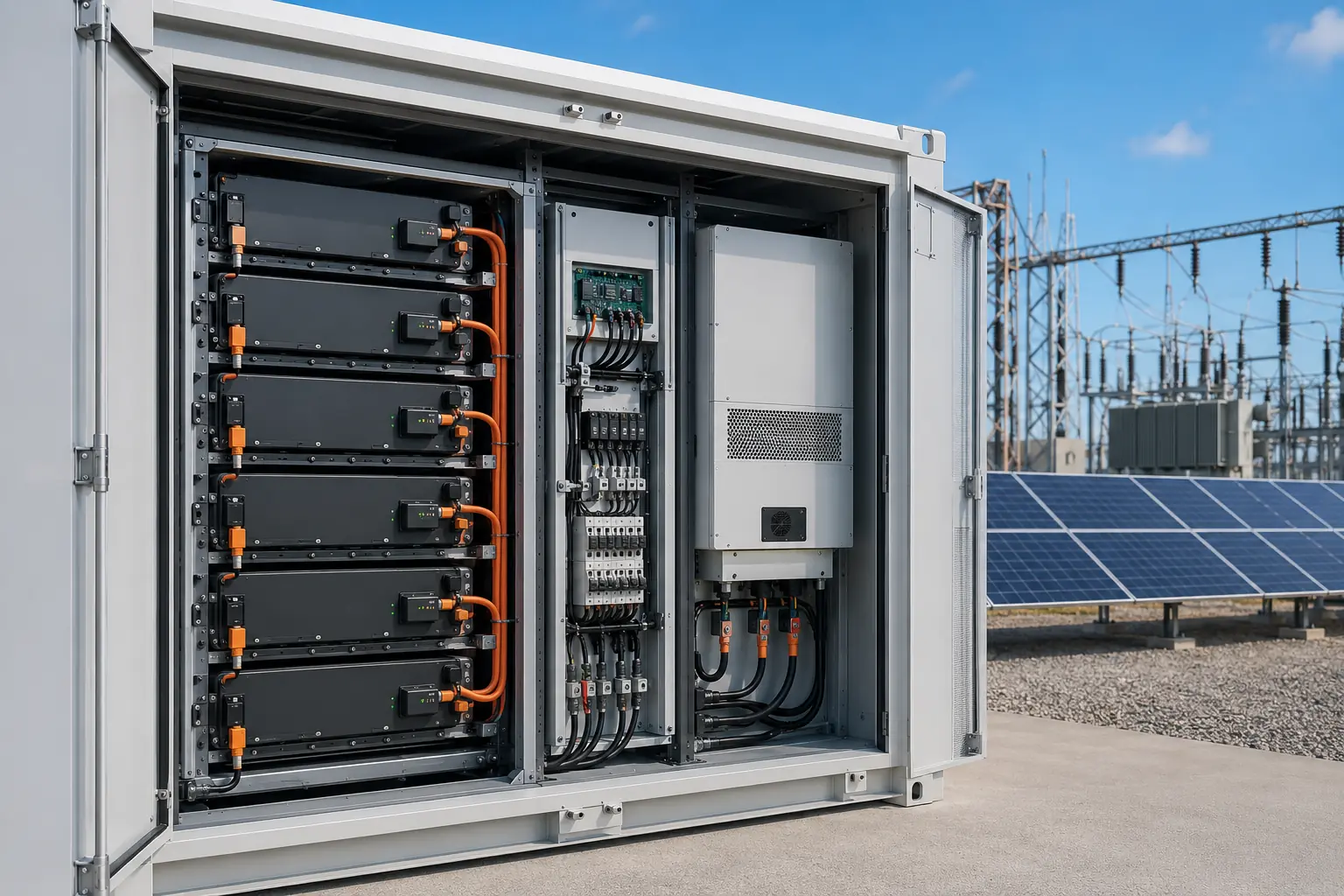
](https://voltcrave-battery.com/wp-content/uploads/2026/08/What-Are-the-Best-Solar-Battery-Storage-Systems.webp)
A battery can look impressive on a specification sheet and still be wrong for the home. Poor sizing can leave essential appliances without enough backup power.
The best solar battery storage systems include Tesla Powerwall 3, FranklinWH aPower 2, Enphase IQ Battery 10C, BYD Battery-Box Premium, sonnen home batteries, and Generac PWRcell 2. I choose between them by comparing usable capacity, continuous power, solar compatibility, scalability, warranty terms, safety, and local technical support.
Solar batteries store electricity for use after solar production falls, electricity prices rise, or the grid fails. They can also smooth changes in solar output. However, I do not treat one model as the universal winner. The right system depends on the home, the existing solar equipment, local electricity rules, and the owner’s backup goals.
Which Solar Battery Storage Systems Are Best in 2026?
The market includes many capable batteries, but their designs solve different problems. Some systems focus on high whole-home power. Others focus on modular expansion, long warranties, inverter flexibility, or generator integration.
My leading solar battery choices are Powerwall 3 for integrated solar and high output, aPower 2 for large capacity and long warranty coverage, IQ Battery 10C for Enphase homes, BYD Battery-Box for flexible inverter-based designs, sonnen for high-cycle intelligent energy management, and PWRcell 2 for modular storage with Generac integration.
| Solar battery system | Usable energy per main unit | Continuous output | Warranty | Best suited to |
|---|---|---|---|---|
| Tesla Powerwall 3 | 13.5 kWh | Up to 11.5 kW in the United States | 10 years | New solar systems and high household loads |
| FranklinWH aPower 2 | 15 kWh | 10 kW | 15 years or stated throughput limit | Whole-home backup and longer warranty coverage |
| Enphase IQ Battery 10C | 10 kWh | 7.08 kVA | 15 years or 6,000 cycles | Enphase microinverter systems and modular expansion |
| BYD Battery-Box Premium | 5.1–12.8 kWh HVS or 8.1–21.7 kWh HVM per tower | Depends on the paired inverter | Usually 10 years, subject to region | Flexible high-voltage solar designs |
| sonnen home battery range | Configurations up to 60 kWh | Model and configuration dependent | 10 years or 10,000 cycles on selected models | Frequent cycling and virtual power plant programs |
| Generac PWRcell 2 | 9–18 kWh per cabinet | Up to 11.5 kW with two configured cabinets | 10 years | Modular systems and Generac generator integration |
Specifications and warranty conditions can differ by country. I always check the local datasheet, approved inverter list, warranty document, and installer requirements before making a final comparison.
Tesla Powerwall 3: Best for Integrated Solar and High Output
I consider Tesla Powerwall 3 one of the strongest all-in-one choices for a new solar installation. It combines a 13.5 kWh battery with an integrated solar inverter. The United States version supports up to 20 kW of DC solar input and can provide up to 11.5 kW of continuous AC power. That output can support larger household loads more easily than many lower-power batteries.
Powerwall 3 can also be installed with expansion units. Each expansion adds 13.5 kWh without adding another full inverter. This design is useful when a homeowner needs more backup duration but does not need the power electronics of several independent batteries.
I see Powerwall 3 as a good match when:
- The project includes a new solar array.
- The home has an air conditioner, heat pump, well pump, or other large load.
- The owner wants one app for solar, storage, backup, and energy settings.
- Future capacity expansion may be required.
- A Tesla-certified installation network is available locally.
Powerwall 3 is not automatically the best retrofit for every existing solar system. Its strongest design advantage is the integrated solar inverter. An installer must examine the current inverter, electrical service, backup gateway, solar strings, and local interconnection requirements. The warranty lasts ten years, and exact output settings can also depend on local grid rules.
FranklinWH aPower 2: Best for Large Capacity and Warranty Length
I consider FranklinWH aPower 2 a strong whole-home backup option. One battery provides 15 kWh of capacity and 10 kW of continuous output. FranklinWH states that systems can scale to 15 batteries on one aGate, although most homes will need far fewer units.
The warranty is a major reason that I include it among the best systems. FranklinWH lists a 15-year warranty with a 60 MWh throughput condition for aPower 2. Throughput measures the total amount of energy moved through the battery during its life. A long calendar warranty is helpful, but I still examine the throughput limit because frequent cycling can reach that limit before the calendar period ends.
I see aPower 2 as a good match when:
- Whole-home backup is the main goal.
- One battery must support several larger appliances.
- The owner values a longer stated warranty period.
- The project may combine solar, grid power, a generator, or several energy sources.
- The existing solar inverter needs to remain in service.
FranklinWH describes aPower 2 as suitable for both new installations and retrofits. Its AC-coupled design can work with different solar inverters. This flexibility is useful, but the system still needs the aGate and a complete site design. The buyer should compare the full installed system rather than the battery price alone.
Enphase IQ Battery 10C: Best for Enphase Solar Homes
I consider the Enphase IQ Battery 10C a natural choice for a home that already uses Enphase microinverters. It is an AC-coupled system with 10 kWh of usable capacity and 7.08 kVA of continuous power. Enphase supports it with a 15-year limited warranty covering up to 6,000 cycles.
The system uses multiple embedded microinverters instead of relying on one central battery inverter. This architecture supports modular design and reduces dependence on a single conversion component. It also keeps solar generation and battery storage within the same Enphase monitoring environment.
I see the IQ Battery 10C as a good match when:
- The house already has Enphase solar microinverters.
- The owner wants AC-coupled storage.
- Modular expansion is more important than maximum power from one battery.
- A long warranty is a major purchasing factor.
- The local installer has current Enphase training and commissioning access.
I still compare the battery’s output against the home’s actual loads. A 10 kWh capacity figure describes stored energy. The 7.08 kVA rating describes how much power the system can deliver continuously. A homeowner may have enough stored energy for several hours but still lack enough instantaneous output to start every large appliance at once. Enphase requires qualified commissioning, so installer experience is an important part of the product decision.
BYD Battery-Box Premium: Best for Inverter Flexibility
I consider BYD Battery-Box Premium one of the strongest choices for markets where homeowners and installers prefer to select the battery and hybrid inverter separately.
The HVS range provides 5.1 to 12.8 kWh of usable capacity in one tower. Up to three identical HVS towers can be connected for a maximum of 38.4 kWh. The HVM range provides about 8.1 to 21.7 kWh per tower and can reach about 65 kWh with three matching towers.
Unlike an all-in-one battery with a fixed internal inverter, the BYD system works with approved third-party inverters. This structure can give system designers more control over voltage, backup power, phase configuration, and regional equipment selection.
I see BYD Battery-Box as a good match when:
- A compatible hybrid inverter has already been selected.
- The project needs several capacity choices.
- The installer wants a DC-coupled or high-voltage battery architecture.
- The system is outside the United States and local inverter choices differ.
- Future tower or module expansion is part of the plan.
Compatibility is the most important condition. I do not assume that any inverter can operate with any BYD battery. The exact battery model, inverter model, firmware, module count, and regional approval must appear in the current compatibility documentation. Mixing HVS and HVM towers is also not a valid design.
sonnen: Best for Frequent Cycling and Intelligent Grid Programs
I consider sonnen a strong choice when daily energy management and grid participation matter as much as emergency backup. Its United States range includes indoor and outdoor systems, including sonnenCore+, sonnenEvo, and the sonnenHome Battery 11.
Selected sonnen systems can scale to 60 kWh and include a 10-year or 10,000-cycle warranty. Sonnen states that its LFP battery technology is designed for more than 10,000 charge and discharge cycles while maintaining at least 80% of its original capacity under its stated conditions.
I see sonnen as a good match when:
- The battery will cycle frequently.
- The local utility or energy provider offers a sonnen virtual power plant program.
- The owner wants automated energy management.
- The project needs indoor or outdoor configuration choices.
- Community energy services are part of the buying decision.
A virtual power plant connects many home batteries and coordinates them as one larger grid resource. Participation may create additional value, but the program terms, owner control, battery reserve, payments, and local availability need careful review. Sonnen’s VPP programs are not available in every market.
Generac PWRcell 2: Best for Generator Integration
I consider Generac PWRcell 2 a strong option for homes that already use, or plan to use, a compatible Generac standby generator.
One PWRcell 2 cabinet can be configured from 9 to 18 kWh in 3 kWh steps. Two cabinets on one inverter can provide up to 36 kWh. A configuration with two suitable cabinets can deliver up to 11.5 kW of continuous power. Generac lists a ten-year warranty.
The system can integrate storage, solar, home loads, and selected Generac generators. This can be valuable in regions with long outages. The battery can provide immediate, quiet backup, while a generator can support longer interruptions when solar production is limited.
I see PWRcell 2 as a good match when:
- The home needs both battery storage and generator support.
- Capacity must expand in small 3 kWh steps.
- Long outages are common.
- The owner wants one coordinated Generac energy platform.
- Local Generac service is well established.
The system’s highest stated output requires a specific multi-cabinet configuration. I do not assume that a small 9 kWh installation will deliver the same power as a fully configured system. The installer must match battery modules, cabinets, inverter capacity, generator controls, and household loads.
How Do I Choose the Best Solar Battery?
A product ranking is only useful after I define what the battery must do. A home that needs evening solar use has a different requirement from a home that must operate a well pump during a three-day outage.
I choose a solar battery by comparing usable capacity, continuous and peak power, backup duration, coupling type, inverter compatibility, expansion limits, warranty conditions, safety certification, operating temperature, installer quality, and lifecycle cost. I give the highest weight to the requirements that directly affect the homeowner’s daily use and outage protection.
Capacity and Power Are Different
I measure battery capacity in kilowatt-hours. Capacity tells me how much energy the battery can store.
I measure output in kilowatts or kilovolt-amperes. Output tells me how much electrical load the battery can support at one moment. The Department of Energy explains that energy capacity and power rating must both be considered because the same stored energy can support high power briefly or lower power for longer.
For example, assume that essential household loads average 1.5 kW during an outage:
| Desired operating time | Basic energy requirement |
|---|---|
| 4 hours | 6 kWh |
| 8 hours | 12 kWh |
| 12 hours | 18 kWh |
| 24 hours | 36 kWh |
These are simple estimates. I then add an allowance for conversion losses, reserve charge, battery aging, changing loads, and periods with little solar production.
I also identify the largest loads. An air conditioner, electric water heater, induction cooker, EV charger, or well pump can draw much more power than lights and internet equipment. The battery may have enough energy but insufficient output to run several large loads together.
AC Coupling and DC Coupling
I choose the battery architecture based on whether the project is a new installation or a retrofit.
An AC-coupled battery has its own inverter and connects on the AC side of the home’s electrical system. I often prefer this design when an existing solar inverter will remain in place. It can simplify equipment compatibility, but solar energy may pass through additional conversion stages.
A DC-coupled system connects the solar array and battery through compatible DC equipment before electricity reaches the home’s AC system. It can reduce conversion steps in some operating modes and may capture solar energy that would otherwise be limited by inverter capacity. Solar can charge a battery through either a DC path or after conversion to AC.
| Project situation | Coupling approach I usually examine first |
|---|---|
| New solar and battery installation | DC-coupled or integrated hybrid system |
| Existing solar with a working inverter | AC-coupled battery |
| Enphase microinverter system | Enphase AC-coupled storage |
| High-voltage hybrid inverter project | Compatible DC battery such as BYD |
| Generator plus battery project | Integrated AC energy platform |
I do not select coupling type from efficiency claims alone. Installation cost, inverter replacement, backup design, solar restart during an outage, maintenance access, and future expansion can have a larger effect on long-term value.
Warranty Terms Need Careful Reading
A battery may advertise a 10-year or 15-year warranty, but the calendar term is only one part of the protection.
I check:
- The maximum cycle count.
- The energy-throughput limit.
- The guaranteed remaining capacity.
- The required internet connection.
- Approved operating modes.
- Temperature and installation conditions.
- Labor and transport coverage.
- Transfer rules when the home is sold.
- Registration and commissioning deadlines.
A warranty may end when the first limit is reached. A frequently cycled battery can reach its cycle or throughput limit before the calendar period ends. I compare the written warranty with the expected daily operating schedule.
Safety and Installer Quality
I prefer complete systems that meet the relevant local safety and electrical standards. In the United States, UL 9540 applies to energy storage systems and equipment. UL 9540A addresses thermal-runaway fire propagation testing. NFPA 855 provides installation requirements for stationary energy storage systems.
Certification does not replace good design. I also check:
- Battery placement and required clearances.
- Indoor or outdoor enclosure rating.
- Flood, heat, sunlight, and cold exposure.
- Fire detection and shutdown functions.
- Cable and overcurrent protection.
- Emergency access.
- Installer training.
- Remote monitoring.
- Local service and spare parts.
A well-known battery with a poor installation can perform worse than a less familiar battery installed by an experienced and responsive team.
What Size Solar Battery Do I Need?
I size a battery around the homeowner’s goal instead of using a fixed rule for every property.
A small battery may be enough for solar self-consumption and essential-load backup. Whole-home backup often needs greater capacity and output, especially when the property uses electric heating, cooling, cooking, pumps, or vehicle charging. I calculate the critical load, desired operating time, solar recharge potential, and maximum simultaneous power.
Step 1: Define the Backup Loads
I divide household loads into three groups:
| Load group | Examples | Typical priority |
|---|---|---|
| Essential | Refrigerator, lights, internet, alarms, medical devices | Highest |
| Important | Selected outlets, fans, small pumps, home office | Medium |
| Large discretionary | EV charging, electric heating, pool equipment, ovens | Controlled or disabled |
This process can reduce the required battery size. It can also improve outage duration because the system does not waste stored energy on low-priority appliances.
Step 2: Choose the Backup Duration
I ask whether the battery must cover:
- A brief evening outage.
- An overnight interruption.
- A full day.
- Several days with solar recharging.
- Several days without reliable sunlight.
Solar can recharge the battery during an outage only when the system includes the correct backup controls and the array can produce enough energy. Weather, shading, season, and household use affect the result. Storage helps solar serve loads after sunlight falls, but it cannot guarantee unlimited backup.
Step 3: Check Peak Power
I list the equipment that may operate at the same time. I also check motor-starting requirements.
A home may use only 10 kWh overnight but still require a high-output battery to start an air conditioner or pump. Another home may consume 25 kWh but spread that use across many hours. The second home needs more energy capacity, while the first may place more pressure on inverter power.
Step 4: Allow for Aging and Reserve Capacity
Battery capacity normally changes with age and use. I avoid sizing a system that can only meet the target when it is new and fully charged.
I add design margin for:
- Conversion losses.
- Capacity degradation.
- Cold or hot conditions.
- Backup reserve.
- Unexpected loads.
- Reduced winter solar generation.
- Future electrification.
The final design should be based on measured interval data when available. Monthly electricity bills are helpful, but they do not show which appliances operate at the same moment.
My Insights: What Are the Best Solar Battery Storage Systems
I do not believe the best battery is simply the model with the largest capacity, highest power, or longest warranty. The strongest choice is the system that fits the complete energy plan.
The best solar battery storage systems are those that match the home’s loads, solar equipment, outage risks, tariff structure, expansion plans, and service environment. Powerwall 3, aPower 2, IQ Battery 10C, BYD Battery-Box, sonnen, and PWRcell 2 are leading options, but each becomes “best” only in the right application.
I Match the Product to the Main Goal
For a new solar installation with large household loads, I would place Tesla Powerwall 3 near the top of the shortlist.
For longer warranty coverage and strong output from one battery, I would examine FranklinWH aPower 2.
For a home built around Enphase microinverters, I would first compare the IQ Battery 10C with other compatible AC-coupled options.
For an international project with a selected hybrid inverter, I would examine the BYD compatibility list and choose the HVS or HVM configuration that fits the design.
For frequent cycling and virtual power plant participation, I would examine the local sonnen program.
For a home that needs coordinated battery and standby generator operation, I would examine Generac PWRcell 2.
I Compare the Complete Installed System
The battery cabinet is only one part of the purchase. The complete project may also include:
- Solar or battery inverters.
- A backup gateway.
- A transfer switch.
- A critical-load panel.
- Current transformers and meters.
- Electrical service upgrades.
- Fire protection measures.
- Monitoring subscriptions.
- Permits and interconnection work.
- Installation labor.
- Commissioning and technical support.
I compare the final installed price against usable capacity, output, expected yearly cycling, warranty limits, and the loads that will actually receive backup power. I do not compare battery hardware prices without these items.
I Protect Future Flexibility
A solar battery may remain in service for ten years or longer. During that time, the owner may add an EV, heat pump, electric water heater, workshop equipment, or another solar array.
I check whether the system can expand later. I also ask whether expansion requires identical battery generations, another inverter, more wall space, a larger gateway, or a new electrical permit.
Expansion claims need detail. Adding energy capacity is not the same as adding output power. Some expansion batteries add stored energy but use the original inverter. This can extend backup time without increasing the maximum load that the system can support.
I Treat Local Support as a Technical Specification
A reliable installer can be as important as the battery brand.
I look for a team that can:
- Produce a clear single-line diagram.
- Explain backup-load limits.
- Model expected battery use.
- Confirm all product compatibility.
- Provide certification documents.
- Complete commissioning correctly.
- Diagnose remote alarms.
- Supply replacement components.
- Respond during warranty claims.
A battery with excellent specifications can become a poor investment when technical support is slow or replacement parts are unavailable. For this reason, my final decision includes the manufacturer, distributor, installer, monitoring platform, and warranty process.
Conclusion
The best solar battery depends on the home. I choose by matching capacity, power, compatibility, warranty, safety, expansion, and local support to the owner’s real energy goals.
](https://voltcrave-battery.com/wp-content/uploads/2026/08/Is-a-240V-Portable-Power-Station-Necessary-for-Home-Backup-768x512.webp)
](https://voltcrave-battery.com/wp-content/uploads/2026/08/How-High-Voltage-Battery-Systems-Improve-Power-Efficiency-768x512.webp)
](https://voltcrave-battery.com/wp-content/uploads/2026/08/How-to-Pick-the-Right-Portable-Power-Station-768x512.webp)