

](https://voltcrave-battery.com/wp-content/uploads/2026/08/Are-Solar-Batteries-Worth-It-in-2026.webp)
Solar batteries are becoming cheaper and more capable, but losing the federal residential tax credit has changed the financial calculation for U.S. homeowners in 2026.
Solar batteries can still be worth it in 2026, especially for homes with frequent outages, expensive time-of-use electricity, poor solar export compensation, or strong state and utility incentives. However, they are not automatically a good financial investment. Backup value, local electricity rates, battery cost, solar production, and available incentives determine the real return.
I would evaluate a solar battery as both an energy-saving device and a resilience investment. In 2026, that distinction matters more because U.S. homeowners can no longer assume that a new residential battery will receive the former 30% federal Residential Clean Energy Credit.
Are Solar Batteries Financially Worth It in 2026?
A battery can lower an electricity bill, but its savings vary dramatically between utilities and states. A homeowner with full retail-rate net metering faces a very different calculation from someone whose utility pays little for exported solar electricity.
Solar batteries are most financially attractive when the value of using stored electricity later is significantly higher than the value of exporting solar immediately. High peak electricity prices, low export rates, demand-response payments, virtual power plant programs, and state incentives can improve the economics. Cheap electricity and generous net metering can make batteries harder to justify from bill savings alone.
Home Battery Prices Are Still Significant
EnergySage reported in July 2026 that a typical 13.5 kWh home battery installation costs about $15,647 before available incentives. Its marketplace data from the first half of 2026 showed substantial variation between brands and states.
That means a homeowner should not assume that falling lithium-ion cell prices translate directly into a cheap installed home battery.
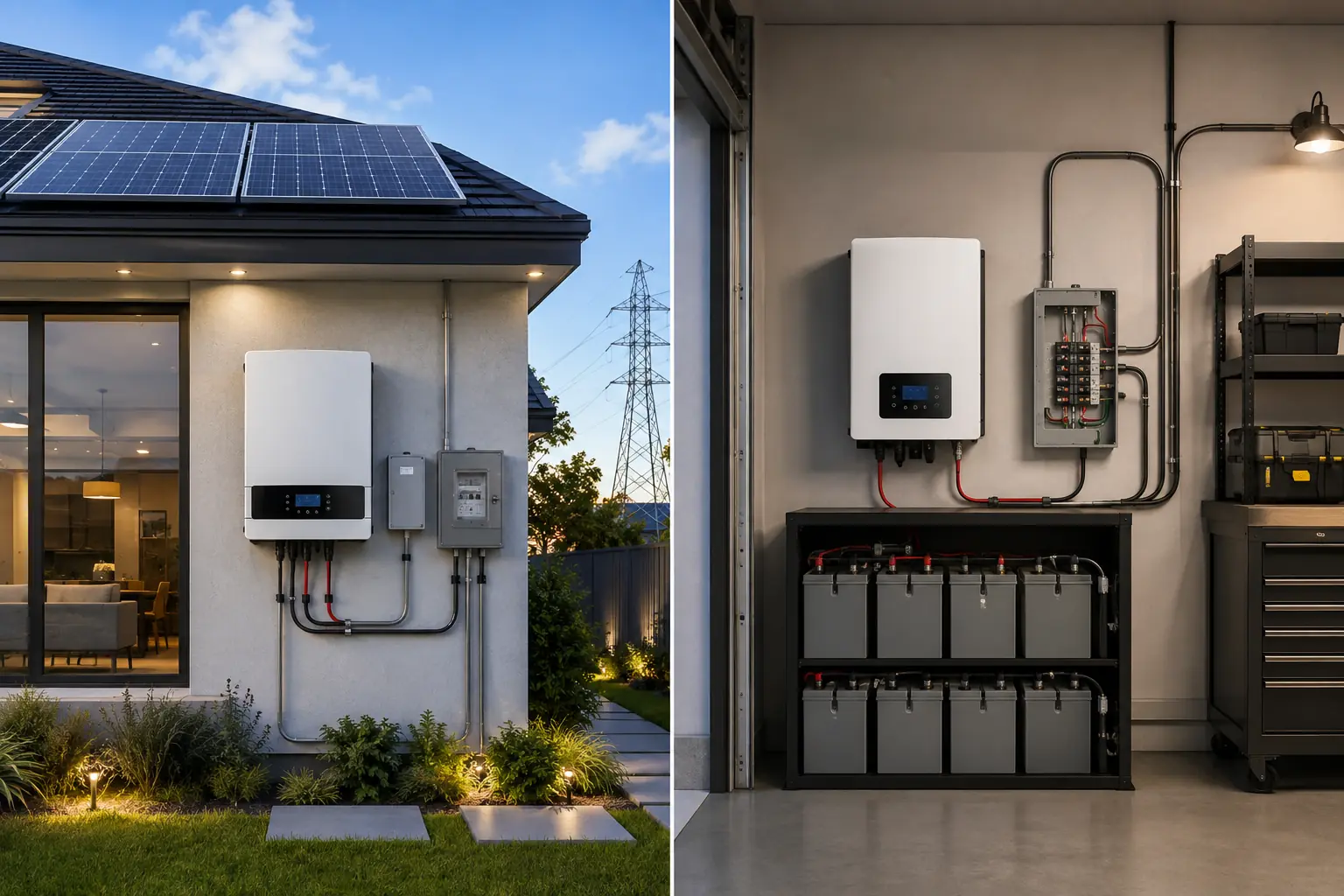
A complete installation may include:
- Battery modules
- Battery inverter
- Backup gateway or transfer equipment
- Electrical panel modifications
- Wiring
- Permitting
- Installation labor
- Monitoring equipment
- Commissioning
For a simple financial illustration, suppose a 13.5 kWh system costs $15,000.
If it saves $1,000 per year, the simple payback is:
$15,000 ÷ $1,000 = 15 years
If state incentives reduce the net cost to $10,000 and annual savings reach $1,500:
$10,000 ÷ $1,500 = 6.7 years
These are mathematical examples rather than typical guaranteed returns. Actual savings depend on location, tariff design, battery operation, degradation, solar production, and financing.
The Federal Tax Credit Changed in 2026
This is one of the biggest changes affecting U.S. solar-battery economics.
The federal Residential Clean Energy Credit previously covered qualifying battery storage and other residential clean-energy equipment. The IRS now states that the 30% Section 25D credit applies to qualified property installed through December 31, 2025, and is unavailable for property placed in service after that date.
IRS guidance on Public Law 119-21 confirms that the Residential Clean Energy Credit was terminated for expenditures after December 31, 2025. Even paying for a system in 2025 does not preserve eligibility when installation is completed after that date.
| Installation timing | Federal Residential Clean Energy Credit |
|---|---|
| Qualifying installation completed by Dec. 31, 2025 | Potentially eligible under applicable rules |
| New installation completed in 2026 | Not eligible for Section 25D |
| State battery incentives | May still be available |
| Utility rebates/VPP payments | Depend on local program |
I would therefore reject any 2026 battery proposal that still automatically subtracts a 30% federal residential credit without explaining a separate legally applicable incentive.
State, utility, and local programs can still materially change the economics.
When Is a Solar Battery Worth It?
I see four situations where a battery becomes especially attractive: expensive peak electricity, poor export compensation, frequent outages, and valuable local incentives.
A solar battery is most likely to be worth buying when it solves more than one problem. A battery that reduces peak electricity purchases, increases solar self-consumption, provides outage protection, and earns grid-service payments has a much stronger value proposition than a battery installed only because a homeowner already owns solar panels.
High Time-of-Use Rates Can Make Batteries Valuable
Some utilities charge considerably more during afternoon or evening peak periods.
A homeowner can charge the battery from solar during lower-value midday hours and discharge it during expensive peak periods.
Consider this simplified example:
| Energy flow | Example electricity value |
|---|---|
| Export midday solar | $0.08/kWh |
| Store midday solar | — |
| Avoid evening purchase | $0.35/kWh |
| Gross difference | $0.27/kWh |
Battery efficiency and degradation reduce the actual benefit, but the price difference creates an economic opportunity.
The larger the gap between export compensation and peak retail electricity prices, the more valuable energy shifting can become.
Low Solar Export Rates Strengthen the Case
California provides a clear example.
Under the state's Net Billing Tariff, exported solar is generally compensated below the retail electricity rate, although export values can rise during certain high-value evening periods. The California Public Utilities Commission specifically states that customers can maximize bill savings by pairing generation with battery storage and shifting stored energy into more valuable periods.
This changes the solar strategy.
Under generous net metering:
Excess solar → grid → strong credit
Under lower export compensation:
Excess solar → battery → home later
The battery becomes more valuable because self-consuming a stored solar kWh may be worth significantly more than exporting it immediately.
High Electricity Prices Improve Battery Economics
U.S. residential electricity prices also continued rising into 2026.
EIA data for May 2026 showed an average residential electricity revenue of 18.44 cents/kWh, 6.2% higher than May 2025. California, Rhode Island, and Massachusetts were among the highest-priced contiguous states in that dataset.
Higher electricity prices do not automatically make batteries profitable, because the savings depend on when electricity costs are high and how solar exports are compensated.
However, a battery generally has more economic opportunity when the avoided electricity is expensive.
Are Solar Batteries Worth It for Backup Power?
Financial payback is only one reason to buy a battery. Some homeowners place significant value on keeping refrigeration, communications, medical equipment, lighting, heating controls, or pumps operating during outages.
Solar batteries can be worth it for resilience even when electricity-bill savings alone do not recover the full purchase price. A backup-capable battery can automatically isolate a home from a failed grid and supply protected loads. When combined with properly configured solar, it may recharge during daylight and extend backup through a multi-day outage.
A Battery Provides Automatic Backup
A properly designed backup system can detect the utility outage and move the home into islanded operation.
DOE describes residential solar-plus-storage systems that automatically detect grid loss, disconnect, and continue powering the home locally.
This can be particularly valuable for households that experience:
- Wildfire-related outages
- Hurricanes
- Ice storms
- Public safety power shutoffs
- Weak rural distribution networks
- Frequent thunderstorms
- Critical medical-equipment needs
I would assign a financial value to avoided outages where possible.
For example, preventing spoiled food may save hundreds of dollars. Keeping a home office online may protect income. Maintaining a well pump or medical device can carry much greater personal value.
Solar Makes a Battery More Useful During Long Outages
A battery without solar starts an outage with a fixed amount of stored energy.
Once that energy is exhausted, backup ends.
A compatible solar-plus-storage system can generate new electricity each day. DOE notes that distributed solar combined with local storage can continue supporting homes during wider grid disruption without requiring fuel deliveries.
This creates a major difference:
Battery only = stored reserve
Solar + battery = stored reserve + possible daily energy production
For long-duration resilience, I often value solar-recharging capability more than simply purchasing the largest possible battery.
When Are Solar Batteries Not Worth It?
Battery marketing often focuses on independence and savings, but some households receive limited financial benefit.
A solar battery may not be worth it when grid electricity is inexpensive and reliable, excess solar receives generous compensation, peak and off-peak prices are similar, outages are rare, and no meaningful incentives are available. In these conditions, a battery may provide convenience and resilience but produce a long financial payback period.
Full-Retail Net Metering Can Reduce the Financial Need
Suppose a homeowner exports one kWh of solar and receives a credit almost equal to the cost of buying one kWh later.
The grid effectively provides a strong financial offset for excess solar.
Adding a battery introduces:
- Battery cost
- Conversion losses
- Degradation
- Additional electronics
In that situation, storing the solar may provide limited extra bill savings.
I would still consider a battery for backup, but I would separate backup value from energy-savings value.
A Reliable Grid Reduces Resilience Value
A homeowner experiencing one five-minute outage every few years may not receive enough resilience benefit to justify a $10,000–$20,000 battery.
Someone experiencing several multi-hour outages every year may reach the opposite conclusion.
The same battery can therefore be worthwhile at one house and uneconomic at another.
Oversized Batteries Can Have Poor Economics
Buying more battery capacity than the home can regularly use increases cost without proportionally increasing savings.
Suppose a household produces only 6 kWh of excess solar on a typical day.
Installing 30 kWh of storage may leave most of the battery unused during normal operation.
I size batteries around:
- Excess daily solar generation
- Evening consumption
- Peak-rate duration
- Backup loads
- Expected outage duration
- Available solar recharge
A larger battery is not automatically a better investment.
How Long Does It Take a Solar Battery to Pay for Itself?
There is no universal payback period because battery economics depend heavily on tariffs and incentives.
A solar battery may have a payback period of under ten years in favorable markets, while other homeowners may never recover the complete battery cost through electricity savings alone. In 2026, the loss of the federal residential credit makes state incentives, time-of-use spreads, export compensation, and grid-service programs more important to the calculation.
My Simple Battery Payback Formula
I begin with:
Simple payback = Net installed battery cost ÷ Annual battery-related savings and revenue
Suppose:
- Installed cost: $15,000
- State incentive: $3,000
- Net cost: $12,000
- Electricity savings: $1,100/year
- VPP payments: $300/year
Total annual value:
$1,400
Simple payback:
$12,000 ÷ $1,400 = 8.6 years
Then I perform a more complete analysis including:
- Battery degradation
- Electricity-rate escalation
- Round-trip losses
- Maintenance
- Financing interest
- Warranty period
- Replacement risk
- Discount rate
A simple payback calculation is useful for comparison, but it is not the same as a lifecycle financial model.
Should I Add a Battery to Existing Solar in 2026?
Existing solar owners often face a different decision from homeowners buying solar and storage together.
Adding a battery to an existing solar system can make sense when utility tariffs have changed, outages have become more important, or the homeowner wants to increase self-consumption. AC-coupled batteries can often simplify retrofits, although electrical-panel work, backup equipment, permitting, and system compatibility can increase the installed cost.
I Check the Existing Solar Inverter
Some existing systems can integrate easily with a new battery.
Others may require:
- A separate battery inverter
- Backup gateway
- Main-panel upgrades
- New metering
- Additional disconnects
- Solar inverter modifications
I compare the complete retrofit price with the expected benefit.
A battery that appears inexpensive as hardware may become costly once the home's electrical system is modified.
I Check Whether Solar Works During an Outage
Standard grid-connected solar normally shuts down when the utility fails.
Adding a battery does not automatically guarantee solar charging during outages unless the complete system supports islanded solar operation.
For backup installations, I specifically verify that:
- The battery can form a local grid.
- The solar inverter can operate in that local grid.
- Solar can charge the battery while the utility remains unavailable.
- The system can manage excess solar when the battery is full.
These details matter more than battery capacity alone.
My Insights: Are Solar Batteries Worth It in 2026
The answer has become more location-dependent in 2026. Falling battery costs help, but the loss of the federal residential credit makes the local electricity market much more important.
Solar batteries are worth it in 2026 when they provide enough combined value from energy savings, poor export compensation, backup power, incentives, and grid programs to justify their installed cost. They are less compelling where electricity is cheap, net metering is generous, outages are rare, and no incentives exist. I would calculate value before selecting a battery.
The 2026 Tax Change Raises the Importance of Local Economics
Until the end of 2025, the federal Residential Clean Energy Credit could cover 30% of qualifying residential battery expenses.
That changes dramatically for new 2026 installations because the IRS says property placed in service after December 31, 2025 is no longer eligible for Section 25D.
A $15,000 battery therefore no longer automatically becomes an effective $10,500 investment through a federal 30% credit.
This makes state rebates, utility programs, and installer pricing substantially more important.
Rising Electricity Prices Help, but Tariff Structure Matters More
Average U.S. residential electricity prices increased year over year in May 2026.
However, I care more about the difference between charging and discharging value than the average electricity price.
A battery becomes especially valuable when I can store solar worth $0.05–$0.10/kWh and later avoid buying electricity worth $0.30–$0.50/kWh.
A flat $0.18/kWh tariff with generous net metering may produce much weaker economics.
Backup Value Should Not Be Ignored
A generator and battery are purchased partly for the same reason: they provide value when normal electricity service disappears.
It would be incomplete to judge a backup battery only by its annual electricity-bill savings.
I consider:
- Outage frequency
- Outage duration
- Critical equipment
- Medical requirements
- Work-from-home needs
- Food refrigeration
- Well pumps
- Heating or cooling needs
Solar-plus-storage is particularly attractive where outages and fuel-delivery concerns make conventional backup difficult. DOE specifically recognizes local solar and storage as resilience resources capable of operating when centralized grid infrastructure is disrupted.
California Shows Why Batteries Can Become More Valuable Than Solar Alone
California's Net Billing Tariff generally values exported solar below the retail electricity rate and explicitly encourages customers to use batteries to shift energy into more valuable periods.
This is an important market trend.
When utilities pay less for midday exports, homeowners have a stronger reason to store excess solar themselves.
I expect battery economics to improve in markets that move toward:
- Time-varying electricity prices
- Lower daytime solar export rates
- Higher evening prices
- Virtual power plant participation
- Grid-service payments
My 2026 Decision Rule
I would seriously consider a home battery when at least two or three of these conditions apply:
| Condition | Effect on battery value |
|---|---|
| Frequent outages | Strongly positive |
| High peak electricity prices | Positive |
| Low solar export compensation | Strongly positive |
| State or utility incentive | Strongly positive |
| VPP/grid-service payments | Positive |
| Existing solar surplus | Positive |
| Critical backup loads | Strongly positive |
| Cheap flat electricity rates | Negative |
| Full retail net metering | Usually negative for savings case |
| Very reliable grid | Reduces resilience value |
| High installation cost | Negative |
I would not buy a battery because it is fashionable or because every solar installation supposedly needs one.
I would buy it when the battery has a clearly defined job and the financial or resilience value of that job justifies the cost.
Conclusion
Solar batteries can be worth it in 2026, but not universally. High rates, weak export compensation, outages, and local incentives create the strongest case for home storage.
](https://voltcrave-battery.com/wp-content/uploads/2026/08/How-Does-Temperature-Affect-BESS-Battery-Life-768x512.webp)
](https://voltcrave-battery.com/wp-content/uploads/2026/08/How-Is-a-Solar-Panel-Made-768x512.webp)
](https://voltcrave-battery.com/wp-content/uploads/2026/08/Which-Is-Better-a-Solar-Inverter-or-a-Regular-Inverter-768x512.webp)