
](https://voltcrave-battery.com/wp-content/uploads/2026/10/Is-a-Whole-House-Battery-Backup-System-Better-Than-a-Generator.webp)
Power outages can disrupt refrigeration, heating, internet access, and essential household equipment. Choosing an unsuitable backup system can increase costs and leave a home without sufficient electricity.
A whole-house battery backup system is generally better than a generator for quiet operation, lower routine maintenance, solar integration, and short outages. However, a standby generator may be more practical for extended outages and high electrical demand. The better choice depends on installation costs, battery capacity, fuel availability, and household energy requirements.
I recommend comparing batteries, generators, solar, and hybrid systems based on backup duration, reliability, fuel availability, operating costs, and household power requirements for optimal performance.
What Are the Main Differences Between Whole-House Battery Backup and Generators?
Home battery storage systems and standby generators both provide electricity when the utility grid fails. However, one stores previously generated electricity, while the other converts fuel into electrical power.
The main difference between a whole-house battery and a standby generator is how electricity is supplied. A battery delivers stored energy through an inverter without on-site fuel combustion. A generator produces electricity from natural gas, propane, or another fuel. Batteries offer quieter operation and potential energy savings, while generators can support longer outages when fuel remains available.
How Does Whole-House Battery Backup Work?
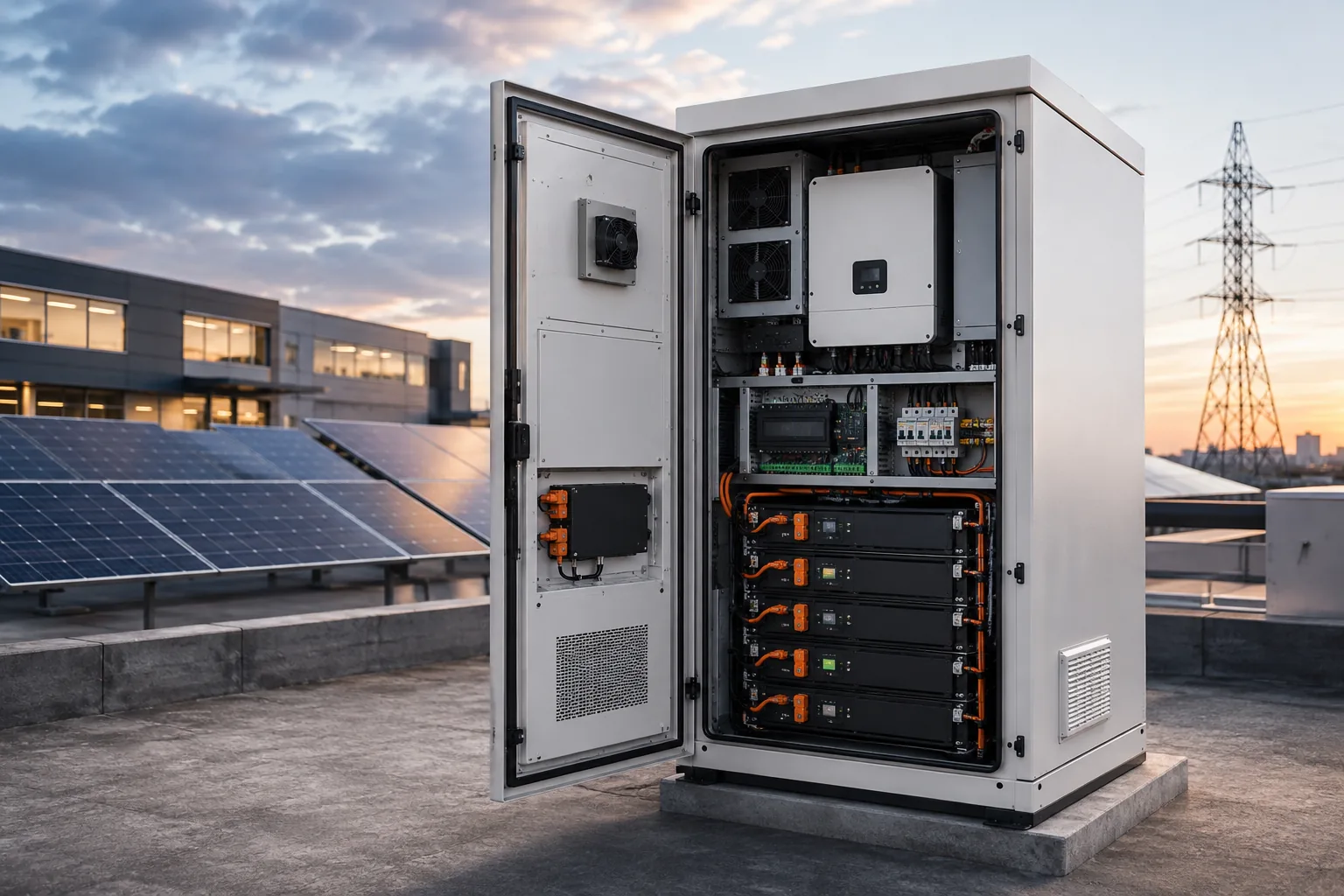
A whole-house battery backup system stores electricity in rechargeable battery modules.
The electricity may come from the utility grid or compatible rooftop solar panels.
During a power outage, the backup system detects the loss of utility electricity and isolates the protected household circuits from the external grid.
The battery inverter then converts stored DC electricity into AC electricity.
This allows household appliances to continue operating within the system's electrical limits.
I consider the automatic operation one of the most useful advantages.
Homeowners do not need to start a combustion engine or refuel the battery during the initial backup period.
However, the system has a limited amount of stored energy.
Once the battery reaches its minimum operating charge, it must recharge from an available electricity source before continuing normal operation.
How Does a Standby Generator Work?
A standby generator produces electricity by operating an engine connected to an electrical generator.
The engine typically uses natural gas, propane, or diesel.
When grid electricity becomes unavailable, an automatic standby system can start the generator and transfer supported household loads to generator power.
I consider this particularly useful for homes that experience long outages.
A generator can continue producing electricity as long as it has suitable fuel and remains mechanically operational.
However, fuel supply is not always guaranteed.
Natural gas infrastructure can be interrupted, propane tanks can become depleted, and diesel deliveries may be delayed during severe weather.
Generators also require engine maintenance and produce combustion exhaust.
Whole-House Battery vs. Generator Comparison
| Feature | Whole-House Battery | Standby Generator |
|---|---|---|
| Energy source | Stored electricity | Natural gas, propane, or diesel |
| Operating noise | Generally low | Higher |
| On-site combustion exhaust | None during discharge | Yes |
| Backup duration | Limited by available energy | Limited by fuel and operation |
| Automatic backup | Supported by compatible systems | Supported by automatic standby systems |
| Solar integration | Common in compatible installations | Requires additional equipment |
| Routine maintenance | Generally lower | Regular servicing |
| Installation cost | Usually higher | Usually lower |
| Daily electricity savings | Possible | Generally limited |
| Long-duration backup | Requires replenishment | Practical when fuel is available |
Does a Whole-House Battery Provide Better Reliability?
I do not believe either technology is automatically more reliable under every condition.
A battery has no combustion engine and generally requires less mechanical maintenance.
However, the inverter, battery management system, and electrical protection equipment can still experience faults.
A generator can provide extended electricity production but depends on fuel delivery, engine condition, and scheduled maintenance.
The most reliable solution depends on the failure scenarios the homeowner wants to protect against.
For short outages, a battery may provide convenient and dependable operation.
For prolonged outages with substantial energy consumption, a generator may offer greater practical flexibility.
How Long Can a Whole-House Battery or Generator Power a Home?
Backup duration is one of the most important differences between batteries and generators. A high-capacity battery may operate essential appliances for many hours but discharge quickly when several large appliances run simultaneously.
A whole-house battery's runtime depends on usable energy capacity and household electrical demand. For example, a 30 kWh battery delivering 24 kWh of usable AC energy could power a constant 1 kW load for 24 hours. A generator can operate longer if sufficient fuel is available and the equipment remains functional.
Understanding Battery Capacity and Power Output
I always separate battery energy capacity from inverter power.
Kilowatt-hours (kWh) measure stored electrical energy.
Kilowatts (kW) measure the rate at which electricity is consumed or delivered.
For example, a 30 kWh battery contains three times the nominal energy of a 10 kWh battery.
However, if both systems have the same inverter output rating, they may support similar maximum continuous loads.
The larger battery mainly provides longer operating time under equivalent conditions.
I recommend evaluating both measurements when designing a residential backup system.
How to Calculate Battery Backup Runtime
I use the following simplified formula:
Backup Runtime (hours) = Available AC Energy (kWh) ÷ Average Household Load (kW)
Suppose a home has a battery system with 30 kWh of nominal capacity.
Assume that 80% of the nominal capacity becomes available as AC electricity after operating limits and losses.
Available electricity would be:
30 kWh × 0.80 = 24 kWh
If the household consumes an average of 2 kW:
24 kWh ÷ 2 kW = 12 hours
The battery could theoretically support that constant load for approximately 12 hours without recharging.
Actual operating duration depends on battery condition, charge level, temperature, inverter efficiency, and reserve settings.
Estimated Whole-House Battery Runtime
The following table assumes 80% of nominal capacity is available as AC energy.
| Battery Capacity | 1 kW Load | 2 kW Load | 3 kW Load |
|---|---|---|---|
| 10 kWh | 8 hours | 4 hours | 2.7 hours |
| 13.5 kWh | 10.8 hours | 5.4 hours | 3.6 hours |
| 20 kWh | 16 hours | 8 hours | 5.3 hours |
| 30 kWh | 24 hours | 12 hours | 8 hours |
| 40 kWh | 32 hours | 16 hours | 10.7 hours |
| 60 kWh | 48 hours | 24 hours | 16 hours |
These are simplified calculations without additional solar charging.
The values do not guarantee the runtime of a particular battery product.
How Long Can a Generator Operate?
Generator operating duration depends on fuel availability, fuel consumption, maintenance requirements, and electrical demand.
For example, a properly installed natural gas standby generator may provide electricity during an extended outage if the gas utility continues operating.
A propane generator depends on the amount of fuel stored in its tank and the rate at which fuel is consumed.
I would not estimate generator runtime based only on its rated wattage.
A 15 kW generator does not necessarily consume the same amount of fuel under a 3 kW load as it does under a 12 kW load.
The manufacturer's fuel-consumption specifications are important.
Can Solar Panels Make a Home Battery Last Longer?
Yes. Solar generation can improve battery backup duration when the equipment supports operation during a grid outage.
For example, a compatible rooftop solar system may supply household electricity during daylight hours and recharge the battery.
This allows stored energy to be used overnight and replenished during the following day.
However, sunlight is not always available.
Cloud cover, shading, snow, seasonal conditions, and the solar system's rated capacity all affect electricity production.
I would not assume that solar-plus-battery systems can provide unlimited backup electricity.
The average solar energy generated must be sufficient to support household consumption and replenish stored energy.
Why Do High-Power Appliances Matter?
Homeowners may want to operate refrigerators, air conditioning, electric heating, water pumps, and kitchen appliances during an outage.
These loads have different energy requirements.
For example, a refrigerator may use relatively little electricity over 24 hours, while electric heating equipment can require substantial continuous power.
I recommend identifying which loads are essential.
Reducing unnecessary appliance use can significantly extend battery backup duration.
For generators, load management may reduce fuel consumption and improve operating flexibility.
Is a Whole-House Battery Cheaper Than a Generator Over Time?
The initial installation cost is often the deciding factor for homeowners. Batteries generally require a larger investment, but generators incur ongoing fuel and maintenance expenses.
In 2026, a typical installed 13.5 kWh home battery costs approximately $15,650 in the United States, while a standby generator installation commonly costs around $7,000, depending on capacity and site requirements. Larger whole-house battery installations can cost substantially more. Lifetime costs depend on fuel, maintenance, electricity savings, battery degradation, and replacement requirements.
Average Installation Costs in 2026
EnergySage reports that a typical 13.5 kWh residential battery installation costs approximately $15,647 before incentives.
However, a single 13.5 kWh battery may provide only limited whole-house operating time.
A larger system with approximately 30 kWh of capacity may cost substantially more.
EnergySage provides an example of a 30 kWh whole-house battery installation costing approximately $33,840.
Standby generators often cost less upfront, although large or complex installations can become considerably more expensive.
| Backup System | Illustrative U.S. Installed Cost |
|---|---|
| 13.5 kWh home battery | About $15,650 |
| 30 kWh whole-house battery | About $33,840 |
| Typical standby generator installation | About $7,000 |
| Large generator installation | Depends on generator size and electrical work |
| Hybrid battery-generator system | Depends on both systems and integration |
These figures are planning references rather than guaranteed quotations.
I recommend obtaining quotes that include permits, electrical panels, transfer equipment, labor, and related upgrades.
Generator Fuel and Maintenance Costs
Generators require fuel whenever they operate.
The total fuel cost depends on generator efficiency, electrical load, local fuel prices, and outage duration.
They also require periodic maintenance.
Typical maintenance tasks may include oil changes, filter replacement, inspection, testing, and servicing of engine components.
I consider these expenses part of the total ownership cost.
A generator that operates infrequently may have relatively limited fuel expenses.
However, frequent or extended outages can increase operating costs.
Can Home Batteries Save Electricity Costs?
Home batteries may provide financial benefits even when the grid is operating normally.
Some electricity providers use time-of-use pricing.
This means electricity prices change depending on the time of day.
A compatible battery can charge during less expensive periods and discharge when grid electricity becomes more expensive.
A solar battery can also store excess solar electricity for later household use.
I consider this one of the main economic advantages of battery systems.
A conventional standby generator generally does not provide comparable daily electricity savings.
However, savings are not guaranteed.
They depend on utility tariffs, charging efficiency, solar generation, and household consumption.
Example of Battery Electricity Savings
Consider a simplified time-of-use scenario:
- Off-peak electricity rate: $0.15/kWh
- Peak electricity rate: $0.35/kWh
- AC energy delivered from the battery: 10 kWh
- Assumed round-trip efficiency: 90%
To deliver 10 kWh, the battery must purchase approximately:
10 kWh ÷ 0.90 = 11.11 kWh
Charging cost:
11.11 kWh × $0.15 = $1.67
Value of peak electricity avoided:
10 kWh × $0.35 = $3.50
Estimated gross savings per cycle:
$3.50 − $1.67 = $1.83
This example excludes battery degradation, financing, additional charges, and other costs.
It also assumes sufficient battery energy is available while maintaining the required emergency backup reserve.
I would not assume the same savings can be achieved every day.
Can a Whole-House Battery Pay for Itself?
I believe battery payback should be evaluated using actual financial data.
The simplified formula is:
Simple Payback Period = Net Installed Cost ÷ Annual Net Savings
Suppose a battery installation costs $20,000 and provides $800 of annual net electricity savings.
The simple payback period would be:
$20,000 ÷ $800 = 25 years
This estimate does not account for financing, battery replacement, inflation, or the value of outage protection.
It demonstrates why buying a large battery solely to reduce utility bills may not always be economical.
Homeowners experiencing frequent blackouts may assign significant value to backup reliability even when direct electricity savings are limited.
What About Battery Incentives in 2026?
U.S. homeowners should check current incentive rules before estimating project costs.
The federal Residential Clean Energy Credit under Section 25D is no longer available for qualifying expenditures made after December 31, 2025.
This means new residential battery projects in 2026 generally cannot claim the former 30% federal credit.
Some state, local, and utility incentive programs may still be available.
I recommend confirming eligibility and funding before calculating investment returns.
How Do You Choose the Safest and Most Reliable Home Backup System?
Choosing a battery or generator based only on purchase price can lead to unreliable backup performance. Electrical compatibility, installation safety, fuel availability, and long-term maintenance all matter.
I recommend choosing a home backup system based on outage frequency, expected duration, household electrical loads, installation budget, and available energy sources. Batteries are often preferable for short outages and quiet operation. Generators are useful for long outages with high loads. Hybrid systems can improve flexibility when all equipment is properly integrated.
When Is a Whole-House Battery the Better Choice?
I generally prefer a home battery when homeowners want quiet electricity and automatic backup.
Battery storage is particularly attractive when the household already has rooftop solar panels.
It can also be useful where time-of-use electricity rates create meaningful savings opportunities.
I would consider a battery-first system when:
- Most outages are relatively short
- Quiet operation is important
- Household loads can be managed
- Solar electricity is available
- Daily energy management has financial value
- Homeowners prefer limited engine maintenance
However, the battery must be sized for the actual electrical demand.
When Is a Generator the Better Choice?
I generally consider standby generators more practical when outages last several days and the home has substantial energy requirements.
This may include homes with electric heating, large air conditioning systems, well pumps, or other high-power equipment.
A generator may also provide better initial cost efficiency when emergency backup is the only objective.
However, I would check fuel availability carefully.
A generator is not a dependable backup solution if its fuel source becomes unavailable during the same emergency.
Is a Hybrid Battery-Generator System Better?
I believe hybrid systems deserve consideration in locations with frequent or unpredictable outages.
A battery can provide quiet electricity during short outages and lower-demand periods.
A compatible generator can provide additional energy when stored electricity becomes insufficient.
Solar panels may also recharge the battery when sunlight is available.
However, this combination requires proper electrical engineering.
Not all residential batteries support direct generator charging.
The equipment must use approved transfer controls, inverter settings, and connection methods.
Battery Storage Safety Requirements
Residential battery systems must comply with applicable electrical and fire safety requirements.
In North America, relevant standards may include:
| Standard | Main Application |
|---|---|
| UL 9540 | Complete energy storage systems |
| UL 1973 | Batteries for stationary and certain other applications |
| UL 9540A | Thermal runaway fire-propagation testing |
| NFPA 855 | Energy storage installation requirements |
| UL 1741 | Inverters and related electrical equipment |
I distinguish UL 9540 system certification from UL 9540A testing.
A UL 9540A test report does not automatically establish complete UL 9540 certification.
I recommend verifying the complete installed equipment configuration.
Generator Safety Requirements
Fuel-powered generators produce carbon monoxide, which can cause serious injury or death.
Portable generators must never be operated inside homes, garages, basements, or other enclosed spaces.
The U.S. Consumer Product Safety Commission recommends operating portable generators outdoors at least 20 feet from buildings, with exhaust directed away from doors, windows, and vents.
Permanently installed standby generators must follow their manufacturer's placement instructions and applicable local codes.
I also recommend properly installed carbon monoxide alarms.
A generator connected to household electrical circuits must use an approved transfer arrangement.
Improvised electrical backfeeding can endanger residents and utility workers.
My Recommended Selection Framework
I evaluate home backup projects through five connected factors:
Household Loads → Required Output Power → Backup Duration → Energy Availability → Total Ownership Cost
For example, a household that only needs refrigeration, internet, and lighting during short outages may not need unrestricted whole-house backup.
A smaller battery system could meet those requirements.
A larger home that requires central air conditioning and other high-power equipment for several days may benefit more from a standby generator or hybrid installation.
I recommend professional electrical load calculations before purchasing either type of system.
My Insights: Is a Whole House Battery Backup System Better Than a Generator
Homeowners often compare battery backup and generators using purchase price alone. This can overlook operating duration, energy availability, maintenance requirements, and the real value of reliable electricity.
I believe a whole-house battery backup system is better than a generator for quiet operation, solar integration, and everyday energy management. However, generators remain valuable for extended outages and high electrical demand. The most suitable option depends on household requirements, expected outage duration, fuel availability, and the total cost of ownership.
I Consider Backup Duration the Most Important Difference
I do not believe one technology is always superior.
A battery stores a fixed amount of electrical energy.
A generator produces electricity as long as its fuel supply and mechanical condition permit.
This difference becomes important during prolonged outages.
For example, a battery system may provide enough electricity for a typical overnight blackout.
The same battery may be insufficient when severe weather interrupts the grid for several days.
I therefore consider expected outage duration before comparing other benefits.
I Separate Electrical Power From Available Energy
I also believe many homeowners confuse inverter output with battery capacity.
A battery system may provide 10 kW of continuous power but contain only 13.5 kWh of stored energy.
It can support relatively large loads, but not necessarily for long periods.
A standby generator's rated output also does not reveal its operating duration without information about fuel consumption and availability.
I evaluate these requirements separately.
Solar Integration Creates Additional Battery Value
I consider solar charging one of the strongest reasons to choose residential battery storage.
A compatible solar-plus-battery system can store daytime electricity and use it during the evening.
During a grid outage, solar generation may help replenish battery energy.
This can reduce dependence on external fuel deliveries.
However, I would not describe solar-plus-storage as unlimited backup power.
Solar generation depends on weather, season, and available sunlight.
I Would Not Ignore Generator Economics
I believe standby generators remain financially attractive for certain households.
A generator may cost substantially less to install than a large whole-house battery system.
If outages are rare and electricity rates do not support meaningful battery savings, the additional battery investment may be difficult to justify.
However, generators also require fuel, maintenance, and periodic testing.
I compare both options using complete ownership costs rather than initial purchase prices alone.
Hybrid Backup Can Offer the Best Resilience
I also see value in combining different energy sources.
A battery can provide quiet operation during short outages.
Solar generation can replenish stored electricity under suitable conditions.
A generator can provide additional electricity when battery storage becomes insufficient.
This combination can reduce dependence on a single backup technology.
However, the additional equipment increases system cost and installation complexity.
I would recommend a hybrid system when the household's reliability requirements justify that investment.
My Final Recommendation
For short outages, existing solar installations, and households interested in daily energy management, I generally favor a properly sized home battery.
For frequent multi-day outages and high-power household loads, I would give greater consideration to a standby generator.
For homes that require the highest practical flexibility, I would evaluate a compatible hybrid battery-generator system.
Ultimately, I believe the best home backup solution is not determined by technology alone. It is the system that can deliver sufficient electricity safely, reliably, and economically throughout the expected outage.
Conclusion
Home batteries offer quiet, flexible backup and solar integration. Generators suit extended high-load outages. Hybrid systems can combine their advantages when properly designed.
](https://voltcrave-battery.com/wp-content/uploads/2026/08/What-Is-an-All-in-One-Energy-Storage-System-768x512.webp)
](https://voltcrave-battery.com/wp-content/uploads/2026/10/What-Is-the-Best-Portable-Power-Station-in-2026-768x512.webp)
](https://voltcrave-battery.com/wp-content/uploads/2026/08/How-Long-Does-a-BESS-Battery-Normally-Last-768x512.webp)







































