
](https://voltcrave-battery.com/wp-content/uploads/2026/11/What-Is-the-Life-Expectancy-of-a-Portable-Power-Station.webp)
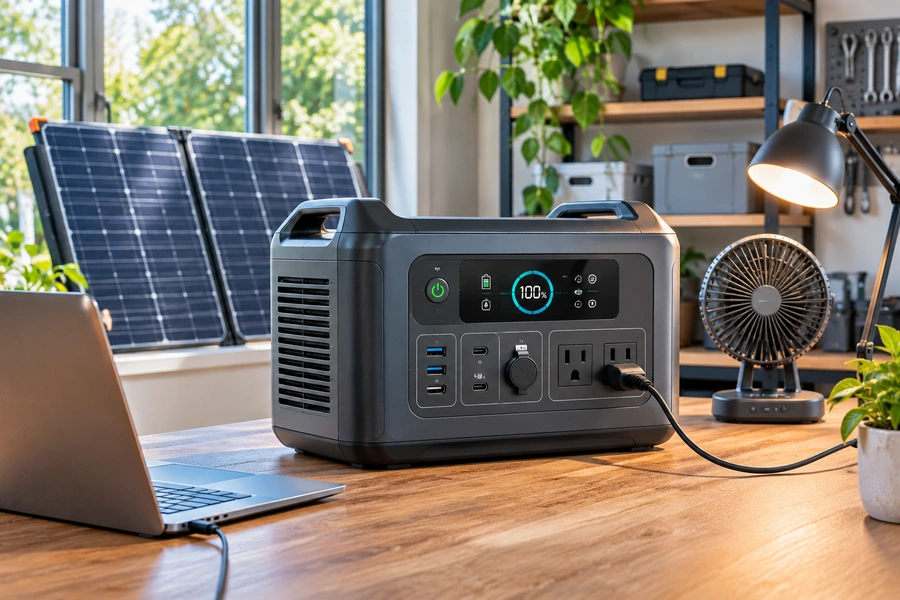
Portable power stations provide reliable electricity for camping, home backup, and outdoor activities. However, battery aging can reduce performance and make long-term ownership more expensive.
A modern portable power station with a LiFePO4 battery can often provide around 8–12 years of useful service under suitable operating conditions. Many models are rated for 3,000–6,000 charge cycles before declining to a specified remaining capacity, commonly 70–80%. Actual lifespan depends on battery chemistry, charging habits, temperature, storage conditions, and equipment quality.
Understanding portable power station life expectancy helps users compare battery technologies, evaluate long-term costs, and select equipment that meets their electricity requirements. It is also important to distinguish battery lifespan from the number of hours a power station can operate on a single charge.
How Many Years Does a Portable Power Station Typically Last?
Portable power stations are designed to store electricity and deliver it when needed. Their useful operating life depends on battery durability and the reliability of the complete electrical system.
A well-designed LiFePO4 portable power station may remain useful for approximately 8–12 years, although individual results vary. Older models using nickel manganese cobalt (NMC) lithium-ion batteries often have lower cycle-life ratings. The actual service life depends on charge frequency, operating temperature, storage conditions, and the condition of electronic components.
Battery Lifespan vs. Operating Runtime
I believe one of the most important distinctions is the difference between battery lifespan and operating runtime.
Battery Lifespan describes how long the battery remains useful over months or years.
Operating Runtime describes how many hours the power station can supply electricity before needing another charge.
For example, a 1,000Wh power station might operate a 100W appliance for approximately 8–9 hours under favorable conditions.
However, this does not indicate whether the battery will remain usable for five, ten, or fifteen years.
Battery lifespan depends on long-term degradation rather than the energy consumed during one discharge.
What Does a Charge Cycle Mean?
A battery cycle represents the equivalent of using and replenishing its full rated capacity.
A complete discharge and recharge can represent approximately one equivalent full cycle.
Partial discharges can also accumulate into equivalent full cycles.
For example, two discharges of 50% of battery capacity can represent approximately one equivalent full cycle.
Manufacturers generally measure cycle life under defined laboratory conditions.
These conditions may include controlled temperature, charge rate, discharge rate, and depth of discharge.
How Do Charge Cycles Translate Into Years?
Consider a portable power station rated for 3,000 equivalent full cycles.
If the battery completes one full cycle every day:
3,000 ÷ 365 = 8.2 years
A model rated for 4,000 cycles would have a theoretical cycle-count equivalent of:
4,000 ÷ 365 = 11.0 years
These calculations explain why many LiFePO4 products are marketed for long-term use.
However, they do not guarantee those service lives.
A battery also ages when it is not being used.
This process is called calendar aging.
Cycle Life and Calendar Life
Battery degradation occurs through two main mechanisms.
| Aging Type | Meaning | Main Influences |
|---|---|---|
| Cycle Aging | Capacity loss associated with charging and discharging | Cycle count, discharge depth, current, temperature |
| Calendar Aging | Capacity loss over time, including periods without use | Temperature, storage conditions, state of charge |
I consider both mechanisms important.
A battery that is used frequently may experience substantial cycle aging.
A battery stored for many years can experience calendar aging even if it completes very few cycles.
Therefore, dividing the rated cycle count by annual usage provides only a theoretical comparison, not a guaranteed replacement date.
How Does Battery Chemistry Affect Portable Power Station Life Expectancy?
Battery chemistry strongly influences energy density, thermal behavior, and cycle durability. Modern portable power stations commonly use LiFePO4 technology, while some older or weight-sensitive designs use other lithium-ion chemistries.
LiFePO4 batteries generally provide longer cycle life than conventional NMC lithium-ion batteries used in many older portable power stations. LFP models are often rated for thousands of cycles, while older NMC models may have ratings in the hundreds to around 1,000 cycles. Actual performance depends on the specific battery design and test conditions.
LiFePO4 Battery Technology
Lithium iron phosphate batteries are commonly known as LiFePO4 or LFP batteries.
They are widely used in modern portable energy storage products.
I consider their main advantages to include:
- Long cycle life
- Good thermal stability
- Suitable performance for repeated charging
- Lower reliance on nickel and cobalt materials
- Practical durability for frequent-use applications
Many current LFP portable power stations advertise approximately 3,000–6,000 cycles, although some products fall outside this range.
The rated remaining capacity must always be checked.
For example, a manufacturer may specify 3,000 cycles to 80% capacity.
Another model may specify 4,000 cycles to 70% capacity.
These claims cannot be compared directly without accounting for the different capacity-retention thresholds.
NMC Lithium-Ion Batteries
Nickel manganese cobalt batteries are another type of rechargeable lithium-ion battery.
NMC technology offers relatively high energy density, which can be useful when equipment weight and size are important.
However, many older NMC portable power stations have lower advertised cycle-life ratings than comparable LFP products.
This does not mean every NMC battery has a short lifespan.
Battery quality, temperature control, and operating conditions remain important.
For users who frequently charge and discharge their power stations, I generally consider LFP technology a strong option.
Battery Chemistry Comparison
| Battery Technology | Illustrative Cycle-Life Range | Main Characteristic |
|---|---|---|
| LiFePO4 (LFP) | 3,000–6,000 cycles | Long cycle life and good thermal stability |
| NMC Lithium-Ion | 500–1,000 cycles for many older models | Higher energy density |
| Lead-Acid | 200–500 deep cycles | Lower initial cost but greater weight |
These ranges are general illustrations, not universal specifications. Actual products use different test methods and remaining-capacity thresholds.
Does a Battery Stop Working After Its Rated Cycle Life?
No. A rated cycle-life value does not mean the battery automatically stops operating.
For example, consider a portable power station with an original capacity of 1,000Wh.
If its battery retains 80% of its original capacity after a specified number of cycles, the remaining nominal capacity would be approximately:
1,000Wh × 0.80 = 800Wh
The power station may still operate normally, but it will generally provide less runtime on each charge.
Actual usable AC energy will also depend on inverter efficiency and internal consumption.
I believe understanding this distinction helps buyers make more informed long-term purchasing decisions.
What Factors Reduce the Lifespan of a Portable Power Station?
Battery lifespan is influenced by daily operating habits and environmental conditions. Even high-quality lithium batteries can degrade faster when exposed to excessive heat or unsuitable charging and storage practices.
The main factors that shorten portable power station lifespan include high temperatures, frequent deep discharging, prolonged storage at unsuitable charge levels, excessive electrical stress, and poor maintenance. Battery chemistry and system design also affect durability, while proper thermal management and charging controls can reduce unnecessary degradation.
High Operating Temperatures
Heat is an important factor in lithium-ion battery aging.
High temperatures can accelerate unwanted chemical reactions inside battery cells.
These reactions gradually reduce the amount of energy the battery can store.
For example, leaving a power station inside a hot vehicle or placing it near a heat source can expose it to unfavorable conditions.
I recommend following the operating and storage temperature limits published by the manufacturer.
A cool, dry, well-ventilated location is generally preferable for long-term storage.
Frequent Deep Discharging
Repeatedly discharging a battery close to its minimum permitted state of charge may increase degradation under some operating conditions.
Modern power stations use battery management systems to prevent operation beyond defined protection limits.
However, I recommend avoiding unnecessary deep discharges when a product's instructions advise against them.
For daily use, a moderate operating range may reduce battery stress.
The most appropriate charge range depends on the specific product and its battery management strategy.
Long-Term Storage at Full or Empty Charge
Lithium batteries can degrade during storage.
Keeping a battery at a high state of charge for extended periods may accelerate calendar aging, especially at elevated temperatures.
Storing a power station with very little remaining energy also creates risks.
Self-discharge and internal standby consumption can gradually reduce the charge until the battery enters a protective shutdown or becomes difficult to recover.
Many manufacturers recommend a partial charge for extended storage.
For example, some EcoFlow models specify approximately 60% charge and periodic maintenance during storage.
I recommend using the exact instructions for the model rather than applying one charge percentage to every battery.
Charging Speed and Power Demand
High charging and discharging currents can increase battery heating and electrical stress.
However, fast charging does not automatically damage a portable power station when the charging system is designed and approved for that operating mode.
The battery management system should control charging according to the manufacturer's limits.
I recommend using compatible chargers, cables, and solar inputs.
Connected appliances must also remain within the rated output capacity.
Electronic Component Reliability
I also consider the reliability of non-battery components important.
A portable power station contains an inverter, cooling equipment, charging electronics, connectors, and control circuits.
A battery may retain useful capacity while another component develops a fault.
For this reason, battery cycle life is not the same as the guaranteed service life of the complete power station.
How Can You Extend the Life Expectancy of a Portable Power Station?
Portable power stations require relatively little maintenance compared with fuel-powered generators. However, correct charging, storage, and operating practices can help preserve battery performance.
You can extend portable power station life expectancy by keeping the battery within recommended temperatures, following proper charging practices, avoiding unnecessary deep discharge, checking stored batteries regularly, and maintaining ventilation. Choosing a suitable battery chemistry and a well-designed battery management system also supports long-term reliability.
Follow Proper Charging Practices
I recommend using charging equipment approved for the power station.
Users should confirm that the input voltage, charging power, and connector type match the manufacturer's requirements.
Many modern portable power stations support AC charging, solar charging, and vehicle charging.
However, each input has specific operating limits.
Unsupported chargers or modified cables can create safety and reliability risks.
Store the Battery Correctly
For long-term storage, I recommend following the manufacturer's instructions for battery charge level and inspection frequency.
Some manufacturers recommend storing the system near 50–60% charge.
Others specify different procedures.
A suitable storage environment should generally be:
- Dry and protected from water
- Within the recommended temperature range
- Away from direct heat
- Well ventilated
- Protected from physical impacts
I also recommend checking stored power stations periodically.
Many manufacturers advise inspecting or maintaining battery charge approximately every three months.
Keep Ventilation Openings Clear
Portable power stations generate heat during charging and discharging.
Cooling systems help maintain acceptable operating temperatures.
Blocked ventilation openings can reduce cooling performance.
I recommend keeping the device on a stable surface and maintaining the clearances specified in its user manual.
Dust and debris should be removed using approved cleaning methods.
The device should be disconnected and powered off before routine exterior cleaning.
Monitor Battery Performance
A gradual reduction in runtime is normal as batteries age.
However, unusual changes may indicate a problem.
Warning signs can include:
- Unexpectedly rapid capacity loss
- Frequent error messages
- Unusual overheating
- Abnormal charging behavior
- Unexpected shutdowns
- Physical swelling or enclosure damage
If these symptoms occur, I recommend stopping use and contacting the manufacturer or a qualified service provider.
Users should not open or modify internal lithium battery packs.
Choose a Reliable Power Station
I believe long-term product quality depends on more than battery chemistry.
When purchasing a power station, I recommend evaluating the following specifications.
| Specification | Why It Matters |
|---|---|
| Battery Chemistry | Influences cycle life and thermal characteristics |
| Rated Cycle Life | Indicates tested capacity retention after cycling |
| Remaining Capacity Threshold | Shows the capacity expected at the rated cycle count |
| Battery Management System | Helps control battery operating limits |
| Cooling System | Supports thermal management |
| Product Certification | Provides evidence of testing against applicable safety requirements |
| Warranty and Support | Defines the manufacturer's service commitments |
For portable battery power packs, UL 2743 is one relevant safety standard in North America.
Buyers should verify the certification of the actual product rather than assuming that a battery cell certification covers the complete power station.
I also recommend comparing warranty conditions with expected battery cycle life.
A five-year warranty does not necessarily mean that the product stops working after five years.
Similarly, a ten-year estimated lifespan does not automatically mean the entire product is covered by a ten-year warranty.
My Insight: What Is the Life Expectancy of a Portable Power Station
I believe the practical life expectancy of a portable power station should be evaluated through three factors: battery aging, electronic reliability, and actual operating requirements.
Modern LiFePO4 technology has significantly improved battery durability compared with many older portable power station designs.
However, I do not consider a high cycle-life rating sufficient evidence that a complete power station will operate for a specific number of years.
A battery may have enough rated cycles for more than ten years of theoretical daily use, but calendar aging, thermal exposure, and electronic component failures can reduce the actual service life.
For this reason, I recommend focusing on five considerations.
1. Battery Chemistry
I generally prefer LiFePO4 batteries for applications requiring frequent charging and long-term use.
2. Capacity Retention
I compare cycle ratings using the same remaining-capacity threshold whenever possible.
A specification of 4,000 cycles to 80% capacity is not equivalent to 4,000 cycles to 70%.
3. Operating Conditions
I consider moderate temperatures and suitable charging practices important for long-term battery performance.
4. Equipment Quality
I evaluate the complete system, including the inverter, BMS, cooling equipment, and electrical protection.
5. Intended Application
I believe different users require different levels of durability.
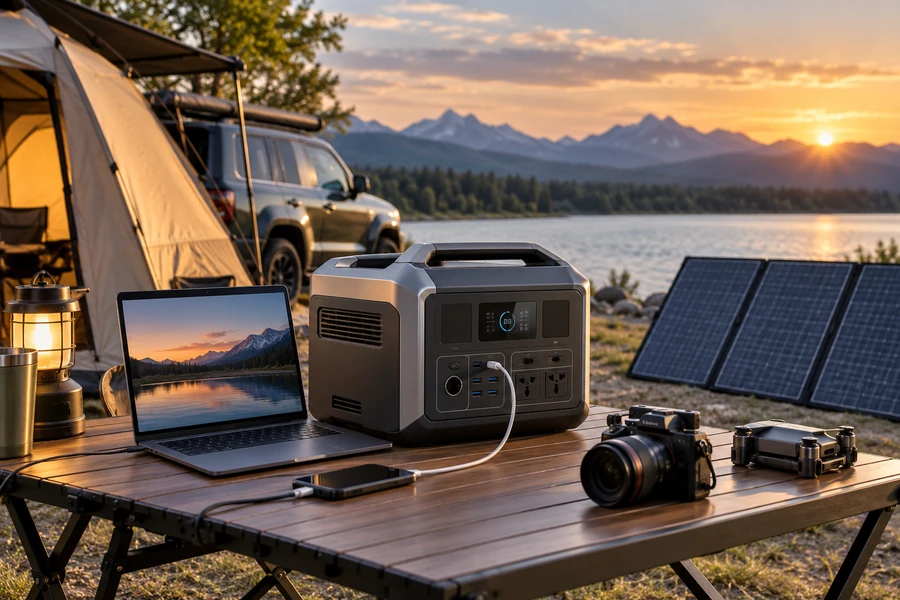
For occasional camping trips, battery cycle life may be less important than portability, output power, and storage reliability.
For daily solar charging, RV living, or repeated commercial use, cycle durability becomes more important.
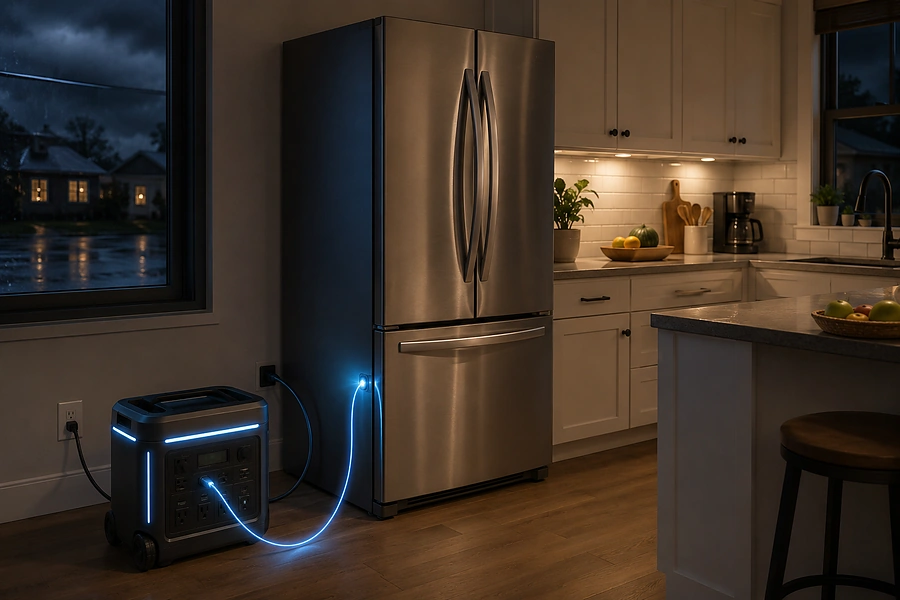
For emergency home backup, I place additional emphasis on reliable storage, readiness, and regular inspection.
I also recommend considering the total cost of ownership.
A portable power station with a higher initial price may provide better long-term value if it delivers reliable performance and has strong manufacturer support.
However, I do not believe every customer needs the most expensive model.
The best choice is a properly sized power station with suitable battery technology, verified specifications, and reliable service support.
Conclusion
Modern LiFePO4 portable power stations can provide years of reliable service. Actual lifespan depends on battery chemistry, cycle life, temperature, maintenance, and overall product quality.
](https://voltcrave-battery.com/wp-content/uploads/2026/08/What-Are-Industrial-Energy-Storage-Devices-What-Are-Some-768x512.webp)
](https://voltcrave-battery.com/wp-content/uploads/2026/09/Portable-Power-Station-Lithium-Ion-Battery-Storage-Containers-for-Reliable-Energy-On-the-Go-768x512.webp)
](https://voltcrave-battery.com/wp-content/uploads/2026/09/How-Long-Will-a-Power-Station-Power-a-Fridge-768x512.webp)