
](https://voltcrave-battery.com/wp-content/uploads/2026/10/What-Is-the-Best-Option-for-Home-Power-Backup.webp)
Power outages can last minutes or days, so choosing between batteries, portable power stations, generators, and solar backup requires more than comparing headline wattage.
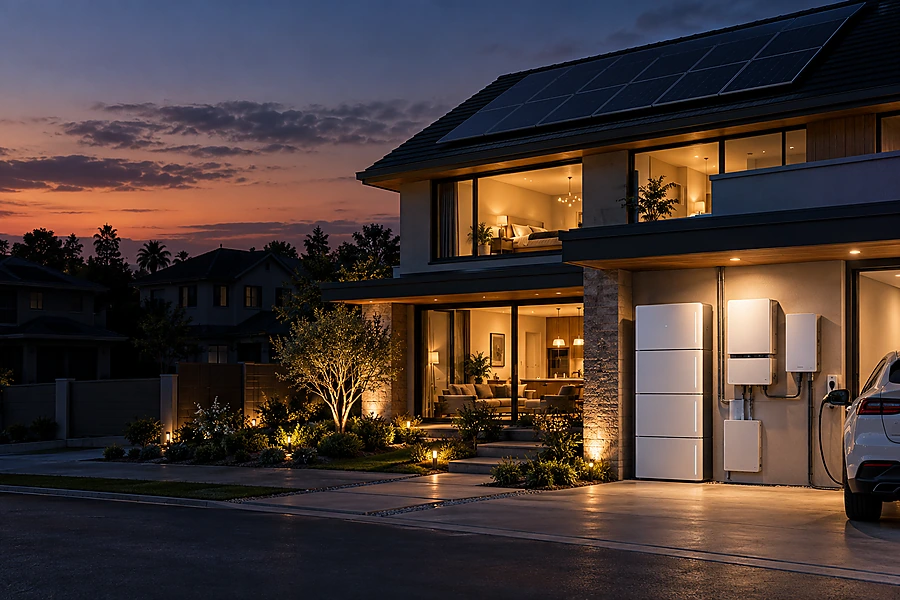
For most homeowners wanting quiet, automatic backup, a professionally installed LFP home battery sized to essential loads is the best all-around option, especially when paired with solar. For frequent multi-day outages, a battery-plus-generator hybrid provides stronger resilience. Portable power stations are better for smaller loads, renters, and lower-cost emergency backup.
Home backup options include batteries for quiet automatic power, solar-plus-battery systems for recharging, generators for long outages, and battery-generator combinations for stronger resilience and flexibility.
What Is the Best Overall Home Power Backup Option?
No single backup technology is ideal for every home, but permanent battery storage offers an unusually strong balance of convenience, silence, automatic operation, and daily usefulness.
For many modern homes, a permanently installed LFP battery system with automatic backup switching is the strongest all-around choice. A system in roughly the 10–20 kWh range can support essential loads and, when power output is sufficient, larger appliances. Pairing it with solar can extend outage duration by recharging the battery during daylight.
Current residential products illustrate what this category can provide.
Tesla Powerwall 3 has:
13.5 kWh nominal battery energy
and configurations up to:
11.5 kW continuous AC output.
FranklinWH aPower 2 provides:
15 kWh usable energy
with:
10 kW continuous discharge
and:
15 kW peak output for 10 seconds.
Enphase IQ Battery 5P provides:
5.0 kWh usable energy
with:
3.84 kVA continuous output
per unit, allowing multiple batteries to be combined when more energy or power is required.
These examples show why home backup should be evaluated using two numbers:
kWh = How much energy is stored
kW = How much power can be delivered at one time
A battery with plenty of kWh but insufficient kW may run lights and refrigerators for a long time but still struggle with an air conditioner or electric water heater.
Is a Home Battery Better Than a Generator?
The answer depends primarily on outage duration and access to fuel.
A home battery is usually quieter, faster, cleaner at the point of use, and easier to combine with solar than a combustion generator. A standby generator can provide much longer backup if natural gas or propane remains available. Batteries are generally stronger for automatic short-to-medium outages, while generators remain valuable for prolonged outages requiring large amounts of energy.
A permanently installed home battery has several advantages.
It can switch rapidly into backup mode.
It produces no exhaust at the home during operation.
It requires no fuel delivery during an outage.
It can also provide value outside emergencies through:
solar self-consumption,
time-of-use optimization,
and other energy-management functions.
The U.S. Department of Energy notes that residential batteries can store energy for later use and provide backup during outages; when paired with solar, they can store daytime solar production for use later.
A generator solves a different problem.
Generac explains that permanently installed standby generators can automatically begin supplying power after an outage and operate on natural gas or propane. Natural-gas systems can potentially run continuously while gas service remains available, while propane runtime depends on tank size and electrical demand.
Therefore:
Battery = Stored Energy
while:
Generator = Energy Production From Fuel
A battery eventually becomes empty unless it is recharged.
A generator can continue operating as long as fuel is available and the equipment can continue running safely.
When Is a Standby Generator the Better Choice?
Homes exposed to long outages may need more energy than a practical residential battery can economically store.
A standby generator is particularly attractive for homes that regularly experience multi-day outages, have reliable natural-gas or large propane supplies, or need to operate high-demand equipment continuously. Generators can deliver substantial power for extended periods, although they create noise, emissions, maintenance requirements, and fuel dependence.
Generac currently offers residential standby systems across multiple power classes.
Its guidance notes that smaller homes may use systems around:
10–18 kW
while homes with larger electrical demand may require:
22–28 kW.
For example, one current Generac model provides:
22 kW on propane
and:
21 kW on natural gas.
That is considerably more continuous power than one typical residential battery.
However, power output is only half of the comparison.
A 22 kW generator running at only 5 kW average load can theoretically continue for many hours or days while fuel remains available.
A:
15 kWh battery
supplying a constant:
5 kW
contains only about:
15 ÷ 5
= 3 hours
of nominal energy before accounting for operating limits and losses.
This explains why generators remain useful for long-duration resilience.
Is Solar Plus Battery Better for Home Backup?
Solar can dramatically improve battery resilience because it creates an opportunity to replenish stored energy during an extended outage.
Solar plus battery is one of the strongest home-backup configurations when the system is specifically designed to operate during grid outages. The battery provides power when solar production is insufficient, while solar can support loads and recharge the battery during daylight, potentially extending backup far beyond the battery's initial stored energy.
DOE describes solar-plus-storage systems entering an islanded operating mode during outages, allowing local solar and battery resources to keep supplying electricity when designed for that function.
Without solar:
Battery Energy → Household Loads → Battery Depletes
With solar:
Solar → Household Loads
and potentially:
Solar → Battery Recharge
This changes backup planning.
Suppose a home uses:
12 kWh overnight.
A 15 kWh battery may be able to cover much of that demand.
If the next day provides enough solar energy to run daytime loads and recharge the battery, the system may repeat the cycle the following night.
But solar does not guarantee indefinite backup.
Production depends on:
weather,
season,
array size,
shade,
snow,
and system configuration.
A week of poor solar production can still exhaust a battery system.
That is why very high-resilience homes may use:
Solar + Battery + Generator
rather than relying on only one energy source.
Is a Battery Plus Generator the Best Option for Long Outages?
For high resilience, combining technologies can solve weaknesses that each one has alone.
A battery-plus-generator system can provide some of the strongest residential backup resilience. The battery handles fast transfers, quiet overnight operation, and smaller loads efficiently, while the generator can recharge the battery or support larger loads during prolonged outages. Adding solar can further reduce generator runtime and fuel consumption.
The architecture can be thought of as:
Grid
+
Solar
+
Battery
+
Generator
→
Home Loads
During a short outage, the generator may not need to run at all.
The battery can handle the interruption.
During a longer outage, the generator can operate periodically rather than continuously if the system is designed to recharge the battery.
This can reduce:
noise,
fuel consumption,
and generator operating hours.
FranklinWH's current aPower 2 platform is designed to store energy from solar, grid, generator, and other supported sources through its home-energy ecosystem.
Hybrid backup is therefore particularly attractive for homes where:
multi-day outages are possible,
critical electrical loads must remain available,
and losing power is more than an inconvenience.
Are Portable Power Stations Good for Home Backup?
Portable power stations can be excellent emergency tools but usually start with much less stored energy than permanently installed home batteries.
Portable power stations are a strong option for renters, apartments, essential-load backup, emergency preparedness, and homeowners who want backup without permanent electrical installation. Modern units can power refrigerators, electronics, medical devices, and selected appliances, while larger expandable systems can support 120V and 240V loads.
Portable products vary widely.
Smaller systems may store around:
1 kWh
while expandable home-oriented systems can reach:
several kWh
or:
tens of kWh
with additional batteries.
Their main advantages are:
portability,
simpler purchase,
lower entry cost,
and the ability to use the same equipment for:
camping,
RV travel,
worksites,
or emergency power.
But portable systems have limitations.
A:
3.8 kWh
power station contains far less energy than a:
15 kWh
permanently installed home battery.
It may be enough for:
refrigeration,
internet,
lights,
phones,
and selected electronics.
It may not provide comfortable whole-home backup for:
central air conditioning,
electric heating,
water heating,
cooking,
and EV charging.
Portable power should therefore be sized around:
essential loads
rather than automatically treated as whole-home backup.
Why Is LFP a Good Chemistry for Home Backup Batteries?
Many current residential systems use lithium iron phosphate because stationary storage values long life, thermal stability, and frequent cycling.
LFP, or LiFePO4, is well suited to residential backup because it offers strong cycle performance and favorable thermal characteristics while avoiding nickel and cobalt in the cathode. It has lower energy density than some nickel-rich lithium-ion chemistries, but weight is usually less important in a stationary home installation.
FranklinWH's current aPower 2 uses:
LFP chemistry.
Enphase IQ Battery 5P also uses:
LFP.
For a stationary system attached to a wall or foundation, maximum:
Wh/kg
is not usually the top priority.
Instead, buyers care about:
cycle life,
safety,
temperature management,
warranty,
power capability,
and long-term reliability.
However:
LFP ≠ Automatically Safe
and:
LFP ≠ Automatically High Quality.
The complete system still needs good:
BMS protection,
electrical design,
thermal management,
enclosure construction,
installation,
and certification.
How Much Battery Capacity Does a Home Need?
Battery capacity should be calculated from energy use during the outage rather than total monthly electricity consumption.
A practical home-backup battery may range from roughly 10–20 kWh for essential loads, while larger whole-home systems can require 20–40 kWh or more. The correct capacity depends on average outage load, desired backup duration, large appliances, climate, and whether solar or a generator can recharge the battery.
The basic equation is:
Required Energy = Average Backup Load × Required Hours
Suppose critical loads average:
1 kW.
For:
12 hours
the theoretical energy requirement is:
1 × 12
= 12 kWh.
If average load is:
2 kW
for:
12 hours
required energy becomes:
24 kWh.
Now consider a home running:
air conditioning,
refrigeration,
lighting,
internet,
electronics,
and occasional kitchen loads.
The average load may change continuously.
Therefore, real system sizing should account for:
conversion losses,
battery reserve,
temperature,
future degradation,
and uncertain household behavior.
This is why a load study is more valuable than simply asking:
“How many kWh does an average house need?”
What Is the Difference Between kW and kWh for Home Backup?
Confusing power and energy is one of the most common home-backup mistakes.
Kilowatts determine how much electrical load a backup system can support at one time, while kilowatt-hours determine approximately how long it can support those loads. A home battery must therefore have enough kW to start and run appliances and enough kWh to provide the desired outage duration.
For example:
Battery A:
15 kWh energy
5 kW power
Battery B:
13.5 kWh energy
11.5 kW power
Battery A stores more energy.
Battery B can deliver substantially more power at one time.
This can affect whether the system can run:
central air conditioning,
well pumps,
electric dryers,
or other high-load equipment.
Tesla Powerwall 3 demonstrates this distinction clearly with:
13.5 kWh energy
and up to:
11.5 kW continuous AC output in its current North American specification.
Therefore:
kWh → Runtime
kW → Appliance Capability
Both must be checked.
Can One Home Battery Run an Air Conditioner?
Sometimes, but the answer depends on the battery's continuous and surge power and the air conditioner's starting requirements.
A home battery can run central air conditioning when its inverter and system architecture provide sufficient continuous output and motor-start capability. Large compressors can require a substantial starting surge, so battery capacity alone is not enough. Buyers should verify both running power and locked-rotor or startup requirements.
FranklinWH states that a single aPower 2 can support startup of a:
5-ton air conditioner
while operating other essential household loads.
Tesla lists substantial motor-start capability for current Powerwall 3 configurations.
But this does not mean every battery can start every HVAC system.
The relevant values include:
continuous kW,
surge kW,
surge duration,
motor LRA,
and other loads operating simultaneously.
This is one reason a battery should be sized using:
load characteristics
rather than just:
daily kWh.
Should You Back Up the Whole Home or Only Essential Loads?
Critical-load backup often provides much longer runtime from the same battery.
Backing up essential loads is usually more energy-efficient and less expensive than trying to operate every household circuit during an outage. Refrigeration, lighting, communications, medical equipment, selected outlets, and limited HVAC may require far less energy than electric heating, water heating, dryers, ovens, pool equipment, and EV charging.
Imagine a home normally averaging:
4 kW
during an outage.
A 15 kWh battery would theoretically provide:
15 ÷ 4
= 3.75 hours.
If the homeowner reduces the backup load to:
1 kW
the same battery theoretically provides:
15 ÷ 1
= 15 hours.
The battery did not become larger.
The energy strategy changed.
This makes:
load management
one of the cheapest ways to increase backup duration.
Smart electrical panels, controlled circuits, and automatic load shedding can make this easier.
What Safety Standards Matter for Home Battery Backup?
Home batteries should be evaluated as complete energy-storage systems rather than collections of cells.
For U.S. residential installations, buyers should look for properly certified systems and professional installation consistent with applicable electrical, fire, building, and local requirements. UL 9540 covers energy storage systems and equipment, while UL 9540A evaluates thermal-runaway propagation behavior. Additional residential fire-testing requirements can apply depending on jurisdiction.
UL Solutions explains that UL 9540 covers complete energy-storage systems and that residential installation requirements interact with codes such as NFPA 855 and the International Residential Code.
UL also introduced UL 9540B to address additional large-scale fire-testing concerns specifically for residential battery systems.
The details are jurisdiction-specific.
A homeowner should therefore verify:
system certification,
installation location,
clearances,
electrical protection,
permitting,
and local fire-code requirements
with qualified installers and the local authority having jurisdiction.
The relevant question is not simply:
“Is the chemistry LFP?”
It is:
“Is the complete system appropriately designed, certified, installed, and permitted?”
How Should You Choose a Home Backup System?
The best selection process begins with the outage rather than the product.
Choose a home backup system by defining which loads must remain powered, their continuous and startup demand, how many hours or days backup is required, whether solar or fuel is available, and whether automatic operation is important. Then compare system kWh, kW, expansion, safety certification, installation requirements, warranty, service, and lifetime cost.
A useful comparison is:
| Backup Option | Best Use | Main Advantage | Main Limitation |
|---|---|---|---|
| Fixed home battery | Automatic everyday backup | Quiet, fast, useful daily | Finite stored energy |
| Solar + battery | Renewable resilience | Can recharge during outage | Weather dependent |
| Portable power station | Essentials / renters | Flexible, no permanent install | Lower stored energy |
| Standby generator | Long outages | Runs while fuel is available | Noise, emissions, maintenance |
| Battery + generator | High resilience | Combines quiet backup with long duration | More equipment and cost |
| Solar + battery + generator | Maximum resilience | Multiple energy sources | Highest complexity |
For many households, I would start with:
Critical Loads + 10–20 kWh LFP Battery + Automatic Backup
and then ask whether the site needs:
Solar
or:
Generator Support
for longer outages.
My Insights: What Really Determines the Best Home Backup System
The best system is not necessarily the one with the largest battery or generator.
Home backup is a balance between power, energy, outage duration, recharge options, automation, safety, cost, and resilience. Batteries excel at quiet automatic backup, generators excel at sustained energy production, and solar can replenish stored energy. Combining technologies is often more resilient than simply installing a much larger version of one technology.
My First Insight: Backup Duration Is Primarily an Energy Problem
Many homeowners focus first on:
watts.
But after confirming appliances can start, outage duration becomes mostly a:
kWh problem.
A system may have enough power to run the air conditioner but not enough energy to run it all night.
Therefore:
kW determines whether
while:
kWh determines how long.
My Second Insight: Load Reduction Can Be More Valuable Than Adding Another Battery
Cutting average outage consumption from:
4 kW
to:
2 kW
can approximately double theoretical runtime.
That can sometimes be achieved by temporarily avoiding:
EV charging,
electric dryers,
pool pumps,
electric water heating,
and other discretionary loads.
Backup design should therefore include:
energy management
rather than only more hardware.
My Third Insight: Solar Changes a Battery From a Tank Into a Rechargeable Energy System
A battery without solar starts an outage with a finite energy reserve.
Solar can add new energy each day.
DOE notes that solar paired with storage allows generated electricity to be stored for later use and can support resilience during grid outages when the system is configured accordingly.
That makes solar particularly valuable for outages lasting longer than one battery cycle.
My Fourth Insight: The Strongest Resilience Usually Comes From Diverse Energy Sources
A battery can fail to last through several cloudy days.
Solar cannot generate much at night.
A generator needs fuel.
Combining:
Battery + Solar + Generator
reduces dependence on any single source.
For homes where power continuity is critical, this can be more practical than installing an extremely large battery alone.
My Fifth Insight: What Is the Best Option for Home Power Backup?
For most homeowners seeking quiet, automatic, low-maintenance backup, a professionally installed LFP home battery sized to critical loads is the best all-around option, especially when paired with solar. For frequent multi-day outages or very high energy demand, combining the battery with a standby generator provides stronger resilience. Portable power stations are best for smaller loads, renters, and lower-cost emergency preparation.
The decision can be simplified as:
| Household Need | Best-Fit Backup Approach |
|---|---|
| Short outages / automatic backup | Fixed home battery |
| Solar home / daily energy management | Solar + battery |
| Apartment / renter / essentials | Portable power station |
| Frequent multi-day outages | Standby generator |
| Quiet backup plus extended outages | Battery + generator |
| Maximum outage resilience | Solar + battery + generator |
For a typical homeowner, the most useful starting specification is not:
“I need a whole-home battery.”
It is:
“I need X kW of critical-load power for Y hours.”
From there:
Required kWh ≈ Average Backup Load × Backup Duration
and the system should then be checked for:
startup power,
solar recharge,
generator integration,
battery reserve,
safety,
and future expansion.
That produces a backup system designed around the home rather than around the marketing specifications of one product.
Conclusion
For most homes, an LFP battery provides the best all-around automatic backup. Add solar for renewable recharging or a generator when multi-day resilience is essential.
](https://voltcrave-battery.com/wp-content/uploads/2026/08/How-Many-Solar-Panels-Does-It-Take-to-Power-a-House-768x512.webp)
](https://voltcrave-battery.com/wp-content/uploads/2026/10/What-Is-the-Best-Power-Station-for-Home-Backup-768x512.webp)
](https://voltcrave-battery.com/wp-content/uploads/2026/06/Stationary-Storage-Battery-Key-Guardians-of-Energy-Security-768x512.jpg)







































