
](https://voltcrave-battery.com/wp-content/uploads/2026/10/What-Are-the-Disadvantages-of-a-Portable-Power-Station.webp)
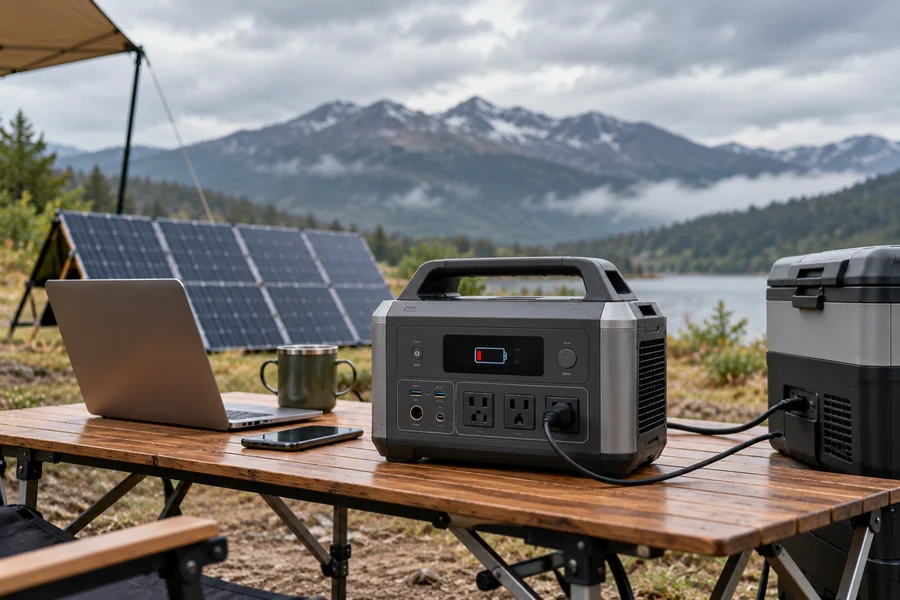
Portable power stations provide convenient electricity during camping and outages. However, limited battery capacity, recharging delays, and high costs can make them unsuitable for demanding applications.
The main disadvantages of a portable power station include limited battery capacity, short runtime under heavy loads, slow recharging, restricted output power, high purchase costs, and increasing weight. Batteries also degrade over time. Although solar charging can extend operation, it depends on sunlight, and most portable stations cannot replace a complete home backup system.
I believe portable power stations provide practical benefits, but buyers should understand their limitations before choosing one for camping, outdoor work, or emergency electricity.
What Are the Main Disadvantages of a Portable Power Station?
Portable power stations are marketed as convenient alternatives to fuel-powered generators. However, their integrated batteries and electronic components introduce several technical and practical limitations.
The biggest disadvantages of portable power stations are finite energy storage, limited continuous output, recharging requirements, high capacity-related costs, and reduced portability as batteries become larger. Inverter losses, battery aging, temperature restrictions, and limited repair options can also affect performance. These disadvantages become more important when powering high-wattage appliances or preparing for extended outages.
Limited Battery Capacity
I consider limited stored energy the most important disadvantage.
A portable power station contains a rechargeable battery with a fixed capacity.
Once that stored energy is consumed, the equipment must recharge before it can continue operating.
For example, a 1,000Wh portable power station contains approximately 1kWh of nominal electrical energy.
This may be enough to charge a laptop several times or operate small electronics for many hours.
However, a high-power appliance can consume the available energy much faster.
Unlike a fuel-powered generator, the battery does not produce new electricity while operating.
I therefore calculate expected electricity consumption before evaluating a power station.
Restricted Continuous Power Output
Portable power stations have an inverter that converts stored DC electricity into AC electricity.
The inverter has a maximum continuous output rating.
For example, a power station with 1,000W of continuous output cannot normally operate a 1,500W appliance at its full rated demand.
Some manufacturers advertise temporary surge output or power-boost functions.
However, these features should not be confused with continuous inverter power.
I consider this limitation especially important for refrigerators, pumps, electric tools, and appliances with compressors.
These devices may require additional power during startup.
The inverter must support both the running load and the applicable starting surge.
Inverter and Internal Energy Losses
I also consider conversion efficiency an important limitation.
Portable power stations store electricity as DC energy.
When an AC appliance is connected, an inverter converts the stored electricity into AC output.
Some energy is lost during this conversion.
The cooling system, control electronics, and monitoring display may also consume electricity.
As a result, the usable AC energy is usually lower than the nominal battery capacity.
I prefer comparing measured usable energy rather than relying only on advertised watt-hours.
Battery Capacity Decreases Over Time
Rechargeable lithium batteries gradually lose capacity with use and calendar aging.
The rate of degradation depends on battery chemistry, temperature, charging conditions, and operating patterns.
Many modern portable power stations use LiFePO4 batteries.
This chemistry offers good cycle-life potential.
However, it does not eliminate capacity loss.
For example, EcoFlow specifies that certain DELTA series LiFePO4 batteries retain at least 80% capacity after 4,000 cycles under stated test conditions.
I would not assume every power station offers the same cycle life.
The complete product's durability also depends on its inverter, charging electronics, cooling system, and connectors.
Main Disadvantages Compared
| Disadvantage | Practical Impact |
|---|---|
| Limited energy capacity | Appliances stop when the battery is depleted |
| Inverter power limits | High-wattage equipment may not operate |
| Conversion losses | Available AC energy is lower than rated capacity |
| Battery degradation | Runtime gradually decreases |
| Charging requirements | The system needs an external energy source |
| Limited repairability | Some repairs require manufacturer service |
| Environmental restrictions | Extreme temperatures and water exposure can limit use |
I believe these limitations make portable power stations better suited to specific applications than unrestricted electricity supply.
Why Do Portable Power Stations Have Short Runtime and Slow Charging?
Battery capacity and charging time strongly influence how useful a portable power station can be. A system may operate a low-power device for many hours but discharge quickly when powering an electric heater or other demanding appliance.
Portable power stations have limited runtime because they store a fixed amount of energy. High electrical loads consume this energy quickly, while inverter losses reduce usable capacity. Recharging also depends on the available input power. Solar panels can help, but cloud cover, shading, and limited daylight may substantially increase charging time.
How Long Can a Portable Power Station Run?
I calculate operating time using the following simplified formula:
Runtime (hours) = Usable AC Energy (Wh) ÷ Average Electrical Load (W)
Consider a portable power station with 1,000Wh of nominal battery capacity.
Assume 85% of the energy becomes available through its AC outlets.
The estimated available energy would be:
1,000Wh × 0.85 = 850Wh
If the connected appliance consumes 100W:
850Wh ÷ 100W = 8.5 hours
However, if the appliance consumes 500W:
850Wh ÷ 500W = 1.7 hours
The same battery provides substantially different runtime depending on electrical demand.
I consider this the main reason buyers should calculate appliance consumption before choosing capacity.
Estimated Runtime by Battery Size
The following table assumes approximately 85% of nominal capacity becomes usable AC energy.
| Battery Capacity | 100W Load | 500W Load |
|---|---|---|
| 500Wh | 4.3 hours | 0.9 hours |
| 1,000Wh | 8.5 hours | 1.7 hours |
| 2,000Wh | 17 hours | 3.4 hours |
| 3,000Wh | 25.5 hours | 5.1 hours |
| 4,000Wh | 34 hours | 6.8 hours |
These figures are theoretical estimates with constant loads and no additional charging.
Actual performance depends on the product's inverter efficiency, standby consumption, battery condition, temperature, and operating settings.
The inverter must also be rated to deliver the connected load.
Why Does AC Recharging Take Time?
A power station must receive enough electrical energy to replenish the battery.
Charging speed depends on its input power rating, charging efficiency, battery temperature, and control settings.
For example, a 1,000Wh battery with an average charging input of 200W would require more than five hours to recharge fully after accounting for charging losses and the charging profile.
However, some modern products support much higher AC charging power.
These models can recharge significantly faster under suitable conditions.
I therefore would not describe all portable power stations as slow-charging.
The actual limitation is that replenishing stored energy always requires sufficient input power and time.
Why Can Solar Charging Be Unreliable?
Solar panels can replenish a portable power station during daylight hours.
However, their output changes with sunlight, shading, temperature, and panel orientation.
Suppose a solar array delivers an average of 200W for four hours.
The electricity produced would be:
200W × 4 hours = 800Wh
The battery would store less than 800Wh after charging losses.
If the weather becomes cloudy, the average solar input may fall considerably.
I consider solar charging useful for extending operating duration, but I would not assume that it can fully recharge a large power station every day.
Can a Power Station Support Multi-Day Outages?
A portable power station can provide electricity during a multi-day outage if the connected loads are small enough or additional charging is available.
However, large appliances can quickly deplete stored energy.
For example, a household consuming 10kWh of electricity per day would require much more energy than a single 1kWh portable station contains.
I recommend a larger expandable power station, a properly designed residential ESS, or another approved backup source when extended electricity supply is essential.
Portable power stations are most effective when the required electrical loads and operating duration are clearly defined.
Are Portable Power Stations Too Heavy or Expensive Compared With Generators?
Portable power stations eliminate fuel handling during battery operation, but they are not always easier to transport or cheaper to purchase. Large-capacity batteries can be heavy, while comparable fuel generators may provide longer operating time at a lower initial equipment cost.
Portable power stations are often more expensive per unit of stored energy than fuel-powered generators and become heavier as battery capacity increases. Large power stations may weigh 30–100 pounds or more. Generators can provide longer operation when fuel is available, but they produce exhaust, require maintenance, and must operate outdoors.
High Initial Purchase Cost
I consider purchase cost one of the most important disadvantages for budget-conscious buyers.
A portable power station includes several major components:
- Rechargeable battery cells
- Battery Management System
- Pure sine wave inverter
- Charging equipment
- Electrical protection
- Cooling and monitoring systems
- AC and DC output connections
These components contribute to the total equipment price.
Consumer Reports' 2026 buying guide lists tested portable power stations across a broad range of approximately $1,500–$4,000, although smaller or differently configured products may cost less.
I recommend comparing the amount of usable electrical energy rather than focusing only on the initial price.
Cost per Usable Kilowatt-Hour
A simple purchasing comparison is:
Purchase Cost per Usable kWh = Equipment Price ÷ Usable AC Energy
Suppose a hypothetical portable power station costs $800.
Its nominal capacity is 1,000Wh, and it delivers approximately 850Wh of usable AC electricity.
The initial purchase cost per usable kilowatt-hour is:
$800 ÷ 0.85kWh = $941/kWh
This is a hardware cost comparison.
It does not represent the lifetime cost of electricity or account for repeated charging cycles.
I also consider warranty coverage, battery degradation, charging efficiency, and repair costs.
Weight Increases With Capacity
Portable power stations may be compact compared with installed energy storage systems, but larger batteries can still be difficult to move.
Small models may weigh only a few kilograms.
Higher-capacity systems can weigh tens of kilograms and may require wheels or assistance.
I consider this especially important for camping, outdoor photography, and temporary work sites.
A 3kWh or 4kWh power station may offer useful backup energy but be inconvenient for frequent transportation.
The best product is not necessarily the one with the largest battery.
Portable Power Station vs. Fuel Generator
| Comparison | Portable Power Station | Fuel Generator |
|---|---|---|
| Electricity source | Stored battery energy | Gasoline, propane, or other fuel |
| Initial equipment cost | Often higher for comparable backup use | Often lower |
| Operating noise | Generally low | Higher |
| On-site combustion exhaust | None during discharge | Yes |
| Operating duration | Limited by storage and recharging | Limited by fuel and equipment operation |
| Maintenance | Generally lower | Engine servicing required |
| Indoor use | Permitted only according to product instructions | Never indoors for combustion generators |
| Transportation | Depends on battery capacity | Depends on generator size |
| Solar charging | Available on many models | Requires separate system equipment |
| Multi-day high-load power | Often requires expansion or recharging | Often more practical with fuel available |
I believe both technologies remain useful.
A battery power station is attractive for quiet operation and short outages.
A generator may provide better value for extended high-power applications.
However, generators introduce carbon monoxide hazards and must never operate inside a home, garage, or enclosed space.
Can Battery Expansion Increase Costs?
Some power stations support additional battery modules.
This can extend operating duration.
However, compatible expansion batteries may be expensive and manufacturer-specific.
The total system can become considerably larger and heavier.
I also distinguish between increasing battery capacity and increasing inverter output.
Adding another battery does not necessarily increase the station's continuous AC power rating.
I recommend checking the complete expansion specifications before purchasing.
Repairability and Replacement Limitations
I also consider long-term serviceability important.
Some portable power stations have tightly integrated battery, inverter, and control components.
This can make repairs more dependent on the original manufacturer.
Replacement parts may not be readily available for every model.
For frequent commercial use, I recommend checking warranty terms, repair procedures, spare-part availability, and manufacturer support before purchasing.
How Can You Reduce the Disadvantages of a Portable Power Station?
Portable power stations have technical limitations, but many problems can be reduced through correct equipment selection. Poor sizing, unsuitable charging arrangements, and unrealistic runtime expectations often create avoidable difficulties.
To reduce the disadvantages of a portable power station, choose sufficient usable battery capacity, verify continuous and surge output, plan reliable recharging, and avoid unnecessary electrical loads. I also recommend LiFePO4 batteries for suitable long-cycle applications, checking operating temperature limits, and confirming product safety certification before purchase.
Choose the Right Battery Capacity
I start by estimating how much electricity the connected devices require.
For example, if several appliances consume a combined average of 200W for six hours, their energy demand is:
200W × 6 hours = 1,200Wh
Assume approximately 85% of nominal storage is available as AC electricity.
The required nominal capacity becomes:
1,200Wh ÷ 0.85 = 1,412Wh
I would therefore evaluate a power station with approximately 1.5kWh or more of storage, plus an appropriate reserve.
However, I would not choose a battery based only on energy capacity.
The inverter must also support the equipment's power requirements.
Reduce Unnecessary Electricity Consumption
Load management can significantly improve runtime.
For example, powering a laptop directly through a suitable USB-C connection may avoid unnecessary AC inverter conversion stages.
Using efficient LED lighting can also reduce energy demand.
I recommend disconnecting unnecessary loads and turning off AC outputs when they are not needed.
However, users should check whether the station automatically shuts down under very small loads.
Some products have configurable standby and output shutoff settings.
Plan Charging Before an Outage
I consider the availability of charging electricity essential.
For camping, compatible solar panels may extend operating duration.
For household backup, the battery should have an appropriate reserve before a forecast outage.
For extended emergency use, I would evaluate whether the manufacturer supports approved external charging sources.
I would not assume every product supports simultaneous charging and discharging in all conditions.
Pass-through and UPS functionality must be verified for the specific model.
Choose Suitable Battery Chemistry
Many modern portable power stations use lithium iron phosphate batteries.
I consider LiFePO4 attractive for frequent cycling because of its cycle-life potential and favorable thermal stability.
However, battery chemistry does not eliminate electrical or fire hazards.
The BMS, thermal protection, charging controls, and enclosure design also affect safety.
I recommend reviewing documented performance and warranty conditions rather than comparing battery chemistry alone.
Check Temperature and Weather Restrictions
Portable power stations may have specific charging and discharging temperature limits.
For example, EcoFlow's DELTA 2 documentation specifies a charging temperature range of 0°C–45°C and a discharging range of −10°C–45°C.
These limits apply to that product and should not be assumed for every station.
Charging a lithium battery outside its approved temperature range may be restricted by the BMS.
I also avoid assuming that every outdoor power station is waterproof.
Solar panels may have different ingress protection ratings from the battery enclosure.
I recommend protecting the power station from rain unless the manufacturer explicitly rates it for the expected exposure.
Understand Airline Transportation Restrictions
Large portable power stations are generally unsuitable for passenger air travel.
Under FAA guidance, lithium battery-powered generators and power stations exceeding 160Wh are not permitted on passenger aircraft.
Smaller qualifying lithium batteries are subject to applicable watt-hour and airline requirements.
I recommend checking the official capacity marking and airline policy before traveling.
For international B2B shipments, transport documentation and applicable dangerous-goods rules must also be verified.
Review Safety Certifications
In North America, UL 2743 is an important safety standard for qualifying portable power packs.
A portable power station intended for use through its integrated outlets is not automatically approved for permanent household electrical connections.
For installed energy storage systems, UL 9540 and applicable installation codes may be relevant.
I recommend checking the exact product certification rather than relying only on marketing claims.
Portable Power Station Buying Checklist
| Selection Factor | What I Recommend Checking |
|---|---|
| Battery capacity | Nominal and usable Wh |
| Continuous output | Normal appliance wattage |
| Surge rating | Motor and compressor starting demands |
| Battery chemistry | Cycle life and thermal characteristics |
| Charging speed | Actual AC and solar input limits |
| Solar compatibility | Input voltage, current, and connectors |
| Weight | Practical portability |
| Temperature limits | Approved charge and discharge conditions |
| Water protection | Verified ingress protection rating |
| Expansion | Approved additional battery modules |
| Safety certification | Applicable product listing |
| After-sales support | Warranty and repair availability |
I believe these checks can reduce many of the practical problems associated with portable power stations.
My Insights: What Are the Disadvantages of a Portable Power Station
Portable power stations offer convenient electricity without fuel combustion during discharge. However, their performance can be limited by battery size, charging availability, electrical output, and operating conditions.
I believe the most important disadvantages of a portable power station are limited usable energy, recharging dependence, high initial cost, and reduced portability at larger capacities. These limitations do not make the technology unsuitable. They mean the equipment must be selected according to actual electricity demand, required runtime, and available charging sources.
I Consider Limited Runtime the Biggest Disadvantage
I believe runtime is the first factor buyers should understand.
A portable power station can provide substantial output for selected appliances.
However, the battery contains a finite amount of electricity.
A 1kWh station may operate a laptop for many hours but discharge quickly when connected to an electric cooking appliance.
I therefore focus on available energy rather than advertised maximum wattage alone.
I also consider it important to calculate the expected operating duration before buying.
Recharging Is Often More Important Than Capacity
I believe many users underestimate the importance of replenishing stored electricity.
A large power station can provide useful backup duration.
However, it eventually needs electricity from the grid, solar panels, or another approved charging source.
Solar charging adds flexibility but depends on sunlight.
For this reason, I evaluate a power station through five connected factors:
Electrical Load → Usable Battery Capacity → Runtime → Charging Availability → Operating Reliability
This approach helps identify whether the equipment can meet the intended operating schedule.
Larger Batteries Are Not Always Better
I also believe that selecting the largest power station can create unnecessary costs.
A high-capacity system may be difficult to move and require expensive accessories.
For a person who only needs to charge phones, laptops, and lighting, a smaller power station may provide better value.
For emergency household appliances, larger capacity becomes more important.
I recommend balancing storage capacity with actual portability needs.
Power Stations Cannot Automatically Replace Whole-Home ESS
I consider this an important distinction.
Portable power stations are designed primarily to deliver electricity through their approved outputs.
Some products support compatible home backup panels or transfer equipment.
However, they should not automatically be treated as complete residential energy storage systems.
Permanent household wiring requires suitable certified equipment and professional installation.
For a home that needs reliable long-duration backup, I would compare expandable portable stations with dedicated residential ESS options.
Long-Term Value Depends on Product Quality
I believe battery durability, inverter quality, and technical support are important for long-term ownership.
LiFePO4 technology can provide strong cycling performance, but it does not guarantee that the entire power station will operate without faults.
Charging equipment, cooling fans, electrical connectors, and monitoring electronics can also affect reliability.
For commercial buyers and international distributors, I recommend verifying product test documentation, replacement parts, warranty support, and manufacturer service capability.
A lower purchase price may not provide good value if the product creates expensive after-sales problems.
My Final Recommendation
For ordinary camping, portable electronics, and short emergency outages, I consider a properly sized portable power station a practical choice.
For several days of high-power household electricity, I would compare larger battery systems, generators, or compatible hybrid backup solutions.
I would also assess the available charging infrastructure before selecting the equipment.
Ultimately, I believe the disadvantages of a portable power station can be managed through accurate sizing, reliable charging plans, appropriate safety protection, and realistic expectations about battery runtime.
Conclusion
Portable power stations offer convenient backup electricity but have limited runtime, charging delays, weight, and cost disadvantages. Choose capacity, output, and charging methods according to your needs.
](https://voltcrave-battery.com/wp-content/uploads/2026/10/What-Are-the-Downsides-of-Using-a-Pure-Sine-Wave-Inverter-768x512.webp)
](https://voltcrave-battery.com/wp-content/uploads/2026/08/What-Are-the-Best-Home-Energy-Storage-Systems-768x512.webp)
](https://voltcrave-battery.com/wp-content/uploads/2026/09/How-Much-Does-an-Off-Grid-Solar-System-Cost-A-Complete-Price-Breakdown-768x512.webp)